-110Days
-3Hours
-47Minutes
-34Seconds





Gray drinker. What exactly does that mean? If you were to see and look at my life, it looks like everything’s fine. All of the external consequences of drinking did not happen. But the internal, which no one realizes because you can’t see that if somebody is talking about quitting drinking or thinking about it, join community. Hands down best way. This is Melissa McGovern, the voice behind The Sober New Yorker, an alcohol-free coach, podcaster, mom, and wife who’s helping women rethink their relationship with drinking, guiding women through the messy, honest, and deeply rewarding journey of living alcohol-free. Today, she empowers women to step into healthier, stronger, and more present versions of themselves, one bold choice at a time. alcohol use disorder or or drinking. Everyone tends to turn the conversation to homelessness, drinking under a bridge. And I always think to myself like for them to automatically go to that and it’s like no, this is your best friend. This is somebody that lives next door to you, right? Like this is not we’re not talking about those that have gone to the extreme that are living under a bridge. This is everybody everyday people. The ones that show up and share and turn their camera on are the ones that have the most success.
Hi everyone and welcome back to Wake Up with Marcy where we hold space for real conversations, radical healing, and waking up to your worth. I’m your host Marcy Hopkins and I’m so grateful you are here. Thank you for listening. Thank you for watching. Today’s guest is someone that I truly respect, is become a friend of mine through this sober journey and the Instagram community. And I’m just really excited because you, Melissa, you’re so honest. You have so much heart and you have humor. And I and I just love seeing you in this sober space. Melissa is the creator of The Sober New Yorker. She’s a coach, podcaster, mom, wife and a former gray area drinker. And this is a really good conversation because a lot of times we talk about that rock bottom or making this big decision not to drink, but there’s a lot of us out there that are great drinkers. And Melissa has been alcohol-f free since 2023. But long before that, her wakeup call came after losing her best friend to alcohol use disorder. And now Melissa uses her story to empower women to reclaim their health, identity, and presence, one bold choice at a time. So Melissa, thank you so much for joining Wake Up with Marcy. Thanks for having me, Marcy. This is a pleasure. I’ve been looking forward to it. Absolutely. And it’s so what I love about this sober community is we just find one another, right? And then so you have that bond immediately just because we’re in that same space and then just to hear the different stories and the way that we’re giving back. I’m just so grateful for this sober space that we have. Yeah, me too. You know, when you first are sober curious, you’re kind of looking at it from the outside and these you wonder, at least I’m speaking for myself, how how are they doing it? How are they being so open and vulnerable and accepting? And when you take that leap yourself, when I took that leap myself, joining it and being a part of it is something that still keeps me accountable today. And giving back in that way is so fulfilling. Really truly fulfilling.
So you yourself, you talk about being a gray drinker. What exactly does that mean? And what was life looking like at that time for you? Great question. I think a gray area drinker or middle lane drinker, sometimes referred to as as that as well, is my life. If you were to see and look at my life, it looks like everything’s fine. Everything’s I’ve got it all going on. I didn’t lose my job. I didn’t get a DUI. My family is intact. I didn’t lose my marriage. So, all of the external consequences of drinking did not happen. But the internal, which no one realizes because you can’t see that, the the mental anxiety, the struggle of waking up every day saying, “I’m not going to drink tonight. It’s during the week. I’m going to tell myself, I’m not drinking during the week.” You know, for me, I never really had depressive issues in my life. I was very lucky in that way. But when I started drinking too much, I was starting to wake up feeling like, I wonder what would happen if I stayed in bed all day. And I had never ever felt that way. And I knew it was exactly the reason because I was drinking too much. So everything was happening internally. As a gray area drinker, I think that’s a great way to describe it. I myself went through the same thing. And when you’re in that gray area, you can be questioning for yourself like, am I drinking too much? What would life even look like if I wasn’t drinking? And I would wake up every single night in the middle of the night and say to myself, okay, tomorrow’s going to be different. I started looking up different ways to normalize my drinking, if you will, instead of not going to AA. For me, I was going to go the 12step program. I ended up going there, but I was like, maybe yoga or maybe meditation or maybe hypnosis. You know, there’s got to be some way to help myself to normalized this because I recognized that I felt like I was falling apart even though things looked so good on the outside. Nobody would have known any of this was going on. Right. Exactly. Yeah, I can relate to that 100%. and so can almost every woman that I coach. Yeah. So many women that I know in my sober communities. And I think that keeps us stuck for a long time because we feel like we look a certain way, we act a certain way, we should be able to figure it out on our own. And when we can’t, it’s really hard to to ask for help. It’s so hard to ask for help. And like you you’re making everything else work, right? Why can’t you make that work? And and you do exactly you feel like a a failure in some way and the shame around it, right? What I like about this conversation is that when you talk about alcohol use disorder or or drinking, everyone tends to turn the conversation to homelessness, drinking under a bridge. And I always think to myself like these are people that are not I guess dealing with the same as far as like questioning their alcohol use. for them to automatically go to that. And it’s like, no, this is your best friend. This is somebody that lives next door to you, right? Like, this is not, we’re not talking about those that have gone to the extreme that are living under a bridge. This is everyday people. Yeah. Yeah. And I think, you know, alcohol use disorder, there’s more attention to it as being a spectrum. Yes. And everyone has their own journey and we can’t compare ourselves. I could compare myself to I live in Manhattan. I live in a very high dense metropolitan area where I see open drug use, open drunkenness in my own neighborhood. And I could compare myself to that easily. I used to ride the subway home and see a man on a regular commute who had little bottles of liquor and little bottles of wine. and he would be fumbling around at 3:00 in the afternoon drinking them. And I thought, “Oh my god, I I hope I never turn into that.” But yet in my backpack coming home, I had maybe two or three bottles of bougie wine. And I thought, “What’s the difference really?” Like, I’m waiting to get home. He’s just doing it on the We cannot compare ourselves to I’ll never be like that because everyone is so individual. Yeah, I I talk about in my book a lot about like I was drinking wine from a you know crystal glass, right? And thinking everything was normal, right? So it doesn’t matter if you’re drinking out of a paper bag or if you’re drinking out of a a fancy glass, right, or that bougie wine, it’s all leading down the same path, right?
You shared about losing your best friend to alcohol use disorder. Can you take us back to that time? Sure. My best friend T. Scott, we moved to New York together in 1995. He was in my wedding. My babies, you know, he was huge part of my life and he struggled with alcohol and it really started to get out of control in the pandemic. and he lived in Ohio at the time. And because I wasn’t able to to see him, I would hear that he was in rehab or then a a sober living halfway house kind of thing. And he was so secretive about it. That’s the thing. He was so secretive. I look back and remember I visited him in 2018 and his shoulder was completely busted up and it was because he fell when he was drunk. But he but he made it out to be he was changing a light bulb situation. He was really good at hiding it when he told me about a year before he passed away that it had gone too far. And that’s the thing like if you don’t get a hold of this it can get too far away from you and then even being sober for the last years of your life doesn’t make a difference when the damage is done. So he was having because your kidneys and liver cannot process alcohol or anything else really. His abdomen would bloat up and he would go and get it drained and he would talk to me openly about this and I asked does it hurt and he would say yes it hurts to have it it’s very painful to have that drained. So he went in one day to for this routine procedure and he had sepsis and pneumonia and they admitted him to the ICU and he passed away there 6 days later. Was he drinking at that time? No, he was sober a year before he he passed away. That’s that’s the thing like you you can’t wait until you’re you have cerosis or your eyes are yellow or you know your skin is jaundice once you cross over into that zone it’s unrepairable irreparable. Yeah. And he knew you know he knew that his body was failing him. I knew that he wasn’t going to live a long life but you never know when that is going to happen. He was he was on a transplant list. He was he was really Yeah. And he just doing what he could, right? Yeah. He just didn’t make it. Yeah. My mother ended up dying of her disease of alcoholism. It’s hard. I remember just trying to be there for her and just with the hope it would change and it just that she could not my well my mother this is different than your friend but she just couldn’t get a hold of it right because she was so she had been drinking for so long she wasn’t doing the the trauma work that she needed to do because as you know I mean once you put down the drink there’s a lot of work that has to go into this, right? It’s not just deciding that one day that you’re not going to drink. So, for me, I had my rock bottom. I had a DUI and I I ended up going to the 12step program and that worked for me and I I had all my healing through that process and it it was amazing because I’d gone through therapy all my life and and such. But for you making that decision to stop drinking and you hadn’t had, let’s say, a rock bottom, per se, how did you do it? Well, my big wakeup call came about 15 months after T. Scott passed. And you know, when he died, I really started questioning myself. Is this it? Is this the thing that gets you going on, you know, get you back on track? cuz I had had some periods of sobriety before the pandemic and then it ramped up. Well, after he died, I went the complete opposite direction. I started eating and drinking anything I wanted because he wasn’t here. He couldn’t do that. I was going to live my life however the hell I wanted to live it. And when in the summer of 23, I started waking up feeling like I didn’t want to get out of bed, I knew why. And I had to go see my doctor. My doctor had has always known that I’ve had some, you know, an issue with this. I’ve been very transparent with her over the years. So, when I saw her, I told her point blank that I thought I was drinking too much. She is the one I feel like I could be the safest with. I couldn’t tell my husband. I couldn’t tell my friends. And she took my blood work. She didn’t jump to conclusions. You know, we talked about options. And she took my blood work. And my blood work was disastrous. So, not only were things like blood pressure, cholesterol, weight, A1C up, but my liver enzymes were the highest they’ve ever been. They were in the 200 and 300 range. And that’s a number that hovers between zero and 40. So, wow. Yeah. She’s the one that said in an email that I need to make drastic behavioral changes or she would put me on medication and uh you know, and I knew that I could I could do that. I could be like the rest of America and heavier and and just live live a life like that. and probably still try to drink. But it was a huge wakeup call. I’m still remember exactly where I was when I checked those blood test results and I said, “That’s it. I’m done. I’m not a moderate drinker. I’ll never be a moderate drinker and I really have to try this sobriety thing out for size.” And so for the first three months, I did it on my own with sober podcast, sober Instagram. We’re talking about quit lit, you know. And then when I went back and saw her, everything was reversed. Everything in 11 weeks. How about that? That’s what I’m saying. If you catch it, if you catch your drinking in time, you can reverse the damage and you can set yourself up for an incredible life. From there, I found online sober communities and that is what I started leaning into and and have been. I’m still a member of two amazing online sober communities and I’m currently starting my own now at this point. So, that’s what worked for me, turning my camera on, sharing vulnerably, using my voice. A lot of tears at first. Those first few shares were just just crying. But it felt so good to see Yeah. and hear people that knew exactly what I was talking about. Yeah. I mean, that’s the thing. You will stay sick in isolation. And you’ve got to find community. Absolutely. Can you share any of these online communities? So, possibly if somebody out there would like to take a look. So, so sisters, s o b a h, like like the Boston accent. She’s Megan Wilcox lives in the New England area and she has an all women’s group and I’ve been on a couple of her retreats. I still regularly attend her meetings when I can and it’s an incredible space for only women. The other one is the sober motivation community which is led by Brad Mloud. He’s has the very popular sober motivation podcast and that’s a mixed group men and women and I also group coach there on Tuesday mornings. So um it yeah it’s just been amazing to see new people hop in and really devour their sobriety. showing up to as many meetings as possible, sharing. The ones that show up and share and turn their camera on are the ones that have the most success. Right. Exactly. And what I love today is because when I got sober 10 years ago, I mean, it it was basically that I knew of was basically rehab or the 12step program, right? So now that there’s all of these incredible safe places to go to explore this journey for yourself. Yeah. And once you put down the drink and listen, there’s there’s so many things that we do to fill the voids in our lives, right? But we’re going to talk about drinking. What happened for you as as far as self-discovery and making good choices? How did you change your daily life? H so so many ways. I mean, first of all, I started moving my body more because I wasn’t. And yeah, I started changing my diet. I really leaned into feeling good. I think once you start to feel good, there’s no better feeling in the world. And to think about drinking and the hangovers and all of that that we went through. I just can’t even, you know, imagine because there’s no the sleep becomes next level. And waking up, I’ve always said knowing that I’m waking up in the morning the same woman I took to bed the night before is just something that never gets old. Love that. And yeah, so I really leaned into the fact that I’m taking care of myself and that feels really good. And I don’t know if I’ve ever been able to say that. When I was I have two children. When I was pregnant, I felt amazing because I wasn’t drinking, because I was taking care of myself. And so, my sobriety was my newborn baby and I was taking care of it and going to nurture it and just grow it. I love that. Yeah, I love that so much.
Well, guys, we’re going to take a really quick break and we’ll be right back continuing this powerful conversation with Melissa McGovern. Are you in the first 30 days of sobriety or wondering if now is your time to start? Hi, I’m Marcy Hopkins and I wrote Wake Up You’re Not Broken just for you. It’s a real raw guide to those first 30 days. What no one tells you, what you will feel, and how to keep going. This isn’t about perfection. It’s about progress. Order your copy now on Amazon. Remember, you’re not alone. You’re not broken. You’re waking up.
Welcome back. So excited you guys are back with us. And Melissa, this has been so powerful. And one of the things that I most admire about you is is how real you are, right? That that you’re trying to normalize this thing. And I mean, it’s messy, right? It’s messy. So, how did you start sharing so openly? Because we really stay sick in that silence. Yeah. And you know, even when I did start sharing openly, I got feedback of of, “Oh, you’re you’re so beautiful and put together, I never would have guessed.” And that kind of thing can also really mess with your head. So for me, I just I got over it pretty quickly because of how good I felt and how different I looked and people were noticing and I wasn’t going to play it off like, “Oh, I’ve changed my diet. I’m exercising more.” No. Hell no. I am not drinking anymore. And that is a big deal. Can I say that on your show? on my podcast we swear all the time. Um, you know, I’m a New Yorker mostly. So, you know, that is really a big deal. And I learned very quickly that no one very few people are going to criticize you for for that. They are most they’re going to celebrate you. And the ones that get curious about it and say, “Well, how much were you drinking?” Or, “Yeah, I I only drink on the weekends.” you know, okay, I’m not asking, but clearly they have something going on inside them that they are questioning. And once you realize it, like, you know, once you put it in that frame, it just makes you feel like you are doing you and that’s what’s important. And the people that want to hear more about it will ask you and the people that don’t don’t really care. and so I knew that I had to put myself out there to hold myself accountable. I just felt like this was my mission. I felt like there are women that look like me who have this problem and I want to talk about it to to get that shame out of the room. I hate shame. I loathe it. And so I’m putting myself out there. I’m showing before and after pictures all the time. and you know this is this is me and you don’t have to hit a rock bottom to say drinking does not add anything to my life and I’m going to do something about it. So, I totally get it, Melissa, when you’re talking about how people tell you how much they’re drinking or how we become like a mirror for them, right? And they they they share their experience. And if if you are doing that, if somebody is talking about quitting drinking or thinking about it and you start questioning your own drinking journey, maybe it is something that you want to look into. And there’s no shame in that. and and you you live such a better life without it anyway. But but also no guilt if you do choose to drink. Like I have no judgment if you drink. I mean I have many people around me in my life that drink. It doesn’t Thankfully at this point where I’m at 10 years sober doesn’t affect me. Yeah. So, let’s talk about those that are feeling stuck right now and maybe living in some shame or not sure what they can do, but they are possibly wanting to stop drinking. What is something that they could do to begin that journey for themselves? Yeah. Well, I love that you acknowledge that people drink and it’s okay because it is. you know, sober people, we’re not pushing any kind of agenda here. Everyone has their own journey with this and I agree. And but if you are one of these people that are feeling stuck, you know, January is coming up and dry January, I think the statistic is like 40% of Americans have tried a dry January. And I know a lot of friends personally where January 1st is their their sober date. It kind of gives you that excuse to try this on for size for the month. And if you want to keep going because you feel so good, then you you feel like you have an excuse, right? That that it worked for you and why not try it on for longer. I know me personally, I listen to sober podcasts. There are so many. and I leaned into quit lit literature about quitting alcohol. Your book is a perfect example of that. There’s so many memoirs, but there’s also action-packed plans for taking this on and community. You know, if you really really want to feel better and change your ways and talk to people who get it and have cheerleaders in your corner, join community. Hands down, best way. I love it. Thank you so much, Melissa, for coming on Wake Up and sharing your story and your courage and honesty and you’re helping so many out there to know that they don’t have to hit the rock bottom, that they can just choose a better life and that they’re worth it. And to all those out there listening, please go follow Melissa at the Sober New Yorker and check out her podcast and her coaching. And if you’re sober curious or ready to take the next step, Melissa can help you and guide you through this. I love all that you do on Instagram. And it’s it’s so much fun to watch your journey. And also, you got it. You got it. And if you’re at the beginning of your own recovery journey, especially in those first first 30 days, they’re so hard. and and but once you hit that 30-day mark, then you you have the ability to move forward. You learn so much in that first 30 days. And that’s why I’ve written the book, Wake Up, You’re You’re Not Broken. What to Expect in the First 30 days of sobriety, which is available for Priest Amazon. And it’s a practical guide to help you get through those first early days that I wish that I had with hope and grace and truth and and you can do it. And you can do it. And so please know that you’re not broken. You are becoming. Please share this episode with somebody that that maybe is struggling or needs to hear this message. Please subscribe on Wake Up with Marcy on YouTube. Listen on your favorite podcast platform. And please join me on Instagram at wakeuparcy. And thank you again for joining the show today. And we have a new episode every Thursday. So have a wonderful week and I’ll see you next time on Wake Up with Marcy.

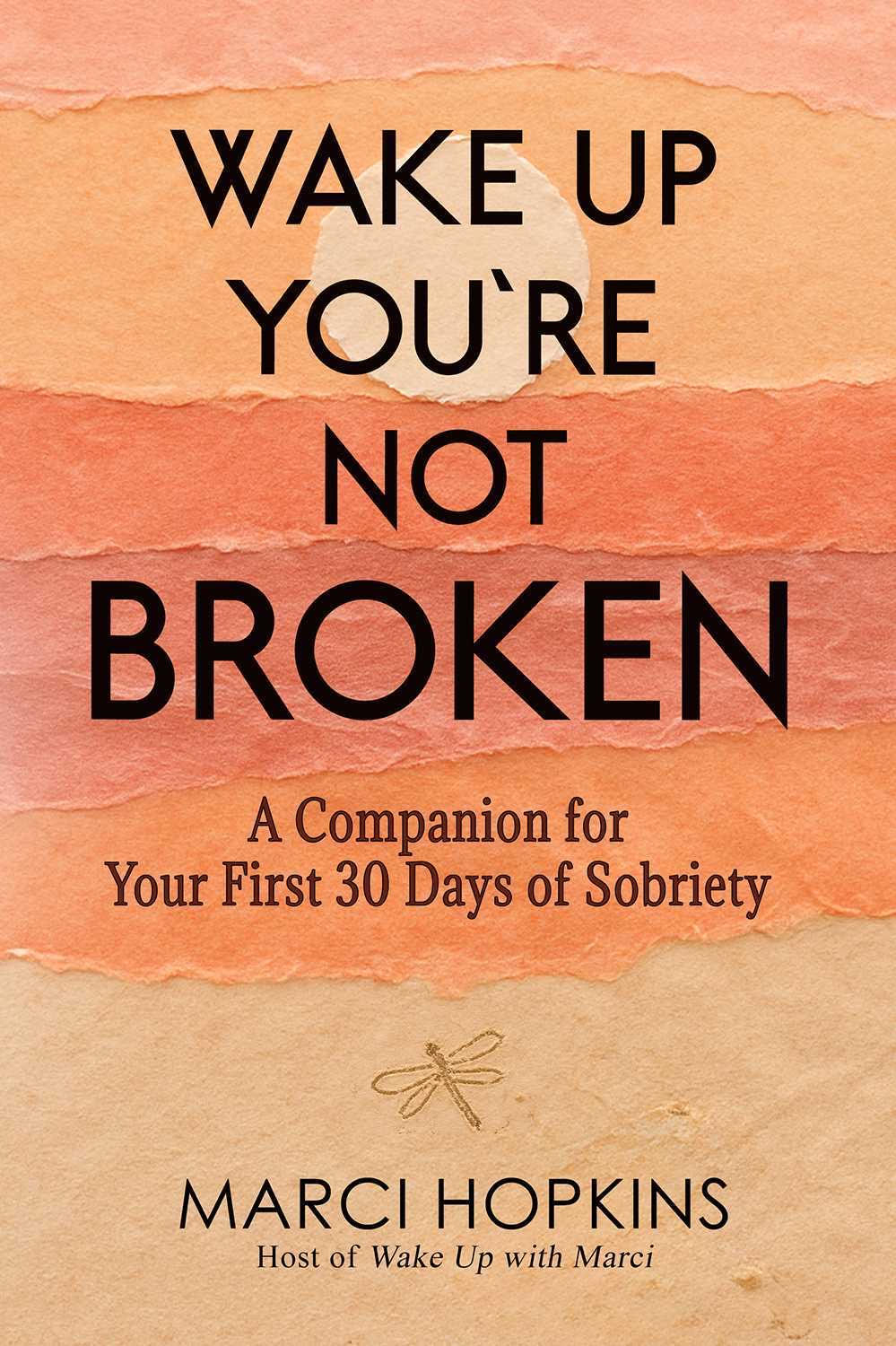
A daily, compassionate guide designed to help individuals through the physical, emotional, and spiritual challenges of early recovery.