-198Days
00Hours
-33Minutes
-6Seconds





For you. What types of support and help have you discovered for yourself or anyone out there with OCD that helps you when you are triggered that way? Fortunately, with OCD, you can’t really use coping mechanisms because those coping mechanisms might actually reinforce the OCD cycle. For us, a lot of our self soothing are actually compulsions, even mental self soothing. Would you say though that so many kids are being diagnosed with ADHD when they maybe necessarily don’t have it? Integrating the neurodeiversity alongside the exposures because exposure therapy is like it’s a pretty tough type of therapy. They’re basically forcing people and even small children to face their fears and be uncomfortable and not do their self-s serving behavior. This is Natalyia Isa. She’s a licensed professional counselor, anxiety and OCD specialist, and the founder of Kyros Wellness Collective in Boulder, Colorado. She’s also the voice behind let’s talk. On Instagram, Natalyia lives with OCD and ADHD herself. She holds a master’s in counseling from Palo Alto University and a bachelor’s degree from Harvard. Like my son, he used to be very disorganized. He couldn’t do more than one or two tasks at a time. He wouldn’t remember. You can perceive things that no one else can perceive in your child. I like to tell parents like you are the only person that is seeing the full spectrum of behavior. And a lot of times the key moment to understanding your child’s mental health is that hour before bedtime. What works for you, what you expect for yourself does not mean it’s going to work for your child, your partner, anyone. Everyone, and welcome back to Wake Up with Marcy, where we have real conversations, support radical healing, and help you to wake up to your worth. I’m Marcy Hopkins, and I’m so grateful you are here today. Today’s guest brings both clinical expertise and deep personal truth to the conversation around mental health, motherhood, OCD, and neurodeiversity. Natalyia Aisa is a licensed professional counselor, founder of Kyroids Wellness Collective in Boulder, Colorado, and the voice behind Let’s Talk OCD on Instagram, where she’s raising awareness about OCD and anxiety de disorders in a way that is both informed and deeply human. With degrees from Harvard University and Paulo Alto University, Natalya’s insights are shaped not just by her education, but by her lived experience. As someone who has navigated OCD, ADHD, and motherhood to four neurodeiverse children, her upcoming book, Self-guided Exposure and Response Prevention Therapy for OCD, offers powerful tools for people who are ready to take healing into their own hands. Natalyia, welcome to Wake Up with Marcy. I’m really grateful that you’re here today. Thank you so much for having me, Marcy.
So, like I was sharing, I mean, you have your own story. You’ve been really open about how returning to work after years as a stay-at-home mom sparked your own self-discovery journey. So, can you share with us that that transition and what that revealed for you and what did you discover that you needed to change? Yeah. So, I needed to change the fact that I was experiencing tremendous amounts of guilt for transitioning from being a stay-at-home mom, constantly being able to attend to my children’s needs and wants, and needed to be able to say no to some of their requests without triggering my OCD. So, my OCD was telling me every day on my commute to work, you’re a bad mom. You shouldn’t be doing this. You should be home. You’re choosing yourself. And I had to learn to not actually engage with those intrusive thoughts because they weren’t aligned with my values. My values at that point were to develop my career. I felt ready. I truly did not want to be a stay-at-home mom any longer. Not that I didn’t love it, but my OCD really activated around the idea that I was being a bad person and that I was being selfish. So, how old were your children when you decided to to start back to work? My youngest was five. Okay. And you had support? Oh, yeah. Yeah. Their dad at that point became a stay-at-home dad. It was like the perfect situation, right? There was no there was no realistic or logical reason for my level of guilt. But sometimes when you have OCD, guilt doesn’t doesn’t actually give you a good moral compass because so many different things give you that sensation of guilt. And our job as experiencers of OCD is to not, you know, get hooked by every feeling and every thought that comes into our minds. Yeah. And listen, I mean, women already struggle with that. We we are not taught to care for ourselves. We have children. You should be at home prior, you know, prioritizing them at all times. and and you’re all you also have OCD. So now it’s just another layer and you’ve learned obviously uh what what to do when these thoughts enter your mind. So for you, what types of support and help have you discovered for yourself or anyone out there with OCD that helps you when you are triggered that way? So unfortunately with OCD, you can’t really use coping mechanisms because those coping mechanisms might actually reinforce the OCD cycle. For us, a lot of our self soothing are actually compulsions. even mental self soothing like uh moments of meditation, mantras, prayers, all of those actions, mental or physical, can actually reinforce our original fear. So with OCD, the coping is the feeling. The coping is just being uncomfortable and not actually stopping that discomfort, but actually writing it out. So, how are your children responding at this time? My children are doing really well. Like I feel I feel great about the decision. My OCD will still will still activate around, well, I should do more for them or I should be with them. That hasn’t really gone away. I’ll still have intrusive thoughts about it. However, the emotionality behind that is gone because I didn’t actually respond to it. So, if you imagine me driving to work on one of those first days when I’m back in the workforce, I’m thinking about my kids. If I had called home and done a check, if I had called home and been like, you know, to to their dad saying like, “Are they okay? Do they miss me?” If I had gone in and cycled there, I probably would have reinforced long term. I would have reinforced that fear. However, I knew that I had to simply be in my feelings, be with my thoughts, and not actually act on them. And because I didn’t do that, with time, those feelings and thoughts dissipated.
So tell me as someone who does not have OCD, I had those thoughts too. So when I went back and I went after this lifelong dream of getting back in front of the camera, my kids were home. I experienced so much stress around that and I had a lot of issues from my childhood, the abandonment. So I didn’t want my children to feel like that and so I brought that into my parenting and then going off to do what I was doing. I had a lot of guilt around that. But what happens when you have OCD? Does it the experience is it more magnified? Mhm. Sometimes. Yeah. So, so what OCD does is it takes kind of a a typical experience and it amplifies it. It takes a typical experience and it creates these repetitive cycles around it. So, if I didn’t have OCD, I’m pretty sure I would have the same, you know, worries or like bad feelings in the beginning because transitions are hard. Like every change like that is difficult. But what happens with OCD is you end up having the same thought over and over and over. It’s like having having like a fly trapped in your brain of just you’re bad, you’re bad, you’re bad, you’re bad. And it’s this incessant like sound almost. And sometimes we can literally hear our intrusive thoughts. Sometimes we get flashes of images of, you know, terrible things like our child falling down the stairs cuz we weren’t there or um we we get these urges like the urge to check on our child that is so much beyond, you know, the the healthy maternal urge to check on your child. It’s like I’m having a conversation with you and suddenly my brain goes somewhere else and says you have to check something bad might have happened. Okay. And so it’s it’s much more invasive when you have OCD is my point. It it’s a lot more insidious. Yeah.
Let’s shift a little bit and now also talk about ADHD. When did you discover that you had ADHD and start taking medication? So, if I’m being honest with myself, I always knew I was neurodeiverse. Like, I remember as a child looking over at other people’s notebooks and mine are like chicken scratchy and disorganized and the paper is stained and it’s ripped and I’m looking over at the other little girls with their perfect handwriting and everything is symmetrical. The OCD part of me longed to have that and the ADHD part of me was completely incapable of like having those types of executive function skills and and being a student in the way that others seem to more easily be students. So I I always knew on some level, but I I was I was in denial for sure until I tried to start my own company. And then I realized that these like very simple tasks and I use that, you know, very very generously. But something as small as like hooking up Wi-Fi felt like such an unmanageable task to me. And I knew I was smart, but then I would see that I wasn’t capable of doing these very basic tasks. So at that point, I believe I was 37, that’s when I first took ADHD medication. And it was honestly one of one of the best decisions of my life. I am um actually so grateful to myself for taking that leap. It felt like a clearing like I was in a forest and suddenly I came to this open space and could see I could see all of the tasks that I had to do and I could execute on them. It felt so relieving that something as simple as a medication could open that up for me.
We just discovered that my son has ADHD when he went to college. He also has something called twice exceptional where very intelligent and uh which was new to me and a lot of people haven’t seem to have heard of it and his processing is very low. He really struggled and went into deep depression over the ability you know he felt stupid. He felt stupid. He felt like he couldn’t connect to people. So really something to to look at and and it has been through that executive functioning. there’s people out there that help with it and then the medication he’s really come so far. You said you you yourself each one of them are struggling in some capacity. How has that been for you? I mean, I think it’s as a parent, it’s really it’s really eye opening because our children sort of enact so many features that that we have and perhaps were in denial of perhaps we are we aren’t actually admitting that we struggle with. I mean, I’ll be honest, like when I was your son’s age in college, even though, you know, I had got into Harvard and I was there, I still had intrusive thoughts. I am stupid. I am incompetent. And that was like almost my entire life until I was on medication and really like owning my ADHD that it’s not incompetence, it’s not stupidity. In fact, many of us have um some, you know, really really amazing strengths and that gets unlocked when we’re actually able to own those strengths and not focus on the the deficits, the ways in which we we can’t actually um you know rise to certain types of um tasks. So, watching my own children, I mean, the oldest has autism and the youngest three have various forms of ADHD, and honestly, I’ve I wouldn’t even say that I don’t even think they would say it’s a struggle, and I wouldn’t say it’s a struggle at this point. I think one of the great things about, you know, modern society and being a neurodeiverse parent is I was really able to like quickly identify, oh, yeah. Exactly. Yeah. And they’ve gotten they’ve gotten accommodations, you know, for the entire time they’ve been in school and they really haven’t had that sort of pretending to be neurotypical experience that I had in school. And so I’m grateful for that. I’m grateful that they, you know, they sort of take neurodeiversity for granted. They are surrounded on all sides. They’re flanked with neurospicy mentors and models and and they don’t actually think of, you know, neurotypical as like the the guidepost as, you know, the way that I used to when I was younger. Of course. Yeah. Yeah. Would you say though that so many kids are being diagnosed with ADHD when they maybe necessarily don’t have it? Yeah, that’s that’s a tough question. I I don’t know like that’s a really like in terms of what I have seen in the area where I work in Boulder I don’t think that neurode diagnostics is overdiagnosing there might be other communities where for example a pediatrician might diagnose without doing the connors or without doing a more extensive screener I really doubt that but I’m also open to being wrong and open to not really understanding it on like a global level. And I mean, who can really answer that? I just feel that so many maybe it’s just an understanding now. There’s probably those that are diagnosed that don’t have it or maybe we are helping our children in a in a way we just never knew how to do before. Yeah. So, yeah. I mean, I I know that’s kind of a loaded question, but I think a topic of conversation that with a lot of moms, are we just giving our kids labels and giving them something to to fall back on, right? And not really understanding that it could be something else that’s going on. So, you know, I guess really just advocate, right? Just keep keep pushing it if you’re not comfortable necessarily maybe with the answer that you got.
So tell us about Chyros. So Chyros is an OCD center. I began my career doing neurodeiversity really focusing on ADHD and autism. And for whatever reason, the scientists will let us know at some point soon. There is an incredible genetic link between those neurodeiversity and OCD. we we have a much higher rate of OCD. And so I was sending the kiddos, these neurodeiverse kiddos out to see the like local OCD, pediatric OCD specialists. And in my opinion, they weren’t integrating the neurodeiversity alongside the exposures because exposure therapy is like it’s a pretty it’s a pretty tough type of therapy. You’re basically forcing people and even small children to face their fears and be uncomfortable and not do their self soothing behavior. So you can imagine with neurodeiverse kids like doing that in a way that is really you know really compassionate is important. So, I started by learning ERP myself and practicing it with the kids at my practice. And and eventually I I realized that there really wasn’t anybody in in my entire town, which is, you know, a pretty large place with like so many therapists. No one actually knew how to do OCD work. And so when my daughter had a really really big uptick in OCD symptoms because she has both OCD and ADHD like I do, I didn’t have a therapist that I could send her to that that could navigate both. So that’s how I started Kyros. I really wanted to expand the competency of local therapists in being able to treat OCD. Amazing.
So, what would you say to a woman out there that maybe is struggling in some capacity and they they don’t really understands what what is happening for themselves? Like you discovered at a later time in life that you had ADHD. Maybe someone is struggling with OCD. Like what can they look for in how could they potentially get help to see if that is happening for them? Yeah. I mean, I think that it really depends on what what you’re noticing. I would say um even though I am a therapist, I unfortunately feel like most sort of run-of-the-mill talk therapists don’t don’t probe deeper on either ADHD or OCD, which is very unfortunate. I think that my suggestion would be to look at the assessments that are public domain. So, there are ADHD self-report tools online. There’s the Ybox, which is the Yale Brown obsessivecompulsive screener that’s also available for free online. Take a look at some of those assessments. I feel like modern therapists have lost the art of of like, you know, doing this type of like more rigorous paperwork rather than just talking about whatever it is that is activated for you today. So, I really strongly suggest that you look for someone that supports you, that is evidence-based, that is willing to do assessments, that’s willing to dig deeper, or do it yourself. Um, I think that there are so many resources out there. My book, um, self-led ERP is really for those people that don’t have access to an OCD therapist, which is honestly most people because so few of us are trained in that modality. So, I, you know, obviously want to plug the the world of self-help books because, you know, I believe in them. Otherwise, I wouldn’t write them. And as much as I love being a therapist, I also really want to recognize that most of us don’t have access to great mental health care and and that’s just sort of a reality in our world right now. And hopefully that’s changing.
Can you share with us what is ERP for those that don’t know? Exposure response prevention. So ERP basically means that you you face that like discomfort and you don’t do your response which is your compulsion. So let’s say I have an intrusive thought, you know, God is mad at me. The thing to do with that intrusive thought is to just keep going with my day because it’s not a message from God. It’s my inner psyche giving me that self-doubt. The OCD response um that some of us have is to pray or to do something that is in direct response to that intrusive thought, which again is part of our our disorder and not actually part of our faith. So there’s many different ways that we sort of learn to expose ourselves to what we fear and not do our compulsions. But most of all, the key is to learn to be uncomfortable, to learn to be in that feeling of ick and not try to like escape it with one of our techniques. Yeah. Yeah. I talk about that because my work is a lot around getting sober and recovery. Yeah. And you know it’s like the in the beginning that’s when you’re like facing those feelings for the first time and having to sit with them face them like you know so yeah it’s crazy but wow it’s life-changing.
So what are some of the biggest misconceptions around OCD and how can we better support someone that we love with OCD? So, I mean there’s so many misconceptions I can’t even I can’t even begin to list them. I’m so frustrated. Three, um, one, that it has to be physical. No, a lot of people have mental compulsions, which I’ve spoken about today. Um, two, that it’s like a whatever thing that happens. Like, I’m so OCD, it’s not a big deal. No, OCD can actually become like a top tier really debilitating mental health disorder. It doesn’t have to be, but it it is in that realm and it needs to be taken seriously. And I would say three is that it’s not about or just ordering and arranging and you know visual perfection the thing that we think it is. Like obviously me with my like ADHD like you’re never going to look at my workspace or my notes and say, “Oh, well that’s a OCD person.” But that’s because that’s only one potential theme of OCD. How to help your loved one. That is also a really complex question because unfortunately when we are trying to support someone with OCD, we might actually end up accommodating and enabling them. So, I love that you brought up the world of sobriety and support with substance abuse because there are so many parallels. And actually, a lot of the work that I do, I have studied substance abuse recovery measures and family system support and substance abuse because it translates so so well to the OCD world as well. Uh so loved ones when a family member has OCD, they want to help but by helping they’re actually fueling the OCD cycle. So it’s it really it really does um map out quite uh quite closely to that model. So sometimes the kind thing is not the nice thing. And then for yourselves, like there is unfortunately with OCD sometimes like a a need to have an awakening, like a proverbial rock bottom experience, something that’s really forcing you to confront what it is that you are really missing out on or the damage you’re creating um the effect that it’s having on your life and the life of others. So, we also really do need to have kind of like that reckoning um sometimes in order to really seek treatment because we like it. We like our compulsions. We’re protective of our compulsions. Um we’re secretive about our compulsions because we don’t we don’t want to lose them. They’re a safety blanket for us and it feels inconceivable to go through life without these behaviors. How about that? And I do see like kind of the parallel even there. There’s the enabling, not wanting to give up what you’re using to cope. You’re you’re hiding it. You can’t imagine life without it. Yeah. There’s there’s a lot of that and and and then having to literally reprogram your brain. I mean, that’s what I’ve had to do and and talk about.
So, we’re going to take just a little pause and we’ll be right back in just a minute. Are you in the first 30 days of sobriety or wondering if now is your time to start? Hi, I’m Marcy Hopkins and I wrote Wake Up You’re Not Broken just for You. It’s a real raw guide to those first 30 days. What no one tells you, what you will feel, and how to keep going. This isn’t about perfection. It’s about progress. Order your copy now on Amazon. Remember, you’re not alone. You’re not broken. You’re waking up.
All right, guys. Welcome back to Wake Up with Marcy. I’m so excited you’re here. And now, I’m excited. We’re gonna talk about your new book, uh, Self-guided Exposure and Response Prevention Therapy for OCD. So, can you share with us more about your new book and when it’s coming out? So, it’s got coming to press, I think, next month. Um, I’m so excited through Zeitgeist, um, a division of Penguin. Basically, what it is is it’s a workbook for doing exposure response prevention, which is the gold standard treatment for OCD on your own. Um, part of the inspiration for writing this book is frankly is my IG community. I just am so heartbroken how many people don’t have OCD support. And as a therapist in the state of Colorado, I can’t do therapy for people in other parts of the country. I can’t do therapy for my many subscribers in India, in Europe. And what I really want is to offer the the paradigm of what I do in a therapy room, which is so much more like coaching than it is like therapy, and offer a way to guide people through doing that on their own because I do believe that it is possible. I love that. I love that you’re putting that out there. And like you said, it’s like I I had a doctor on just last week and she was talking about with her book, she’s able to connect with people and help people outside of her office, right? So, it’s just a way to expand the way she’s helping the world. So, that’s exactly what you are doing. And you know what? What a great great way to help others.
Now, if you are a parent, what are maybe some things for for you to look out with your children? I hate to use the word normal, like what are some behaviors that maybe you could start looking for if there is maybe ADHD that’s happening or OCD like for me and maybe you know I’m I’m sharing this people out there like my son, he used to be very disorganized. He couldn’t do more than one or two tasks at a time. He wouldn’t remember. And you know, it was a struggle for him just to do the things that he needed to do. And I would express these things to the teachers. You know how they say, “What should we look out for with your kids?” And I would share that and oh that’s just a boy that he’ll grow out of that. And one of the biggest things that has stayed with my son and it has it still upsets him. I mean, is he had a teacher that made fun of him of how disorganized his backpack was, right? And it was and it was, but those were literally signs that he was struggling with his ADHD, but he was able to somehow navigate it because he was smart, I guess, or we just weren’t as adults able to really understand what we were witnessing. Yeah. Yeah. It’s I mean I think that it it’s interesting because for your son with the twice exceptionality or with someone like me that has OCD and ADHD were we’re we’re in this constant overcompensation cycle, right? And so your son was probably overcompensating for his executive function skills by, you know, utilizing his intelligence and and it does work. I mean, it got me it got me sort of where where I am today. Um, or where I was, let’s say, six or seven years ago before the ADHD medicine. But the way I’d like to describe that is maladaptive. So, there’s adaptive coping, which is, you know, healthy coping, and then maladaptive coping, which is unsustainable, which can cause depression, which can cause a sense of these really negative self-beliefs, I would say. So, and I’m so sorry that a teacher made fun of him. I would say honestly that is so much more common than we understand. People with ADHD, we get ridiculed constantly. I can’t think of a situation in my life until recently where I wasn’t always like it like the butt of jokes or the person that you know everyone had like a comment about like oh look at this like look at that bag or look at your car or like you know like seriously your shirt is inside out like things like that. feeling that you know constant criticism and not integrating it into your your paradigm for who you are is really difficult. It’s really difficult. Um to answer your question of like how parents should interact with it. I think with compassion considering that the whole world is like in this very judgmental uh space. I think the parents being compassionate without enabling. So if you’re seeing some behavior that that feels maladaptive, I’ll use that word again that feels unsustainable with OCD. If you’re noticing something intense and repetitive, if you’re noticing that your child isn’t very flexible and they used to be able to handle such certain situations and then they can’t anymore, that’s a sign. I think I mean in general, I would urge parents to trust their intuition. I think that a lot of parenting guidance unfortunately this these days makes it seem like there’s some right way to parent, which I I really disagree with. I just don’t think I think that all of us come programmed with our own parental intuition. We have not just generational trauma but also generational wisdom. My dad is autistic and ADHD. My grandfal wisdom to see what is going on with my kids because I I I know how people in my family function in the world, right? So I think that you know trusting your own wisdom and trusting the fact that like you can see things you can perceive things that no one else can perceive in your child. I like to tell parents like you are the only you know person that is seeing the full spectrum of behavior. And a lot of times the the the key moment understanding your child’s mental health is that hour before bedtime. That’s the hour when a lot of the dysregulation, a lot of the difficulty, a lot of the maladaptive behavior comes out. Pay attention to that hour. Nobody else sees it. Nobody else knows how hard that is for your child. Right. Right. Wow. And you brought something up at just recently for me about how you keep your car because my son like you can barely get in his car. And then and it’s true like you know dad got in his car the other day and it’s like hey what is happening here? Like you need to go get your car clean. You need to clean these things out. He’s got a smell in there. I don’t know how he’s been driving his car with that. like I think he left food in there and then you know now there’s this lingering smell. So, you know, thank you for naming that for me because because I mean I’m learning as much as I can so I can help my son and be understanding and also help my husband to not be reactive to it because right as the father figure you are trying to mold your son in a certain way and if you haven’t had any mental health struggles on your own or understanding it, you’re like, “Why haven’t you gotten me that email? Why haven’t you answered your text? Why haven’t you gotten me x, y, and z?” Right? And like you said, the brain works in such a different way. And one task that may seem so simple to you is so magnified to someone with ADHD, right? And also, if you’re interested in something, you’re all in, right? like he can’t even like step away from it if you know if he’s in the middle of something. Yeah. So I I thank you for bringing light to those things and I think as parents we can really be hard on our children not understanding what is really happening and understanding that our brains work differently. Every single one of us. Yes. Every single one of us. So what works for you, what you expect for yourself does not mean it’s going to work for your child, your partner, anyone, right? Yes. Absolutely. And with the car issue, I’m going to be so honest with you. I have just let that one go. I I am just you know my car is my car over whatever you want because I I will try I will go get it detailed. I will do the whole nine yards and I’ll be like now I’m going to be a person that has a car that is clean and that lasts like literally 24 hours. So now I just I just allow it. I own it. I say you know what? this is an accommodation I’m making to myself and my loved ones, they sometimes will do little little bits of help for me. They’ll come in and they’ll take things out or they’ll clean it out and they know that that is that is like um a way of communicating that they support me without shaming me about it. So, you know, I see that as you know, in the world of ADHD, accommodations are a good thing. In the world of OCD, accommodations are a bad thing. And it’s like this very confusing terrain of like how to accommodate the neurodeiversity without, you know, inflaming an OCD cycle or an addictive cycle. So, you know, there again, it’s confusing and just just do your best.
So, for a parent out there, I mean, tell us three places that they could go to for information or like you said, you love self-help books and I know throw yours in there, but you know, if there’s that really help you. So, I love Attitude Additude magazine online. I think they’re excellent. the editor and chief, Carol Fleck, has collated an incredible assortment of ADHD perspectives, and that for me is like very much a like a guiding media publication on the subject of ADHD. And then in terms of OCD, we’re lucky enough to have the IOCDF, which is the International OCD Foundation. Uh it’s a nonforprofit globally. We have yearly conferences. There’s a great website. They have a directory of like trained OCD clinicians, not not clinicians that say they treat OCD among 15 other things, but people that are really specialized in it. Look into these free resources. And I I hate to amplify, you know, the voices that aren’t actually accurate on Tik Tok or on Instagram, but there are really there are a lot of really really good voices out there. And so I I do think that social media, like it or not, it is a way that we are as a society learning so much about mental health. And it’s such a great avenue for doing that type of psycho education that we we weren’t able to do in mass just a decade previously. Yeah. And yet the younger generation is looking Yeah. They get their news from TikTok, you know. So, and I mean there’s a huge sober community that’s out there influencing and helping to educate just as you’re talking about. So, I think it’s amazing what there is so much good that actually does come from these platforms also.
So, where can people find you Natalyia? So, on Instagram I’malk. If you happen to be in Colorado, it’s um chyroswwellnesscollective.com. If you would like to reach out to me personally, I actually have a compulsion that I’ve left, which is to answer emails from anyone that is seeking support. So, you can email me at nataliawwellnesscl.com. I will respond. I make it a priority that anybody that reaches out to me at least at this stage in my career like I will give you at least some modicum of support anything that I can or direct you to resources that are in your area. I want to make sure that you know anybody listening to this knows that there is help out there. It it there are so many people that for free even are wanting to support others that are having these mental health experiences and there is a robust community for OCD and for ADHD out there on Reddit, on Tik Tok, on Instagram, just really anywhere that you look, there’s now people sort of understanding and bonding and collecting around these mutual experiences and I personally find it to be something pretty magical. Yeah, 100% I agree and uh I myself even get help within the same communities which I’m in. So, Natalya, thank you so much for joining me today and sharing your story and your expertise and for all those listening that that need support. And please, everyone out there, check out Natalya’s books and all the the information that she’s providing. I will provide everything in the show notes. And to anyone listening who is in your first days of recovery or self-discovery, I invite you to check out my new book, Wake Up You’re Not Broken: What to Expect in the First 30 Days of Sobriety, which is now available for pre-sale on Amazon and uh comes out January 5th. And this is your daily companion as you begin your journey back to yourself. And please don’t forget to follow me, share this with somebody that needs to hear it, subscribe to the podcast, and join us weekly for real stories, radical healing, and a reminder that you’re not broken, you are becoming. So, thank you again, Natalya. See you soon, and I’ll see you all next week on Wake Up with Marcy.

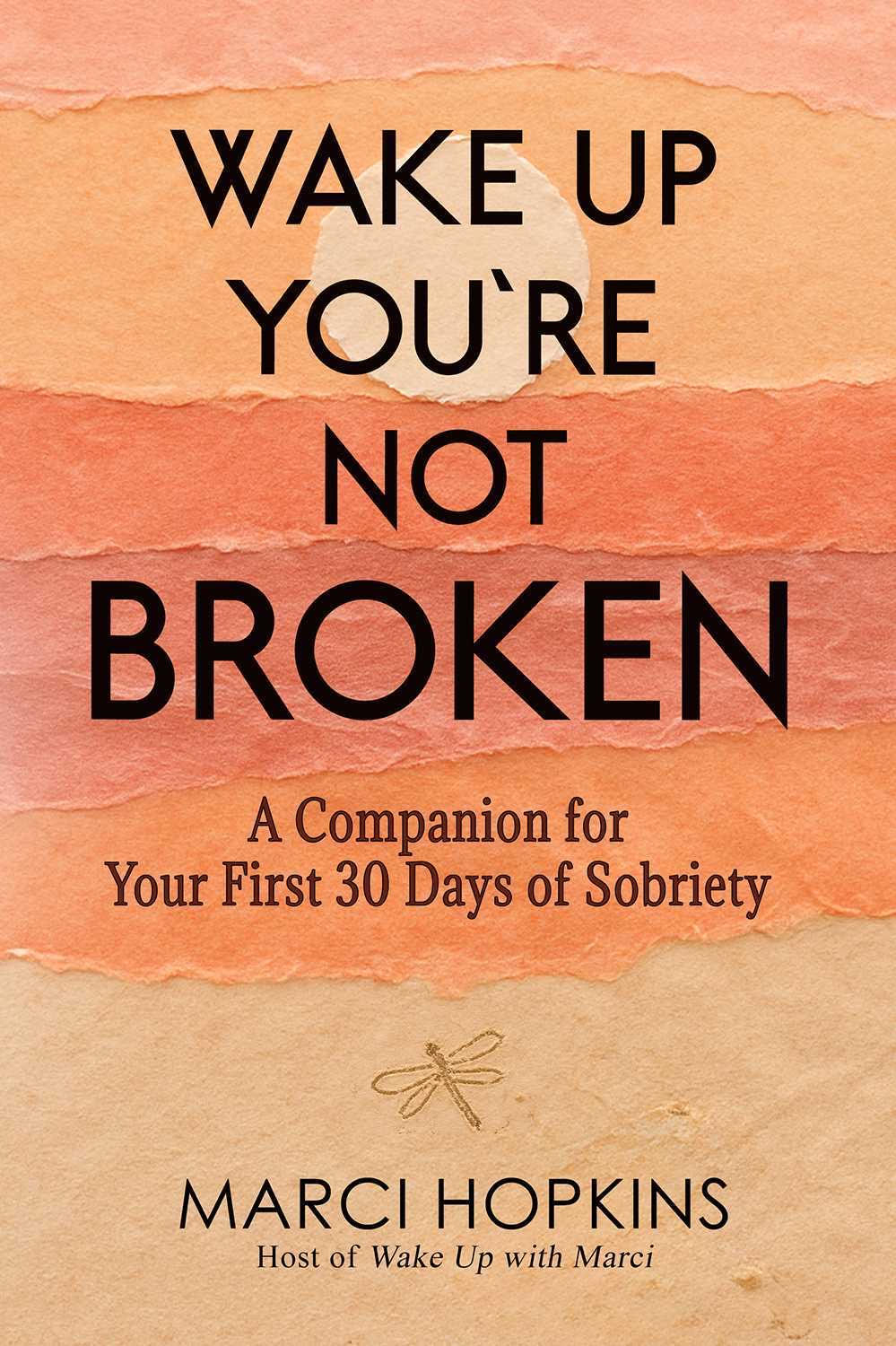
A daily, compassionate guide designed to help individuals through the physical, emotional, and spiritual challenges of early recovery.