-198Days
-19Hours
-43Minutes
-25Seconds





Walking on eggshells and and not knowing how to act around their kids because they’re going to explode. And here’s what I tell parents. Crush those eggshells. They’re going to get upset. Yeah, your kids are emotional. They’re going to react and respond. They have a story. They are going to get emotional. Our job is not to prevent them from ever feeling bad or getting emotional. It’s not our job. Our job is to help them understand that they will and they can get through it. This is Wake Up with Marcy, a space for honest conversations about healing, recovery, and women’s wellness. I’m Marcy Hopkins. Take a breath. You’re safe here. Let’s begin.
Hello all and welcome back to Wake Up with Marcy, where real conversations lead to radical healing and waking up to our worth. I’m your host, Marcy Hopkins, and I am so grateful you are here today, whether you’re watching or listening. It’s so important to me that you are here. And today is going to be an amazing episode because this is something that a lot of us can relate to and that’s the relationship that we have to navigate between parents and a teen. And my guest is Dr. Dr. Cam Caswell, a nationally recognized adolescent psychologist, TEDex speaker, and the founder of the Parenting Teens Academy. She’s affectionately known as the teen translator, and for good reason. We’re going to find that out. She’s also the host of the popular podcast, Parenting Teens with Dr. Cam, where she offers sciencebacked strategies, real talk, and hope for parents who want less conflict and more connection. And I think a lot of us can say we want that. Yes. So, welcome to the show, Dr. Cam. Thank you. It’s great to be here.
So, let’s talk about you a little bit. And I mean, you’ve taken some big leaps in your life and your career. What really sparked your path of self-discovery and led to your work with teens and parents? Yeah, I love that question and it is such a circle. Um, and I think that is true for everyone, right? There’s no direct pathway, but it’s something where I was interested in psychology back when I was in undergrad and everyone said, “No, you can’t do anything with that.” So, I went into communications, did all that. And fast forward to my 30s and I still love psychology. So, I end up in my 30s going back and getting my PhD. And I had basically psych 101 that I had taken many years ago and that was it. I’m like, “Hey, I’m going to do and I did. I I stuck it out and I loved it.” And my favorite class to teach was adolescent psychology and I had parents in the class and because it was an evening class and they kept coming up to me going, “Oh my gosh, what we’re learning in this class is completely changing our relationship with our teens. We we had no idea. Why doesn’t anybody teach us this?” And I’m like, why don’t they? Yeah. And I just became really obsessed with it, sharing what I knew with my friends. And it just became my thing. And I took another big leap later where I said, I’m a single mom. And I was like, I’m going to go out on my own and create my own career doing this gulp. And I did because it just it wouldn’t leave my head. It was something I just kept getting called to and I saw so much need for it. Um, and I’m like, I can fill that need.
Oh, there is so much need, too. We all struggle. And it’s hard. It is hard. And, you know, there’s so much going on on both sides. For the mom, it’s perry menopause. And for the kids, their hormones. I know. It’s like, let’s have a hormone fest all at once. Like, this is a mess. I went I mean, I went through the same thing. I’m like, this is not pretty. Exact. So, I mean, there’s a lot of pressures on both sides, right? And you can experience this self-doubt about how you’re showing up and how you’re parenting. Yeah. What have you learned as as far as managing that for yourself as a single mom? It is a lot about education. And obviously, I I love education, but it’s not, you know, everyone doesn’t have to go get a PhD. It’s just understanding what’s going on with our teen. We’ve kind of been led astray, unfortunately, because there’s a lot of stereotypes about teenagers. You know, they’re rebellious. They’re entitled. They’re all these big things. And even when we’ve got a little kid, we start going, “Oh my god, I’m going to I’m I’m bracing for the teen years when they’re going to hate me and all this terrible stuff’s going to happen.” And here’s what I keep finding. It becomes a self-fulfilling prophecy. Not because it is a shed thing, but because we start looking at our teens through that lens, we start translating their behavior through that lens. And we’re braced for the negative and it happens. Yes. And when you step back and go, okay, it is going to get messy. Yeah, guaranteed. Life is messy. Humans are messy. But that does not mean it has to be bad. It doesn’t mean it has to be conflict. And when we step back and go, this is what my teen is going through. This is why they’re going through. It’s not personal, right? It is developmental. And here’s I’m going to step back and say, what do they need? The other thing we need to do as parents, and it’s so hard, especially I I always say social media impacts parents more than it impacts teens. And I I will go to my grave saying that because I see it over and over again. We have this pressure as parents that we have to perform a certain way. and our teens have to perform a certain way and it’s our responsibility to get our teens behave a certain way. It’s not. So when we let go and go, you know what, our job is to support our teens. Our worth is not defined by our teens behavior. It’s defined by how we’re showing up for them. Yeah. That changes everything.
So when you say that, does that kind of mean like living vicariously through them or or their accolades or the school they go to? Like is that what you mean? Like sometimes we live through that, right? Like we’re we h we’re either proud or we’re not or if they do well that identifies us. If they’re not doing well then that identifies us and we’re either good or bad because of that. That’s a huge one and I I think that pushes a lot of us. But even more so, we judge ourselves on is my teen always happy? Are they mad at me? Do they have emotional outbursts? Do they say something that embarrasses me? Are they do they have friends? Are they social? Do they like we look at and we pick all these tiny little things and we have this huge checklist that we’re not aware of and we just check check check. And if they’re missing anything, we are like, “What did we do wrong? We got to fix it.” And so we look at our kids as something that we need to fix in our project, not a human being developing their own personality with their own traits and going, “How do I help my child be the best version of them? Not how do I mold my child to be the best version I want?” Now, that happens very often. I actually was just having a bit of a debate with a man about that. How can we change that? Well, it’s first acknowledging that we’re doing it and that’s extraordinarily hard to do. And this is this is how our brain works. So, I want to and I talk a lot about the teen brain and how it works. But we also need to address the fact that we’re also human and our brain works a similar way. And the brain is always looking for danger. That’s survival. Well, as a parent, what’s dangerous? Well, our teen getting into trouble, getting some saying something, embarrassing us, any of that is danger. So, we’re constantly looking and trying to prevent that. And what we do is we miss all the amazing things our kids are doing. They’re doing way more amazing than bad. But we drill down on the bad and we’re constantly correcting, constantly fixing. And our teens don’t feel good. They don’t like being around us. Who would? I know. Would you be around someone that’s constantly critiquing everything you do and coming and you’re coming up short? I know. No, I get that, right? I can even relate to that. Yeah. Myself, like I’m just going to say one thing really quick. Like my daughter’s like, I don’t even want you coming in my room anymore, mom, because every time you come in my room, you’re critiquing what it looks like. You’re getting on to me about what my room looks like. And then I’m like, “Well, why don’t you just clean it then?” So, I did stop getting on her, but I know that’s that’s a big one. It is. But what the message we’re giving our kids, and this is a hard one to accept, is your job is to make me comfortable. Your job is to make your space comfortable for me. Love that. Your job is to act and behave in a way that makes me feel good. And then and again, I’m not saying we’re bad people. We’re human beings. Yeah. But we have to realize we’re doing this and it’s not our job, our team’s responsibility to take care of us. That’s a good way to look at it. I get that. Yeah. I picked up that fight because I was like, you know what? It’s her room. What am I gonna do? And I didn’t clean up my room when I was young, but I do now. You know, I know because it matters to us now because it’s our home and that that we eval it’s an adult need, not a kid need. And I think we do this with chores, too. We’re like, “Oh my god, they never do their no teens chores whether the trash is taken out is not a teen concern, right? It is an adult concern. A teen concern is do people like me? How does my hair look? How am I where do I belong? Who am I? Am I falling behind in math class? Those are the things that it’s a lot to be concerned about. There’s so much. So, when they don’t think about chores and we get mad at them for that, it’s saying, “I’m getting mad at you for not prioritizing what matters to me over what matters to you.” Oo, let that hit home for a minute.
But what about the parents out there that are like, “Well, you’re living in my home. It will be the way I want it to be. Fair enough. And this is not and I think the misconception a lot comes from, oh then we just let them do whatever we want. No, we’re there to guide them. That’s our job. It’s not whether we do or don’t. It’s how we do it. And so when we step back and go, okay, yeah, we have shared space to make shared space feel pleasant. This is what I need. But I also realize that it’s not just my home. It is her home. Sure, I pay the bills because guess what? I’m the adult, right? But I have a child. It is my responsibility as an adult to give my child a home and feed my child and give her the comforts that makes this her home. If we treat this as my home, not her home, well, then why would she ever want to be here? She’s not She’s not even invited. Yeah. Right. We’re like, we’re not invited in my home because you’re That’s unfair. So, we’re all living in this space. We use our space differently. That kind of stinks sometimes. There’s definitely things that we need to say, “Hey, in order for us to move forward, we got to chip in. We all need to pull our weight.” But we need to make sure that our kids feel comfortable in their space, too. Which is why I shut the door to my teen’s room. That is the only space in the entire world that is hers. Yeah. We can’t function as a human being without our space. Yeah. We feel completely discombobulated and and offkilter if we don’t have our space. So I don’t go in there. Is it gross? Yeah. Is it up to my standards? No. Exactly. But it’s her space. So the thing is on the other side of it, my teen also is Well, I say teen now. just turned 20. But she helps with chores. Yes, she is extraordinarily respectful. She is very She thinks through her decisions and has critical thinking skills. She does all this stuff. Not because I stepped back and didn’t care, but because I guided, but let her take the lead in her life. I love that. My daughter just turned 20 and she just amazes me how she pitches in. And honestly, a lot of times I’m very surprised. I’m like, “Whoa, wait, what? What happened?” And it just like I don’t know, it fills me with such joy when she does. I’m like, “Oh, that she emptied the dishwasher and I didn’t have to ask.” Like that was so kind of her. And did you say that to her? Yeah, I did. That’s why so we help. The reason people do difficult things and help other people, we’re we’re not selfless beings. Humans in are not selfless beings. There’s always something we’re getting somewhere. And feeling good, being appreciated is huge. And when we just demand our kids do the chores, then we pick on how they do the chores, and then we’re nagging them about the chores. Why would they ever want to do a chore? They now they hate chores. Now they grow up hating chores. instead of going, “Yeah, oh my gosh, thank you. That helps so much.” And even with addition, I’ll be like, “Thank you for doing the first draft. You know me, I’m going to do another round. That’s okay. I appreciate you doing the first draft of them.” Right? It feels good for her to help. And I appreciate her. I say thank you and please a lot as a parent. And I never hear parents saying I rarely hear parents say thank you and please to their kids. Well, I say thank you and please a lot. So I I was raised to do that. So that stuck with me. But it also I want that. So I I know that I want to give that to my kids. Also, speaking of words, Yeah. one of the tools that you use and you teach is reframing should into could. Yes. So why is this so powerful? Should is and I remember because it’s sh is shame. Should is if you were a good person, you would be doing this. You are not doing this, so you’re not a good person. That’s what comes across as should. Like, you should know better. You should have done this. Well, now I just feel crappy, right? Thanks. Yeah. And shame does not make us want to change. Shame makes us want to shrink inward. Yes, it does. It’s a horrible feeling. It is. But when we change it to could, I think could is choice. could is change. You could do that or you you could have done that. Why did you make a different choice? So, I’m not shaming you for doing it. I’m just going there’s a reason why you didn’t. What is that reason? There’s no shame in that. There’s no judgment. Or you could do that moving forward. What would get in your way if you wanted to? What would make it difficult or what would be the reason you would? So, could is suddenly going and I do this for parents too. us. We on ourselves a lot. Always always, right? We’re constantly. So when we do that, it doesn’t make us feel good. It it’s but we go, I I could have done that. Why didn’t I? I was overwhelmed at the moment or I felt at the moment I was afraid that this might happen. So I’m going to go look at now I can be reflective. I could have done that. Why didn’t I do that? Or I could do this moving forward. What would prevent me? And now I can be I can think ahead and prepare that this might get in my way. Yeah. Should is just character. You have a character flaw. Could is you have a choice. I like that. I like that a lot.
So how do we parent without screaming, without reacting? You have to make an intent a decision not to. It’s all we can do. Honestly, I want to be very clear on why reactive parenting is making your life harder. If you are in a reactive parent, finding yourself yelling a lot and throwing threats and doing all this, you’re not only making your teen’s life harder, you’re making your life harder because a teen brain is developing. They don’t have emotional regulation skills down, but they have a lot of big emotions right now. Yeah. Right. They’re learning the skill. we as parents have developed that skill at this point or we could have developed this skill by this we may not have. Um but if we say well my teen pushes my buttons and that’s what makes me react. Well that’s the same as your why your teen’s reacting because you’re pushing their buttons right the difference there isn’t that’s not about respect that’s regulation. We’re losing it. We’re modeling to them. Well, when you get really upset, the way you express it is by losing it. So, we can’t get mad at them if they’re doing what we’re doing, right? That’s the truth. Because we’re learn they’re learning from us. They are. But I want people to use that how hard it is because I’m not saying it’s easy. I want people to use how hard it is to empathize with their teenager. It is harder for them to do it than for us. We’ve had years to practice. They have not. Right. If we can’t do it, we need to empathize with how hard it is for them. Just telling them not to. Does that work for us? No. No. Telling me to calm down is not going to calm me down. No, it’s not going to make it worse. So, our kids are the same way. What calms us down? Feeling understood. Having somebody empathize with us in the moment and go, “Yeah, this is tough.” Yeah, that was tough. Thank you. So, what about what about if our kids are the ones that are just being reactive and we’re like we’re walking on eggshells? We’re we’re not sure how to connect with them and maybe we’re pushing them away and we just don’t know how to manage that behavior.
Well, you have just named the number one problem that every parent has, walking on eggshells and and not knowing how to act around their kids because they’re going to explode. And here’s what I tell parents. Crush those eggshells. They’re going to get upset. Yeah, your kids are emotional. They’re going to react and respond. They have a story. They are going to get emotional. Our job is not to prevent them from ever feeling bad or getting emotional. It’s not our job. Our job is to help them understand that they will and they can get through it. Yeah. Resilience isn’t always being happy. Resilience is knowing when I’m not happy, I will get through it. I will ride this big emotion out. So, we don’t we don’t want to instigate. There’s a difference between walking on eggshells and instigating. Instigating. And I talked to a mom the other day. She’s like, “Everything blows up.” And she tells me, I’m like, “Well, every time you make a snide remark,” which is what she was doing, your team blows up. So, you can choose to make a snide report remark and know it’s going to end up in a blowup or not make the snide remark. That’s your choice. But walking on eggshells means I just said something innocently like I meant I had good intentions and my teen lost it. That’s okay. You didn’t do anything wrong. Either did your teen. Something sparked in your teen. It set it off. And you can just step back and go, “This clearly matters to you.” Or something I said something that upset you. That’s not my intent. I’ll give you time and we can talk about it later. Yeah. Yeah. I love that.
What about parents that are exhausted and they feel like they have tried everything? Yeah. What’s a a small step that they could take towards reconnecting with their teen? The biggest thing is and why parents are so exhausted is because we are trying to control things that are not ours to control. We’re exhausted because we’re constantly on our kids to get them to do what we need them to do when we want them to do it, how we want them to do it. And that is exhausting. Again, I am not saying we don’t get them to do everything, but there’s a lot that we need to step back, provide the guidance, and trust the process. And we focus on controlling how we’re showing up. We focus on how what the words we use. We focus on what is it that I want to model for my teen or what is the one thing right now I want to teach my teen in this moment that I’m going to focus on. I’m not gonna fix everything, but right now I really want my teen to focus on perspective because they feel entitled to me. Entitlement requires, you know, entitlement is a lack of perspective. That’s not their fault that they don’t have that. Yeah. How do I start building that? Not by telling them they should have it. So, we step back and go, what is it that I have control over? It’s far less exhausting. And teens are pushing back because their number one job right now is to develop autonomy. They want free will. Yeah. Because they are human beings. Yeah. And we fight against that constantly. We are constantly trying to take away their autonomy and free will. Yes. Let them have it. Yes. Focus.
I I just have to say, Dr. Cam, something just came to me like blaringly. It’s like we want to control everything, keep them in the house, make them do everything we want them to do, and then them and then we go, “Oh, okay. At 18, now you go out and you you go figure it out.” Like they have no idea. This is why they’re going into the job market and they’re afraid to make a decision on their own because they never have. Exactly. Yes. It’s hard. So the what we’re going to trust is we’re not going to trust that our team is just we’re going to let our team go and now they’re going to do everything we expect them to do perfectly. Right. That will not happen. I can guarantee it. Yeah. What we are going to do is they’re going to make the best choices they can in the moment. And a lot of those choices are not going to be ones we like. But what we can do and what connection is because we we sacrifice connection and influence for control. And that’s because we’re afraid. Mhm. Very afraid. It’s it’s fine. I get it. Yeah. But when we do that, we actually sacrifice the very things that we can that we have to keep our kids safe and teach them. When we step back and we build and focus on our relationship with them, this is not permissive parenting. I want to be clear on this. This is being very selective in what’s important and approaching it in a way that is not judgmental and corrective, but more about, hey, I noticed this was difficult. What’s going on? We’re we’re we’re sparking or I have a thought about that. I’d love to share it with you or let’s figure this out together, right? What do you think would work here? Because we’re trying to chain train our teens brain to think for itself. And our teen brain will never build those connections, which is what it’s doing right now, if we’re constantly handwalking them there.
God, isn’t that the truth? Isn’t that the truth? Although I will say my husband sometimes will just say, “Go do it.” And I’m like, “Well, this is a teachable moment. We do we do need to guide them through it.” So, right. And and I think that what I love to do is I don’t give them the answer. I kind of the way I describe it is I’m going to give them one one dot and another dot and let them figure out how to connect it. That’s great. You teach them how to connect it. They don’t learn how to do that. And that’s the most important part of anything we’re teaching them is connecting the dots. You know, there’s three tasks that need to be done. We need to get the garbage out. We need to do the laundry. And we need to empty the dishwasher. Which one do you want? I’ll take the other two. Okay. Yeah, I like that. So my daughter then feels like she wins because she gets the easier one that she likes, right? And she does and I’m doing it too. So it’s not like you go do your chores. It’s like we’re taking care of the house. There’s lots to do. What is it that you’re going to take? And I will take the other two. They feel like they’re winning right now. And thank you for taking that off my shoulders. That’s amazing. Great. I’m guiding them. You know, the decision you made. Well, I understand you made that choice and I’m and my assumption is that seemed that was the best choice in the moment. Help me understand why you made that choice. I’m not judging it. I’m curious. Yeah. Is the was the outcome what you expected? What do you think could have you could have done differently? Maybe that would have had a different outcome. Right. They’re thinking I’m not I gotta say I could talk to you all day. I’m curious. Like I mean my kids are now 20 and 22 which listen you’re still trying to figure it out, right? But I could really gain a lot but the teen years were hard. They were very hard and and so I know that there’s got to be a million questions out there.
So what’s the best place people could find you? I do my own podcast, Parenting Teens with Dr. Cam, and that comes out weekly. And I’m doing more just one series of just me giving a specific topic and giving advice. The last one I did was chores, which we were just talking about because that is a big pain point for parents. Um, I’m on Instagram um, Dr. Cam Caswell and I post every several times a day with very specific tips and insights and information. We could use them daily. We need a little handholding through this. Yeah, I’m not for loss of content, that’s for sure. There’s so much that I can do. Oh my god.
So, for all of you out there, thank you again for being with us. And if this conversation moved you, please follow Wake Up with Marcy, share this episode, and help us to keep spreading healing and hope. I will see you next week. We have a new episode every Thursday. And remember connection starts with a compassion. Please be kind to yourself. Stay curious. And remember, you are not broken. You are just becoming. And it is time for you to wake up to your worth. All right guys, see you next week.

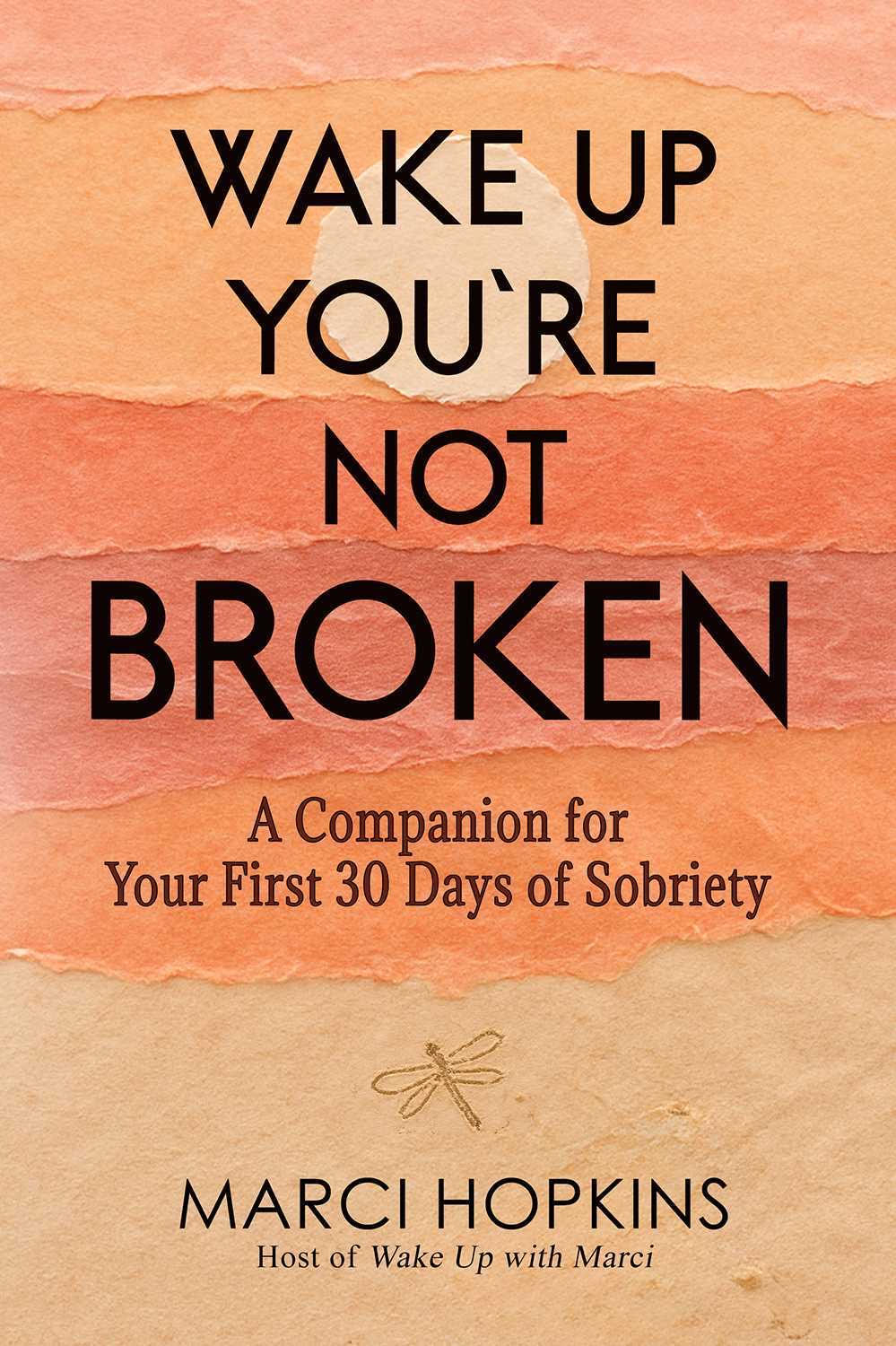
A daily, compassionate guide designed to help individuals through the physical, emotional, and spiritual challenges of early recovery.