-198Days
-11Hours
-55Minutes
-28Seconds





What happened for you at that time? Regroup and say, “What do I need to do?” And it was very scary, but I knew that if I didn’t do that, it was going to get worse. I don’t look at everything that I have to do. I look at what I have to do and stay in the day. And then you got to come up with a positive message for yourself. And they struggle with that because it it sounds fake. They’re all about I don’t want to be fake. I don’t know everything. Oh yes. Oh yes. This is Gail Alexander. Miss Alexander’s work focuses on mood management, executive functioning, eating disorders, and body image along with essential life skills such as coping, communication, and emotional regulation. She works with teens, young adults, parents, and families, helping them uncover what stands in the way of a balanced and healthy life through individual, group, and family therapy. Miss Alexander empowers clients to recognize the thoughts, emotions, and behaviors that hold them back, guiding them toward growth, confidence, and healing. being more solutionbased, but what’s the solution? Do you think it’s hard though that right now giving labels to everything? They come in and they’ve labeled themselves. I think I have this diagnosis. I saw this on Tic Tac. I have that diagnosis. They’re actually a gift to us because that is where we learn the most. Even when you know it’s coming, you don’t know it’s coming. Remember that you’re not broken. You are becoming.
Welcome Gail to Wake Up with Marcy. It’s so wonderful to have you here. Thank you Marcy and thank you so much for having me on your show. As I was sort of saying, I think that you are bringing such a positive message of hope to people right now. And I think it’s very much needed. And I also wanted to say that one thing I thought was really great was that you’re but you’re actually bringing real strategies. you know, you did that 333 mindfulness strategy on your Instagram and so I thought that was fantastic because that’s real tangible stuff that people can see and work with and I see that as empowering people and that’s something that is so important to project safe is the same thing as how to empower people and I just think what you’re doing is really great. Thank you. And we’re going to get into some of those tips and tools that you can offer also.
Yes. But I want to go back a little bit. In 2020, you faced a tremendous personal loss yourself and you lost your business partner. Yeah. And that was a major turning point for you in your life and your career. So can you share with us like what happened for you at that time? Yeah, that was you know it was a weird time in general. Obviously it was 2020 and people were sort of trying to figure out the new normal and we were doing you know video teleaalth and my business partner had been diagnosed with ALS which is just a really devastating disease and then in September of that year he passed away and and you know even when you know it’s coming you don’t know it’s coming and that was not only was it a personal loss like you said he was you know one of my best friends but then that was half of the business that was you he and I did it together and all of a sudden I was trying to hold the business together all by myself and so it was a very it was a it was a discovery time for me as well as as hard as that is and grief is never fun or easy you know you you learn stuff about yourself and it and it helped me face some things and I had to keep moving forward because what we had built was so important to me that I wanted to keep moving forward and then all of a sudden I had to do it all by myself. So that was that was a tough time. It really was. It must have been really scary for you. Yeah, it was. But so speaking of that, and I think it’s it’s first of all, you’re dealing with grief. You’re dealing with huge change. This is your livelihood. This is this is your mission in life. Yeah. So, how did that fear push you forward and and shape you so you could then create something new for yourself? Because I I know it’s hard like a lot of times these things happen and then we get stuck in it and we we we become a victim to our circumstances. And and one of the biggest things that I love to share about is how did someone get through it because we all in essence do go through many of the same difficulties in life but for some it can keep us stuck and we can’t move forward and even me at one time in my life I mean I was throwing a big pity party for myself all the time.
So how did you get through that? What gave you that strength? Well, stuck is a really really spot-on word because you really do get stuck in fear, you know, and like how do I move forward forward? And it’s sort of this piece of you hear that running tape of I can’t do this. I’m not capable. I’m never going to be able to handle this all by myself. And you have to really sit and stop and be in the moment and decide, am I going to stay stuck or am I going to move forward? And I think there’s a lot of vulnerability that comes with that. and being able to say to yourself, I just got to keep moving forward. And so, part of it was trusting my instincts. And that was something that I have struggled with in life. I think a lot of women sometimes struggle with trusting theirelves and their instincts. And so, I really had to pull back, regroup, and say, “What do I need to do?” And it was very scary. But I knew that if I didn’t do that, I it was going to get worse. It would unravel. Everything that we had built would go away. And so part of it was the motivation to honor the legacy of my business partner, but it was also really finding that faith in myself and knowing that I could do it. And then I think the other piece is knowing that it was okay to stumble maybe and to make a mistake. I think that’s a hard one, especially in areas like the DC area. You know, it’s achieve achieve. Don’t ever make a mistake. Well, life doesn’t work like that. You’re going to make mistakes. You’re going to stumble. So, I think giving myself permission because I was stuck in fear of like, I can’t do this. I’m going to make a mistake. And you have to be vulnerable enough to say that’s okay. That’s okay. And really to shift how you think about mistakes or failures because like you said, we’re all going to have them. Yes. But to realize that they’re actually a gift to us because that is where we learn the most. And when we think about those things, what we learn through those difficult times, it’s that stepping stone to the next the next uh opportunity or next door opening or just actually also building more of trust in ourselves, right? Yeah. So that’s very very true. I think that’s the piece you just kind of nailed that if when something ends, I know this is so cheesy, but it’s true. when something ends, it opens something else up. And you can’t move forward if you don’t accept that. And it’s like, well, this is this is the change. This is where we’re at. So, I either have a have a choice to stay stuck and regress or to keep moving forward. And I think you’re absolutely right about that. And that kind of did push me forward.
Yeah. So, let’s talk about the faith part a bit. I think that having faith in the unknown, right? And what does faith really mean? So, what does faith mean to you? I think faith means that you’re going to move forward with something that you instinctually know, even though maybe there’s no tangible evidence. There wasn’t any concrete proof that I was going to be okay. There wasn’t any concrete proof that Project Safe would survive, but I had to have faith in our ability, my ability, and what we had built. And so, it’s a little bit of that jumping into the unknown. And I think again, that’s very scary for a lot of people, understandably so. But it’s that piece to say, I just got to move forward. So, you’re right. You kind of got to anchor yourself in that I I don’t know everything and I’m still gonna move forward. I think that’s really faith is giving you that foundation to say just keep going. Just keep moving. And my god, how powerful it is to say, “I don’t know everything.” Because then it allows you to actually learn or lean on people that do know those areas better.
You work with teens, young adults, parents, and we’re going to get more to that safe program, but in today’s environment, right, there’s so much social pressure. There’s so much unease. So, these young adults, teens are feeling so overwhelmed, anxious, lost. And as an adult, we do have, I think, a little more of an advantage to be able to know what to do in those times. But what are some of those real common emotional challenges, the the younger genzers and such and teens that are what are they facing? So, you you’ve you’re absolutely right. What we’re seeing is an absolute increase in anxiety the likes I’ve really never seen before. um as well as depression, as well as self harm. And they are overloaded with stimulation constantly. And look, technology is here to stay. It’s not going anywhere. And there’s some really wonderful things about it, like this wonderful podcast. But these kids are overloaded. And then they’ve sort of lacking resiliency. So they have a real difficult time handling distressing emotions. So, it’s a combination of anxiety is high, social skills are down, resiliency is down, and it’s all I’m gonna make a mistake. Somebody’s gonna catch it on video. It’ll stay in perpetuity, you know. And so, I think what we’re seeing is this kids are really stuck. They are absolutely terrified of being vulnerable. And I think we’ve lost that piece to recognize that vulnerable builds bonds and community. And they don’t feel safe. So there’s a lot of nervous system stuff that we try to work with at Project Safe to sort of help them reeregulate and really learn to tolerate stress and learn that it is okay to make a mistake. You know, we have a generation of kids that have a difficult time ordering in a restaurant. They have so much stimulation going on all the time. And even think about like us adults, you know, we’re now checking email at night or or doing things for work which, you know, 30 years ago you couldn’t and did not do. and the kids are in the same boat. So I think what we’ve got and that’s one of the reasons I think what project safe part of what we do is also we run groups and I think the value of groups and it’s really sort of I think people misunderstand what that means. They think, “Oh my gosh, I’m gonna someone’s going to go repeat all my personal stuff.” But the value of group is community, being vulnerable together. And even though everybody’s circumstances are different, you really start to know you’re not alone. And so much of this, I have these kids tell me all the time, “Well, nobody else feels like this and nobody else is finding somebody to date or nobody else is this afraid.” And I’m like, “Trust me, they are. I’m talking to them every day.” So, you know, I think part of it is allowing them to know that they are not broken, that they’re going to get through this, but they need to trust the system and it is okay to feel distress and that actually motivates you. You know, some anxiety makes you study for a test. They get stuck in real deep, dark places and where they feel really hopeless.
Do you think it’s hard though that right now we’re giving labels to everything? Oh, yes. Oh, yes. They come in and they’ve labeled themselves. I think I have this diagnosis. I saw this on Tic Tac. I have that diagnosis. And you know, diagnosis is not a bad thing because it gives you a framework to work with. But you are totally right, Marcy, that what that’s done is label kids. And it’s not helpful. And then it’s either a see I’m broken, I have this label, or it’s also, oh, see, I can’t do it. I have anxiety or I have attention deficit. See, I can’t do it. So, you know, the labels are helpful to come up with a framework for strategies, but but they are also it’s a double-edged sword. There’s also a piece of that is not helpful for these kids. And instead, we’re trying to help them see behaviors and patterns rather than a diagnosible label. I love that.
So, how are you seeing teens and families more tap into their inner resilience to get through these things? Yeah, coming together. I think improving communication, improving community systems so that they don’t feel so isolated and families, not just teens, are stretched pretty thin. You know, everybody’s working, everybody’s taking a lot of classes, everybody’s playing sports. I mean, wonderful things, but you pile that all on and and it’s a lot. It’s a lot for people and there’s, you know, we’ve lost, you know, that sense of clan. You know, you don’t have the extended family helping out or, you know, the neighbors and things. I see a little bit of a turn towards the better for that. But I think that’s part of the issue is that we feel really lonely and isolated. So community, improving communication, learning to just pause and regulate. When we get overwhelmed, the more good or bad aroused your body becomes, your cognitive part of your brain sort of shuts down. So pausing and breathing or doing again that wonderful mindfulness you know strategy that you talked about which took two minutes right is a way to just pause and be like hey wait a second what’s what’s going on what do I need how do I move forward so I think it’s giving families and teens and young adults the ability to pause the ability to know that their feelings are not bad and they’re not going to determine who they are and how to move forward and that awesome. Sometimes just taking one action step because they get really overwhelmed. I have five billion things to do and then they shut down. So, it’s like just take one action step. I always get asked a lot, how do you do everything, Marcy? And I take things in little bite-sized pieces, right? I don’t look at everything that I have to do. I look at what I have to do and stay in the day and and celebrate those things that I do get done, right? And that’s so important to see what you’re actually doing to move the needle, to move forward. And you are achieving greatness every single day. And it’s those little things that allow you to accomplish the big things, right? So they’re that’s true. And the teenagers and the young adults really do get stuck there. They don’t see that they’ll have an accomplishment and they immediately go into, “Yeah, but or I still have to or this is.” And it’s like, “No, pause. look at what you’ve accomplished and they’re looking for these large things and sometimes you have to remind them of the small things. You got out of bed today, right? Or you showed up for therapy. Immediate gratification, right? Oh, yes. Huge one. And honestly, our brains, the dopamine where our brains and bodies are trying to catch up and rewire really, right? because as we’ve evolved, we’ve had to do this and and now we’re we’ve approached something that is so foreign um and it’s such a fast pace. Yes.
So tell us what is project safe? Yeah. Yeah. So safe stand for strategies aimed at family empowerment and that you know on our website projects safeforyou.com like you’ll see that our sort of our mission statement is that you’re not broken and that we want to empower you to solve your problems because what again what we find is people are going from achievement to achievement. So one of the things again that that my business partner and I when we started project safe was we wanted to destigmatize therapy. We wanted to view it as as solutionfocused and positive rather than there’s something wrong with you. You are broken. Someone’s trying to fix you. You are the identified patient. So, we shifted that model into a strength-based, hey, everybody’s got stuff. What do you need to work on and to empower them to do it? And that’s part of what I think is helpful about groups because they realize they’re not alone. But even in the family work that I do, it’s that same piece of like, hey, this is we’re all in this together. We’re all trying to move together to figure this out. So, you know, starts with, you know, identifying what’s not working for you. That’s an okay thing to say. We are not perfect. We are supposed to keep moving forward. And then breaking it down, like you said, into its parts because it’s like, oh gosh, I have anxiety. Well, that’s large. What are you going to do with that? You know, so breaking down, well, how is that impacting your quality of life every day? And also, how is maybe some anxiety helping you? You know, so it’s really destigmatizing that everything is bad and negative, that all negative emotions are bad because that’s just not true. We get stuck in them and you don’t want to feel them all the time. That is not helpful. So we really, again, it was this positive message of how do you move forward and acknowledge that things are not exactly the way that you want them to be. You know, again, these kids, they do poorly on a test. Well, that’s it. They’re never going to college. They’re going to be a bum on the street. It’s like, no, no. What did you learn from learning? What did you learn from that? take away from that situation. And so I think breaking it down in these small parts of how can you empower yourself that has been I think a shift in how can you empower yourself and what can you change for next time, right? So being more solutionbased. Yes. Um that’s been huge for me to approach a problem in a way that okay we’ve had a something that’s happened but what’s the solution? Right? there’s always a solution and what are we learning from this experience.
The other thing that I love that you’ve shared about is that isolation me with the work that I do through recovery and mental health and and trying to help others know that you stay sick in the silence and in the isolation and that community or we are supposed to be in a community and attached to people or connecting to people and that’s okay. And like you said, it’s so scary to be vulnerable, but there’s so much strength in being vulnerable. And surrendering is not failing, right? Surrendering is letting go. Letting go of the things you can’t control. And it allows you connect with people. And actually that you had um that fabulous speaker on your show that talked about perfectly hidden depression. And it’s the same thing of like, I’m gonna put this big mask on. I had a a client years ago that the happier she would walk into my office, I’m like, okay, we need to talk. Because she would mask it so well. She was high achieving. And it was one of those things. It’s like, and this comes back to like it is okay to have these negative feelings and to not and to feel stuck. And and you’re right, it’s about learning to surrender and be vulnerable and see the power in that. The power of letting go, the power of being honest in admitting, hey, I’m kind of struggling. And then coming together with community is so so valuable because otherwise you do feel really lonely and isolated and I’m the only one going through this and I’m the only one that’s screwing up and gosh that is just so not the case. and really allowing people to recognize that, you know, it’s okay to not be okay, but to talk about it, to come together and to figure out what your next step is. I think that’s a really powerful thing that you just said. How do you surrender? The teens today don’t want to surrender anything. You know, this is this is the FOMO generation. You know, it’s recognizing that, hey, it’s okay to sometimes say no. It’s okay to stand up for yourself. It’s okay sometimes to compromise and do Yeah. Yes. Yes, that you are important and you matter and we don’t have to just do what everybody else wants to do. You know, sometimes we’re going to compromise for our friends because that’s what friendship is about. It’s not always about you. But they really get stuck in this I can’t disappoint anybody. I have to show up everywhere. I have to be perfect. And also looking for validation from others I think is is a big one. Right.
So can you give us some small but powerful tools that whether teens or adults they could start building their confidence and emotional regulation? The power of breathing, you know, is really is really pretty wonderful. Just pausing and breathing, moving that oxygen through your body and just it gives you that mindfulness moment of pause and what do I hear, see, think, feel. I think that’s helpful. Just stop the hamster wheel. And then you got to come up with a positive message for yourself. And they struggle with that because it it sounds fake. They’re all about I don’t want to be fake. And so we spend a lot of time like okay find it’s the positive message may just be that I’m okay today. And then we work towards hey I’m really proud of myself that I did a b or c. So you know breathing mindfulness having a positive message reminding yourself of something that is good in your life. And then again, a simple thing, and we all know this, and it’s hard to do, but you can’t be on social media 247. We all love it. I We all love it, but set a timer. They forget. All of a sudden, you look up in two hours have gone by. Go ahead and scroll. That’s wonderful. I know you love it. But if you don’t set a timer, you’re going to lose track of time and feel like a break. Yes. Yeah. You get lost.
I can’t thank you enough for being on the show today and I’ve loved our conversation. I love the work that you do and your message and I’m going to put all the information in the show notes about you and project safe. So that’s individual or group therapy, right? Family, individual and group. Yep. Okay. And then you have resources and I’m going to include everything. So, I just want to say thank you for everyone that has showed up today, whether you’re watching or listening. And if you’re feeling stuck or overwhelmed or unsure of how to support yourself or your child, please know that you are not alone and you’re not doing it wrong. And this journey is messy and you’re going to find that braveness inside of you and it’s so worth it. So start small, be open to vulnerability, and above all, remember that you’re not broken, you are becoming. So thank you again for joining Wake Up with Marcy. Share this with someone that needs to hear this message. Please subscribe. I will see you next Thursday. And thank you again for being on the show. It was so wonderful having you. Thank you, Marcy, so much. It’s such a pleasure being on the show today and meeting you. Continue the good work as well. Thank you. And you too. All right, guys. I’ll see you next week.

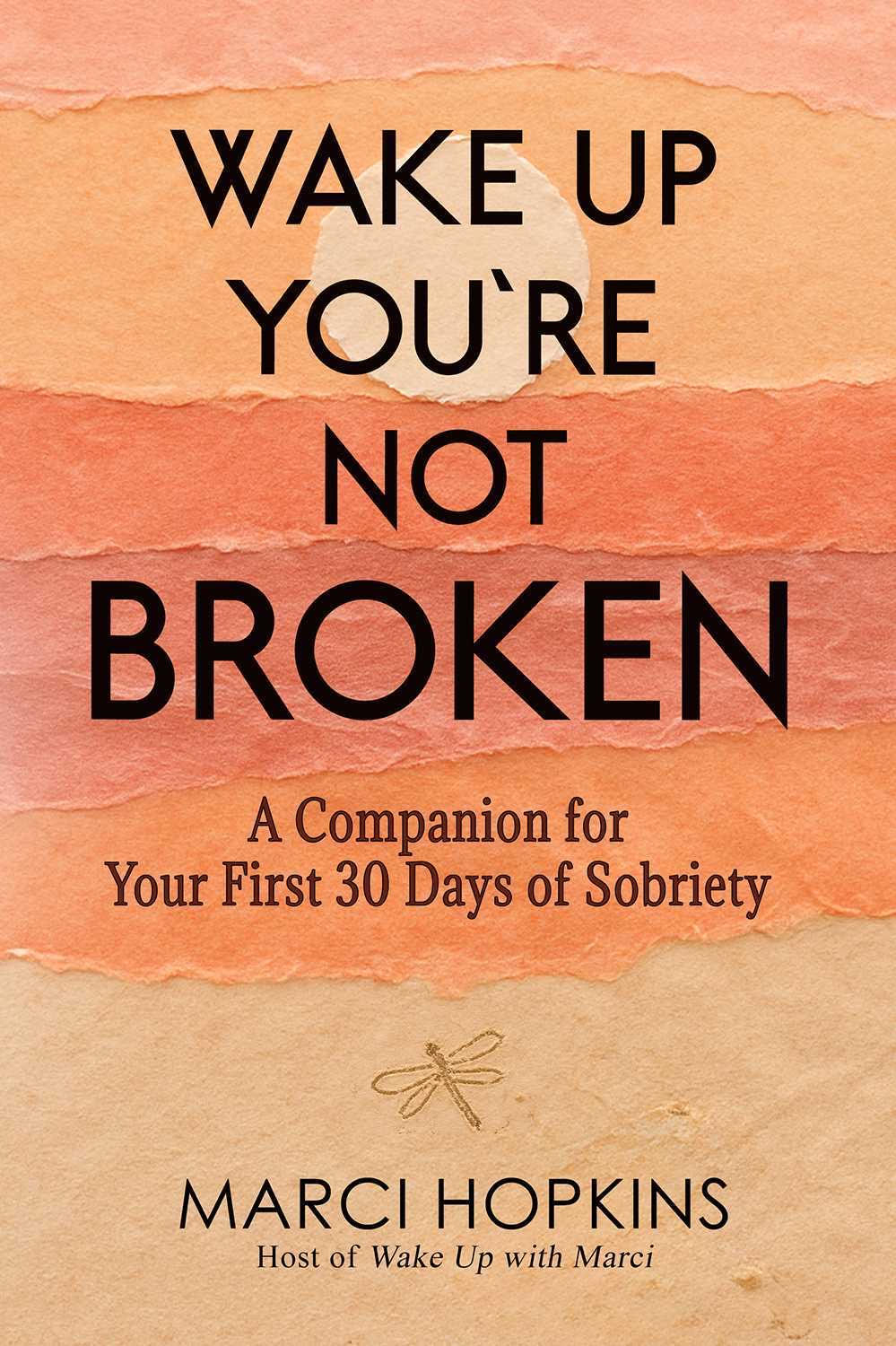
A daily, compassionate guide designed to help individuals through the physical, emotional, and spiritual challenges of early recovery.