-109Days
-18Hours
-59Minutes
-7Seconds





So you had a big turning point in your life. What happened for you? Major wakeup call for me happened when I was 21 and I got arrested and like my world came crashing down. I always was trying to be the people pleaser because I always was looking for validation outside of myself. People often tend to equate how well they perform with who they are as a person and their worth as a person. Howard is a licensed anxiety therapist, mental health educator, and content creator who specializes in high functioning anxiety, overthinking, perfectionism, and peopleleasing. With over a decade of clinical experience and a deeply personal journey through anxiety, and addiction, facing our emotions and our feelings can seem like the scariest thing in the world. I would say that we have that fear because we haven’t done it. There’s actually been some really interesting studies that of this concept called affect labeling. And what this means is if we can learn to put language and words to our emotional experience, it lowers the distress of what we’re feeling. Going back to the things that maybe once in your life did bring you joy. Those are things you enjoyed that maybe you just stopped doing because life was getting in the way or you didn’t think you had that time for yourself. So, please, please start doing those things for yourself because they are truly life-changing.
Hello everyone and welcome back to Wake Up with Marcy where we hold space for real conversations, radical healing, and waking up to your worth. I’m your host Marcy Hopkins and I’m so grateful you are here with us today. My guest today is someone that I deeply respect, not only because of what she does professionally, but because how she shows up with honesty, compassion, and truth. Carrie Howard is a licensed anxiety therapist, mental health educator, and content creator who specializes in high functioning anxiety, perfectionism, and peopleleasing. And I know there’s a lot of us out there that can relate to this and also can benefit from it. Carrie has been featured in Good Morning America, Shape, Huff Post, and Very Well Mind. But what makes her work so impactful is her personal journey behind it. Before becoming a therapist, Carrie struggled with anxiety, depression, and a heroin and cocaine addiction in her teens and 20s. Her healing journey didn’t start with a quick fix. It began with hitting a wall, getting honest, and slowly learning to turn inward instead of running away. Now she helps others to do the same, building confidence, facing fear, and learning how to stop living for everyone else. Carrie, thank you so much for being here. I’m so excited that you could be here, share your story, and help us through all of these different things that we are going through. My god, the anxiety, people pleasing, it’s real. Yeah. Well, thank you so much for having me. I’m just super excited to be here and share what I can to help. Yes, absolutely.
So Carrie, let’s go back and talk about your personal story, your journey before you became a therapist. You yourself were going through your own storm. So can you take us back to that time in your life? Yes. And I was going through it. And honestly, like the reason why I do what I do today as an anxiety therapist is because of my own personal journey and that everything I’ve been through. And so I’ll just kind of take you back to like before there was a turning point and things got better. Like things were really really messy. Um they didn’t start out super messy, but I did start out as a super anxious child. Like from as early as I can remember. I was this anxious kid. And I don’t think you would necessarily have noticed that from the outside. I was kind of a quiet anxious kid. I would keep it all inside, but I was always like worrying and anxious about something. And as I got a bit older, by the time I got into middle school, that kind of morphed into a social anxiety presentation where I started getting really anxious around friends, teachers at school, anytime I was like in a situation where I felt like eyes were on me, I would get so anxious and didn’t know how to cope with that. Like in my family, we didn’t really talk about emotions. And so I was having all of this anxiety and distress and didn’t really have an outlet or understand what was even happening. And as I got a bit older, it spiraled into a place where I was getting panic attacks. And I didn’t even know what a panic attack was. Like all of a sudden, I would just start sweating and heart pounding and couldn’t catch my breath. And like I don’t know if you’ve ever had a panic attack, but like it feels like you’re going to die. Yeah. And so I was having those kind of experiences and feeling like I was going to die and didn’t even know how to label what was happening to me. And so it really kind of tipped into for the first time a place where it went from just kind of a lot of anxiety into depression like really just even suicidal thoughts just not knowing how to cope with my emotions with the pain that was deep inside of me. Yeah. Now are you in high school at this during this point? Yes, at this point in high school having panic attacks, not knowing how to label those and at that point I’m desperate for relief and that’s where those suicidal thoughts come in. You know, oftentimes it’s not really a I actually want to die. It’s more like a I need relief from this pain that I’m in. Please help something. And so in my quest to find relief from the distress within me, I started reaching to substances. started out with alcohol, smoking weed, but I know you’ve also talked to them about your addiction story and it never really just stays there, right? Like, yeah, it kind of hits the spot at first where it’s like, oh, for a minute I don’t have to feel all these big horrible feelings inside, but then it starts to spiral. We need more and more or bigger substances or other things. And so what started out kind of as an innocent put a band-aid on the problem type thing ended up spiraling the older I got into my later teens into experimenting with cocaine and heroin and getting quite addicted to those as you can imagine it just you know because it does the trick for a minute. It numbs that emotional pain but then you get deeper and deeper into the addiction with all those consequences. And on top of that, I still had massively undertreated mental health issues that were continuing to fuel all that. And it just got me to like a really dark place as you can imagine. Yeah, 100%. So, was there something that was going on? Like, how were your parents handling it or did they recognize that you were worrying and having all this anxiety as a young girl? They did the best they could, but like I feel like part of it is our generation that we grew up in. Like our parents, you know, and the and people, we just didn’t have the same access to mental health information. Emotions weren’t really talked about. And so there just wasn’t conversations happening in our home about that. They didn’t know what to do. You know, they tried to get me help as best as they could, but Yeah. Nobody really knew how to deal with their emotions in our home, you know. So, yeah. No. And you keep it quiet and you just forge ahead and Yeah. 100%. Yeah. Now, for you though, was there anything that was triggering this anxiety or was this just something that was inside of you? You know, it was probably a little bit of both. like there is some genetic anxiety that goes up my line but there was also a lot of like unhealed pain in my life I think some past trauma inability to deal with just hard emotions that would come up my mo was suppress run away if I felt something that felt uncomfortable it was like nope can’t tolerate this like can’t deal with this and and over time it just starts to build up and we have nowhere to go right yeah so you had a big turning point in your life. What happened for you? Yeah. So, it was it wasn’t just an like one and done turning point like I wish I could say this happened and then it was all, you know, No, no, I get that. Well, no. But the first like major wakeup call for me happened when I was 21 and I got arrested and like my world came crashing down. And just to give you a little backstory of how that so that the story will make sense, when I was 19, I had a significant drug overdose with cocaine that I needed medical intervention for. And so I didn’t get arrested in that moment, but a few days later, a detective calls me and says, “Hey, we really want to take this drug dealer down. You can either participate with us and we won’t give you any charges for what’s happened, the possession charge, or you can cooperate with us and help us take out this this drug dealer. He said, “If you don’t cooperate with us, we will be giving you felony possession charges to, you know, that you will be held accountable for.” So, oh, I get off the phone. I’m 19 years old and like in my little 19-year-old mind, I operated the same way that I had been operating with my emotions and everything my whole life, it was like instead of facing this head on, it became, well, how can I get out of this? How can I avoid this? And in my little 19-year-old mind, I decided, if I just move states, I mean, they’re not going to come after me, right? you know, so I literally like packed up all my belongings in a week’s time and left the state and like set up shop in another state honestly thinking it would just go away. Well, and you know that saying like like wherever you go there you are. Like I brought my messiness with me. Nothing had changed. And so it was like doing the same old stuff, getting involved with the same old people, same, you know, mental health issues that weren’t being addressed got me to the point within a year and a half’s time that I had spiraled to the point where at least I knew I needed help. And I did get into treatment, but I actually, so I was in treatment at the time, ironically enough, I wasn’t using at all. I was on my way to an to an AA meeting and I get pulled over for a routine traffic stop and I realized pretty quickly it was not going to be a routine traffic stop when the second squad car pulled up and I got arrested. And at that point my avoidance had led to not only a felony charge, but I had I had fugitive status at that point because of my decision to basically flee the state and not face these consequences. And I’ll never forget riding in the back of that cop car that night. That was just kind of my wakeup call of like, holy cow, like I’m 21 years old, felony charges, fugitive status in another state. Like, if I don’t get a handle on these things, I’m either going to die or I’m going to end up in prison. And it it was, you know, it was a blessing in disguise that it happened that way when I was in a safe moment. and realize, okay, like I couldn’t run anymore. And it was very symbolic in a way, like the legal consequences catching up to me were incredibly symbolic of the fact that I had really been running from myself, my emotions, every hard thing in life, I had been running. And it was just kind of all crashing down. And that was kind of the beginning of, okay, I’ve got to make some changes here if I’m going to get through this and actually have a decent and good life. It’s not just marked by survival and addiction.
Well, first of all, one major point that we want to address is you can’t run away from your problems, right? And they will come back. Yes. And worse and worse if we we delay them. And secondly, I totally get the idea of starting over and that it will be better. I did that multiple times in my life. And if things weren’t going well or I wasn’t happy, I always thought if I started over with a new partner, a new place, a new job that it would get better. But again, you’re always taking yourself with you and having to recognize that you have to make the change for yourself for everything to change on the outside. Mhm. So now, okay, so you have all these major charges that are against you, right? And you’re making this decision that now, okay, I got to face this. How did you face that still at 21, so young? I would assume that did you feel like, yeah, I gotta make these changes and I got to face this, but like how am I going to change this? because those are major major offenses. Mhm. Yeah. I mean, it was a rocky road to start like when I was in early recovery for sure. It was marked by a lot of like, okay, I’m going to do it this time. I’m going to be clean and sober, go for a little bit of time, and then my my emotions and all the stuff I was running from would pop back up and I would reach for the same thing. So, a lot of like in and out of treatment, getting a lot of treatment for my mental health during that time. And over time, I started to get enough healing, enough sobriety, uh enough skills to learn how to deal with the hard stuff coming up within me that over time, finally by the time I was 26 is when I was like functional enough and and well enough that I could go back to school because I’d had to drop out of college, you know, during all those drug years. So when I was 26, I went and got my bachelor’s degree and then got my master’s degree at age 30 and I’m in my 40s now. So I’ve been a practicing therapist for the last 12 years. But it’s been it was like right in that window. It was like several years from 21 to 26 of like staying committed and facing the hard thing and showing up, getting the help that I needed to begin to even get the skills and healing that I need to become functional later on. Mhm. Well, you showed so much strength during that time. And one of the key messages here that I that I extract from your story, my story, all the stories that I hear is that when someone is faced or they have addiction, they have the disease of addiction, there’s a a reason, a trauma, a core, you know, mental health disruption happening. Like there is a core reason why someone has started using a substance to cope and through that healing. It’s not about stopping the drink and everything’s going to get better or stop stopping that drug and everything’s going to get better. I mean there’s real work that has to go into this. And one of the things that you talk about is going inward. And that’s one of the things that I had to do also because through my trauma, I would always try to be perfect on the outside like you talk about. I always was trying to be the people pleaser because I always was looking for validation outside of myself, right? To make me feel good about myself. And you talk about going inward and I had to do the same thing to find that love for myself, that happiness. So, can you talk more about that? Yeah. And you’re exactly right because the addictive behaviors, that’s just the surface level problem. That’s the end result, right, of our internal stress and all that. And you can’t just take away the coping mechanism but not address what’s driving that coping mechanism. And there’s a lot of different coping mechanisms we can reach for. It’s not always going to be substances like you said. Sometimes it’s perfectionism and peopleleasing. Those are coping mechanisms that we use to deal with our internal distress. It could be overwork, overfunctioning, doom scrolling, eating. There’s a lot of things that we grab for to soothe, to numb, to escape the internal distress that’s going on underneath. And so there’s a healing process that has to happen to kind of heal that place within us so that we don’t feel like we have to grab for those other things as much. And for me, a big part of this journey was learning how to face those big feelings inside of me. Honestly, like I used to think my feelings, if I really felt them, would kill me. Like that’s how afraid of my own emotional experience that I was. And there was a there was a a significant point probably about even like seven or eight years ago. I was already a therapist and I was like practicing, you know, teaching all these things, but I hadn’t fully embodied this piece of it. I hadn’t fully gotten into the place where I could embody what it looked like to face those feelings and feel those feelings, allow those feelings. And there was a time about seven or eight years ago when I had one of my very last panic attacks and it was like this random panic attack. I was wasn’t even doing I was like hanging pictures in my house and just I don’t even know what the trigger was but it I immediately knew like here comes my heart starting to pound. I’m getting short of breath. You know all these signs and symptoms that normally I would want to reach for something and shut it down and not face it, not deal with it. Get it to stop as quickly as possible. And I said, “You know what? I’m going to do something different and really brave this time. And I’m just going to like turn inward and allow it and invite it and and see what I notice and see how that feels.” And so I got down off my little ladder. I laid in bed and I’m like, “All right, anxiety. I I feel you here. Like bring it on, you know?” And I started to notice the body sensations coming up. And I noticed through that, wow, this feels really uncomfortable, but I’m and it feels like I can’t breathe, but I’m still breathing. I I was just noticing what was coming up for me and instead of pushing it away, just allowing it space. And I kid you not, like that panic attack ended in at least half the time that any of my other panic attacks had ended. It was a little bit like, and I wasn’t trying for it to end, but it was like I had shined a flashlight in a dark hall that seemed scary before, and I’m like, “No, we’re going to look in here and see what this is about.” And as I experienced and allowed and witnessed, it was like it disarmed my body. It was like, “Oh, it’s a panic attack. It’s uncomfortable, but we’re okay. It’s okay.” You know? And so that kind of shifted the way that I began to deal with my emotions instead of trying to shut them down. It became how do I transform my relationship with myself and my emotions to be able to allow and give space to them so that we can coexist together and I don’t have to feel like I have to run and escape and grab for this or grab for that just to get by and and survive the day. Yeah, it’s scary to face those emotions and those feelings especially when you haven’t done it for so long you don’t know how. And what’s interesting is that that panic attack that happened while you were just hanging pictures, I mean, that’s something that’s stored in your body that’s coming up for some reason that you’ve you’ve been pushing pushing pushing, right? And pushing things down. And it it’s going to come up. I mean, no matter how much we try to push down all of the things that we’re trying to run away from, they’re going to come back up in different ways. Maybe it’s a panic attack. Maybe it’s, you know, some sort of illness, whatever it may be, right? You make yourself sick by not facing the very things that are making you sick. And it’s recognizing that. And so facing our emotions and our feelings can seem like the scariest thing in the world, but I I would say that we have that fear because we haven’t done it, right? And so the more you do it, it becomes I don’t want to say easier, but it does become more of a familiar way of managing life, right? So the more we do something like a muscle, right, it just becomes easier and it builds that muscle and and uh you get bigger and stronger and our minds are a huge muscle for us to rewire really is what you’re having to do. So what are some of the things that you had to do to really I know facing that emotion that’s huge, right? Facing those emotions are huge, but what are some actual things or steps that somebody can implement in their lives to help them to start facing those emotions? Yes, great question. And also, I just love the metaphor you used of like our emotions and facing those being like muscles because it really is. It’s like going to the gym to work out your body. Like, you can’t go into the gym and expect that you’re going to lift 100 pounds your first day. You got to start with the little fives and get going and like build your muscles that way, you know, and work your way up. And it’s the same thing learning to deal with our emotions. It can feel very overwhelming to suddenly just turn towards your emotions and like what if I drown you know that’s scary and it feels that way. So like just from some practical standpoints of things you can do. First step would be like just notice when there are certain things that trigger you and you feel that you’re having some kind of emotions kind of rise to the surface. We can’t deal with what we don’t know is happening. And so the more we can begin noticing, and we can notice oftentimes by checking in with our body, you’ll start to notice like for me when I’m feeling anxious, I also tend to have tightness in my chest or a pit in my stomach or nausea or that rapid heart rate. And so paying attention, oh, I notice there’s some things happening in my body. I wonder I wonder if emotions are trying to rise up. So we notice first. Yeah. Second, learning to label your emotional experience is so important. I would encourage anybody, if you don’t have a feelings wheel, get a feelings wheel. I actually have a free copy on my website for download if we want to link to it in the show notes or anything. That is really important tool to begin to put language to what’s happening. Like for me back in high school and middle school when I was having the panic attacks, I didn’t even know how to label I’m having panic and anxiety right now. It just felt horrible and I didn’t know how to put language to it. There’s actually been some really interesting studies that of this concept called affect labeling. And what this means is if we can learn to put language and words to our emotional experience, it lowers the distress of what we’re feeling. Even if we do nothing else, even if we don’t go through any other coping skills or mechanisms or anything and we just label what we’re experiencing, conceptualizing it in that way and speaking it out lowers the distress we’re feeling. So, if we can begin to identify what I’m feeling or even like at the beginning when you’re not really sure, it’s okay to guess. Get your feelings wheel out and say, “What kind of jumps out at me? I maybe I don’t know. Maybe there’s more than one thing. Maybe I feel numb.” That’s, you know, an an a important information to understand, too. And some of that’s common at the beginning when we’re trying to figure out what we’re feeling. So, we just say, “I think I’m feeling some anxiety right now, and I notice some tightness in my chest and a pit in my stomach.” And then at that point, once we’ve labeled, we’ve we’re understanding we’re having kind of an emotional experience, it’s like, what is this emotion needing from me right now? It doesn’t need us to run away. It really needs us. It It needs us to allow its space to be almost think of it like an emotion like a little child. Like it needs a parent to turn towards it and say, “I see you here and I validate you.” Like, “Of course you’re anxious right now. This thing you’re anxious about is really important to you. Of course you’re anxious.” And so validating that emotion and then moving through it. So often we want to suppress our emotions, just hold them in. And what happens is emotions are energy in our body. And when we don’t give them place to express, if we’re just big mad, as I call it with my daughter, like, oh, you’re feeling big mad right now, like when you’ve got all that mad energy and your body’s like vibrating with that fight orflight energy, it needs somewhere to go safely or eventually we’re going to act out in it because that anger, like you said, those emotions, they’re going to come out some way somehow. And so, how can I move through some of this energy that’s in my body? That might look like answering what your body is asking for. Like, if you’re mad, maybe grab a pool noodle, go out in the garage or something and just whap the floor a few times to kind of discharge some of that energy or do some push-ups or sit-ups or things that kind of help that energy move through your body in a safe way to kind of discharge that energy. Now, we’re we’re not we want to be careful that we’re not doing those things to rush the feelings away. We’re just giving an outlet to express those feelings. Often times, feelings are asking to be expressed and moved through, witnessed, seen, and validated rather than shut down and run away from. Love all those. I was thinking about the other day. Now that I’ve done so much work, I don’t have a lot of anger. But the other day, I was I got upset about something and I whacked the table a few times with something and I felt better, right? It helps, right? Like sometimes we dismember, you know, like some anger builds up so much, we can act out in ways that don’t feel good to us. But if we take them in and in a safe way whap something that’s not going to hurt us or the thing, it’s giving that energy a place to go. Exactly. And I didn’t do the screaming that I would have done before. Right. Right. And then it would have just made everything so much worse. Yes. Totally. Every time. Yeah. 100%.
Well, we’re going to take a quick break and we come back, we’ll continue this powerful conversation with Carrie Howard and we’re going to talk about high functioning anxiety. When we come back, stay with us. Are you in the first 30 days of sobriety or wondering if now is your time to start? Hi, I’m Marcy Hopkins and I wrote Wake Up You’re Not Broken just for you. It’s a real raw guide to those first 30 days. what no one tells you, what you will feel, and how to keep going. This isn’t about perfection. It’s about progress. Order your copy now on Amazon. Remember, you’re not alone. You’re not broken. You’re waking up.
Welcome back. I’m so excited to continue this conversation with Carrie Howard. And like I said before the break, we’re going to talk about high functioning anxiety, trying to hold it all together. And a lot of women face this, right? We’re trying to do everything. We have this facade and we we stay stuck in this cycle because we feel like we’re being judged all the time. So, how can someone that’s stuck in this cycle start to move forward and and realize that no one is perfect? They don’t have to be perfect and how they can start changing these behaviors. Great question and and it’s a great continuation from where we’ve been going because it’s the same concept really. High functioning anxiety is you’re still having all the anxiety on the inside, but you’re choosing different things to cope. Like you’re choosing pushing through or leaning into success, overworking, high performing, high achieving, which can quickly lead us to burnout. that you’re all those coping mechanisms of people pleasing, perfectionism, those are things that people with high functioning anxiety grab for as a way to cope with their internal experience and the discomfort that they’re feeling. So, if we look at it through the same lens that we have been looking at it so far, it’s less about tackling all of these things that we’re grabbing for and more about leaning into what is going on underneath the surface that is driving all this. Yes, some crippling anxiety for sure that that causes us to to cope with all these things to, you know, want to reach in, you know, to if I can just work hard enough, I’ll feel better. But also, the thing about high functioning anxiety is people often tend to equate how well they perform with who they are as a person and their worth as a person, right? Yes. That is a big thing that kind of keeps the people pleasing and perfectionism in place because in our minds if I can just push through, if I can just avoid conflict, if I can avoid this person being disappointed or upset with me, then I’m okay. Or if I can just do this thing perfectly enough and everybody’s wowed and I just achieve all this stuff, then I’m okay because I feel like I’m I’m protecting my worth there. So really it comes less about like I said tackling all these coping mechanisms and more about how do I begin to build my worth from the inside out. How do I begin to get the healing that I need? begin to deal with the hard places within myself that allow me to build worth from within so that I’m not so dependent on other people’s approval and doing things perfectly and everybody staying happy with me all the time because that’s so unrealistic, right? Yeah, it is unrealistic. While you’re explaining this, I’m thinking about the type A woman that’s like, well, that’s just who I am. I mean, I’m just like this is what I do. I do everything and it’s expected of me and and this is this is just that’s my worth and that you may say makes me happy or it’s just the way I’m wired. But the reality is and I I felt this. It’s being uncomfortable with the quiet and the peace that’s really really available to you and how you really can get so much more done when you are at more of a place of of quiet, right? Or give yourself give yourself that permission to do that, right? So, what would you say to that as a therapist? Yes, you’re exactly right. And and you hit on a strong like another coping me mechanism that we hadn’t really brought up yet is the busyiness factor. Like we can’t tolerate being with ourselves and so we get busy and we overcommit and then we have all these plates spinning because god forbid we have a moment of peace and quiet that feels too scary, you know. Yeah. And so I would say approach that with the same kind of gentleness that we’re approaching the other things where we want to begin to peel back that busyiness a little bit and maybe give yourself little moments of like, okay, I’m not just going to clear my schedule, but maybe for like 20 minutes, I’m going to practice setting things aside and practice what it feels like in that contained 20 minutes. Set a timer if you need so that it doesn’t feel overwhelming. and begin practicing the same way that you would go to a gym when you get in there and lift the little five pounders. It’s like we’re going to practice being with ourselves without all the busy and the clutter and the distractions for this time limited amount of time and see and notice what comes up. There’s going to be some uncomfortable feelings that start to come up as soon as you probably get still because there’s a reason that we’re staying in motion all the time and it’s so that we don’t have to deal with what’s going to start trying to creep up in those. Exactly. There’s that deeper reason. I mean, I remember when there would be quiet moments for me and I would feel like my skin was crawling and I was just constantly trying to do do because if I did that, I wouldn’t have to face any of the the feelings that I was trying to push down. And so even if somebody like drinking was a big way that I coped and I would drink every day and I would look forward to that 5:00 glass of wine thinking that that was going to calm me which actually grew to more drinking once you know certain things started happening for me. Sure. But when I put the drink down, it was then that I had to start learning different modalities, right, and different routines to change those habits and and my thinking process. So what would you say to someone out there that you know maybe it is that morning routine or what are some suggestions during that 20 minutes? Is it meditating, reading, breathing, breath exercises? What are some things that somebody could maybe that doesn’t feel like too much, but it’s easy enough to just start for themselves today? Yes. And I would say like you gave a lot of good ideas there. The goal is to try some different things because what works for one person might feel frustrating for another or what helps in one emotional state might not be so helpful in another. And so I would say really kind of listen to your body in that state. Like if you’re getting a lot of what I would call fight orflight energy, there’s a lot of like you’re um you know, you’re really either anxious or mad and your body’s asking to move. Move with your body. Do some gentle yoga stretches, do some sprints, whatever you can like whap the pool noodle, something to kind of let that move through your body. Or let’s say you’re feeling really depressed and numb and slowed down and blah. Everything’s just distant and numb. You want to kind of do some things that help bring your activation level inside up a little bit. So maybe getting creative like if you can just doodle, color, something that like even small little body movements. So don’t think about doing big exercises. Can you wiggle your fingers? Wiggle your toes. Notice what the chair feels like as you’re kind of leaning back and pressing your body into it. Do some grounding exercises. There’s one really easy one that’s kind of easy to remember in the moment called the 5 4 3 2 1 exercise where you look around the room and name five things you can see. Four things that you can feel or touch, three things that you can hear, two things that you can smell, and one thing that you can taste. So even if you just have water or coffee nearby, something to kind of ground you back in your body, journaling, it can be really helpful for some people. Set your timer even for like 2 to 5 minutes or something so that it doesn’t so that it’s time limited and doesn’t feel like it’s becoming another deep dark overthinking session, but just long enough to be able to get some of the stuff that’s swirling around in your head or feelings that are trying to come up out and onto paper. And in the same way that that we were talking about affect labeling before, like naming your experience, putting what’s going on out onto paper kind of has the same effect where you’re like moving it from inside you to out, like discharging what’s going on within you to the outside. Yeah. I love visuals like moving that energy. Just think about that energy going all through you whether it’s positive or negative. And you got to move it. Get it out there. Right. Right. And what are your feelings about the gratitude practices? Because that was a huge one for me. I love gratitude. I will say motivation matters. And what I mean by that is with gratitude, we don’t want to use it as a way to run from our emotional experience or veer into what I would call toxic positivity where like I can only look on the bright side of everything. Yeah. You know, but gratitude it’s important for us to find that space. So often times I’ll tell people on the tail end of a really heavy journaling session. End it with some gratitude like to kind of help lift your mood and remind you and and reenter that not everything’s horrible and bad. Like there are some things that are really going well in my life and it kind of helps lift you out of that space. So I think it’s a really valuable tool to incorporate as long as we’re not using it as just another way to smooth over the pain and only focus on the bright side. But if we can hold space for both together, the pain and witness the pain and also find our place of gratitude is where that practice flows and works best. I like that. Gratitude has brought a lot of peace to my life and and the ability to look at the good. So, I like that because I just used to live in this place of lack and feeling sorry for myself and the victim and and it’s interesting because you can have a friend or somebody in your life and you look at their life and think how could they have anything wrong and and yet they’re crumbling inside and they don’t know how to see that the good in their lives just because of maybe what what has transpired before in their lives and you don’t know. So, I really like the fact that we can’t judge a book by its cover. I always say that. I love about the grounding and staying present. Like worrying about stuff in the past, it’s not going to change. We’ve got to forgive it or move past it in some capacity. Not saying it was right what happened, but releasing the power it has. And then worrying about the future. I’m sorry. Do we have control? like we don’t, right? We don’t. But we can drive ourselves mad. And but I get it. I get it. I’ve been there. Um it’s just learning those ways to bring you back to the present moment. And I love that I’ve learned that you can’t think of two things at one time that your brain literally cannot. So, you know, why not think of something that’s more positive or shifting the way that you think or do the positive thing to bring you back to that more positive Right. Yes. Life is going to happen. Life is bad things are going to happen. But like how can we get through it the best possible way? And that’s how we build selfrust too is realizing that we can turn towards a hard thing and begin to deal with it. And like we we build confidence that way that like these hard things that we’ve been running from, they’re not going to crush us. Like like we’ve gotten through these hard things and we’ll be able to keep doing it. And that in and of itself begins to lower some of that anxiety, all those what ifs. What if this happens? What if that happens? Yeah, I love that what you say about getting creative because that’s huge. And getting just curious, right? And get going back to the things that maybe once in your life did bring you joy. Those are things you enjoyed that maybe you just stopped doing because life was getting in the way or you didn’t think you had that time for yourself. So please, please start doing those things for yourself because they are truly life-changing.
So what would you say to someone that’s out there right now that is drinking or smoking pot or shopping excessively, right? And they’re they’re questioning what’s going on for them. They may not say this is a problem. It’s just what you know, it’s just what I do. What would you say to them to because I always say, Carrie, and tell me if you agree with this. If you’re thinking about it, it’s because it it’s hindering your life in some way. And you do want to make a change, but that change is so scary. Yes. And it feels so scary and that can kind of hinder us from wanting to even acknowledge the problem we’re in. And it doesn’t have to be this like you’re all the consequences are coming down the pipe and you’re a fugitive in another state. Like it doesn’t have to be like that. But I would ask you to like consider take inventory. Is my life really am I enjoying am I living my life to the fullest of what I envision or am I stuck in survival mode? Am I just kind of getting through the day as best as I can, but not experiencing the kind of life that I that I would hope is available to me? And if there’s any part of you that resonates with that that’s like, “Oh, I want more. I want to believe that there’s more.” I just want to encourage you like there’s no there’s no one too far gone to be able to come back and to be able to find healing and growth in a way that you can have the kind of life that you can get excited to wake up for in the morning and you know let your purpose and you know unfold and whatever that looks like for you. And you might not know yet because honestly when you’re stuck in survival mode whether you know it’s substances or busyness or otherwise we don’t have room for creativity for curiosity for exploration of hobbies, dreams, passions, goals. And so I would also say even if you don’t know quite what you want your life to look like yet, that is okay. Just recognizing that something’s off and I want for it to change is enough to spark a place where you can begin to get the healing that you need to be able to explore what it is that you want for your life. And it is never too late, no matter if you’re in your 20s, 50s, 80s. I believe there’s just it’s never too late to get your life back and feel fulfilled and do something that you enjoy and get to know yourself in a meaningful way. Oh, Carrie, I don’t think we could end on a better note. So, tell us how like we can follow and and get more involved because I know you’re very active also on social media. So, share with us how we can find you. Absolutely. So, I’m most active on Instagram and threads under the handle Thrive Anxiety Solutions. And you can also find me on my website which is www.thriveanxietyolutions. thriveanxietysolutions.com and don’t forget to stop there and get your copy of the feelings wheel so you can kind of get started on some of these things. Yeah, I love that feelings wheel. Okay, we’re going to put everything in the show notes. Thank you so much for showing up and your honesty and your insight and just your story is just such a reminder that healing doesn’t mean that we have to be perfect. It can start at any time. And I just love all that you shared today. So, thank you so much, Carrie. Oh my gosh, thank you for having me, Marcy. This has been wonderful. And to all those out there that if you’re just beginning your own healing or sobriety journey, I want to remind you that you’re not broken, you are becoming. And my book, Wake Up, You’re Not Broken: What to Expect in the First 30 Days of Sobriety, is now available for pre-sale on Amazon. And it’s a gentle, honest guide that I wish that I had in those first 30 days, which were so hard. I wrote this for you. And please subscribe to Wake Up with Marcy on YouTube. Listen on your favorite podcast platform. Check me out on Instagram at Wake Up with Marcy for weekly inspiration. And remember, we have a new show every Thursday. And please take care of your heart and keep waking up to your worth. And I look forward to seeing you next week. Have a great one. Bye.

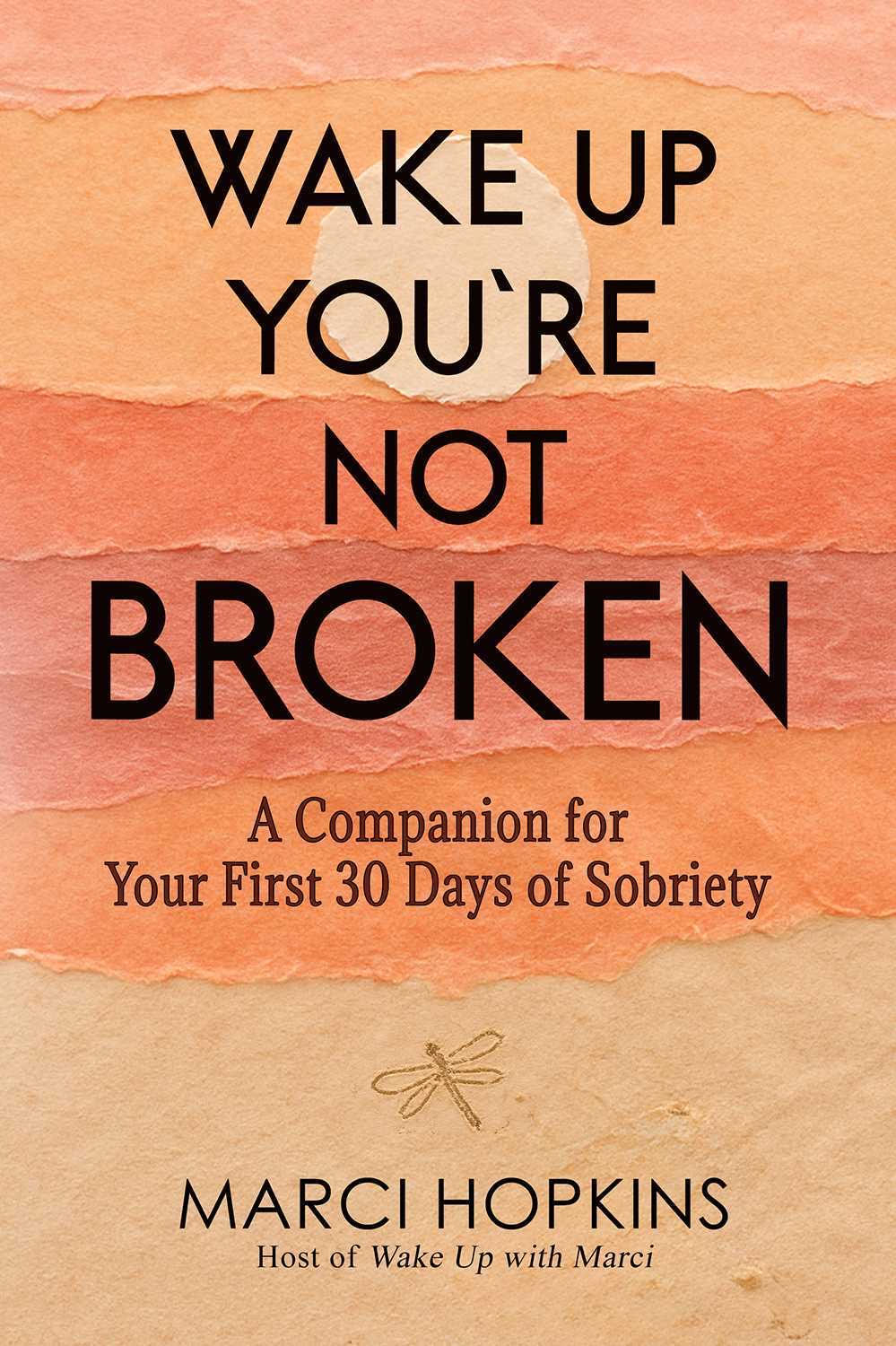
A daily, compassionate guide designed to help individuals through the physical, emotional, and spiritual challenges of early recovery.