-109Days
-22Hours
-47Minutes
-42Seconds





My daughter shouldn’t be married to someone on the spectrum. So, it was comments like that and well, your autism is exhausting. And when this first started, I was like, it wasn’t exhausting before. Um, and now that this piece of papers here, all of a sudden, it’s exhausting. Explain this to me. Like, I helped you through college, uh, get your masters, I have a job, we bought a house, we have two cars, we have a dog. like you know she used it against you and then it escalated to you should really consider killing yourself. Oh my god. This is Wake Up with Marcy, a space for honest conversations about healing, recovery, and women’s wellness. I’m Marcy Hopkins. Take a breath. You’re safe here. Let’s begin.
Hello everyone and welcome back to Wake Up with Marcy, the show where we hold space for real conversations, radical healing, and waking up to your worth. I’m Marcy Hopkins and I’m so grateful you are here. Please remember if this conversation resonates with you. I’d be so grateful if you could subscribe on YouTube or your favorite podcast platform, leave a review, or share this episode with someone who needs to hear it because with your interaction, the show will grow and we can reach more people. So, I’m so grateful you’re here. Thank you. So today’s episode is one of those rare and sacred conversations that reminds us just how brave it is to stay in your body, in your truth, and in your life when it would be easier just to disappear. My guest is Christopher Carz’s, writer, speaker, and the author of the powerful memoir, Now That I’m Still Here. Through his words, Chris explores the quiet complex reality of surviving trauma, navigating grief, autism, psychological abuse, and the long road back to self-rust. His work is raw, vulnerable, and deeply honest. And he’s helping so many people feel seen who’ve spent years hiding in plain sight. So, Chris, thank you so much for being here. Thank you for having me. It’s nice to be here.
So you have a really powerful story and you know I know it’s hard to share our stories so openly and so vulnerably and but with that you help so many people. So take us back to the place so you talk about hiding and and staying in that pain. What was that pain like for you? And how did your past build that quietness for you and those walls around you and and living with a mask on? That’s a very interesting question. It’s like very very intertwined the two, right? So I I grew up autistic and I didn’t know for the longest time I was autistic. So with that came a lot of this wall building. I had to learn, I didn’t have the word for it growing up, but I had to learn to mask. I knew something was off. I want to avoid using the word wrong with me. There was just something different about me. Uh that I I had no idea. And I would just sit and observe and like, oh, this is what my my normal friends are and my normal peers are doing, so let me let me do that. I learned to mask. I learned to hide in plain sight because I didn’t know what was going inside me. And I didn’t want anyone to know because what the world saw was, “Oh, this guy’s very well put together. He’s wicked smart.” When I got diagnosed, I was 35. I was married. I had just bought my first home. I I just got promoted to a new role. I was working with the federal subcontractor at the time. And as soon as that diagnosis came, immediately two things happened. One is like everything I was dealing with now had a vocabulary. Now everything had a name. and I could I knew what to start addressing so I could learn to coexist with this newly found diagnosis and and learn to leverage it as a strength. The second thing that happened was the abuse with with my mother-in-law and and my then wife. Things were said almost on a well on a daily basis. Well, you’re an embarrassment. My daughter shouldn’t be married to someone on the spectrum. So, it was comments like that and well, your autism is exhausting. And when this first started, I was like, it wasn’t exhausting before. Um, and now that this piece of paper’s here, all of a sudden, it’s exhausting. Explain this to me. Like, I helped you through college, uh, get your masters, I have a job, we bought a house, we have two cars, we have a dog. Like, you know, she used it against you. Yeah. And and then it escalated to you should really consider killing yourself. Oh my god. This is your wife or this is your mother-in-law? Both. Oh my god. Both. Uh and when you hear that every day for almost three years, it erodess you. It erodess your sense of health self. I mean I I went into a huge spir downward spiral in terms of pain and one I didn’t know what to say what how to ask for help and various societal stigmas. One like as a man you have to be strong so you can’t let this affect you and what is this depression thing like men don’t get depressed. So, like that kind of exacerbated my whole sense of self and it it came to a breaking point twice. I’m a two-time survivor. After the second time, the only thing tethering me to this world was my dog. And my sister called me one day. We had two conversations. Uh first was she was telling me about one of her friends that I I knew because I coached both of them in in soccer when they were little little tikes. and she had committed suicide and you know she really looked up to you and you know I thought you should know and I was like there’s something you should know. Me too. Yeah. Like you know she kind of lost it and as any great loving sister would. And she came and got me and she’s like no you pack up your dog, you pack up a bag like she came and helped you. Yeah. You’re coming home. So she drove she drove from Massachusetts to Maryland, picked me up and the whole way I could just couldn’t stop talking about what I was going through and like I just needed someone to listen and she did. Yeah. And she was like, “You need to get out of this relationship. Like it’s going to be hard, but out like this girl’s not good for you and like I want my brother around.” Yeah. And after a few hiccups, like I let her back into my life. She begged during the divorce and Valentine’s Day of 2024, she 2 months after her second chance started, she got frustrated and gave me a knife and said, “End the job. Finish the job you failed to do twice because your autism is just exhausting. You brought me up here to Massachusetts. I hate it here. It’s because of your autism. I I don’t want to be here anymore.” Heartbreaking. Well, long story short, we ended up getting divorced and I ended up getting help. I that stigma of getting help, like I needed a higher level of care than just therapy because after years of of that kind of psychological abuse, it like I didn’t know if therapy could help me. Um, I’m in therapy now, but I ended up checking myself into a hospital. Thankfully, I learned some tools. And after that, I met, you know, as I was starting to rebuild my life, I met a girl who was like, “You’re autistic, fun. Let’s go go-karting now.” Like, and our life was full. And she saw who I was and reminded me that there, you know, there are good people in this world still. And she passed away last April. And I ended up writing finishing this book. I initially started writing this for her because the silence of not sharing my pain with anyone was killing me and so I thought that she should know and I didn’t know how long I had so I just started writing and reading to her every day till she passed and my sister convinced me to finish the book to help someone and she said it could help people and I didn’t believe her. I thought she was being nice because you know that’s what good sisters are supposed to say. And wasn’t until about it was a little bit before Christmas. I had published the book. I’d been selling it at the coffee shop I wrote it in and I was talking to these two kids. And mind you, they weren’t kids. They were like in their 20s. I’m I’m 40 41. So to me, they’re kids, right? Uhhuh. Yeah. And I was telling them about Well, I was pre-signing books. I had my dog with me and they were petting the dog and they saw my book and I explained to them what the book was about. And then someone who had bought it was listening and came up and said, “You know what, guys?” She said, “This book helped me stay.” Oh, God. Yeah. Beautiful. Just look at the people you’re touching. Mhm. At least in that short, it had been from September to December, in just a few short months, I was able to see that concrete impact of like someone being helped because I I wrote this story down. And it was hard. It It’s It’s scary to put all this stuff out, but it is. I mean, it’s helpful. No, I I totally get it. I myself wrote my memoir and uh it was hard. I healed a lot through it, but it’s still sometimes hard to to go back and and read it. And it’s like it’s your life, right? So, it’s like you feel sad that somebody would go through that and it’s you and and it’s hard, but it but it’s also healing and and the biggest part is knowing that somebody out there that you’re touching someone through your vulnerability and your honesty.
So, I want to go back a little bit and thank you for for sharing because the psychological abuse it just shows you like what this woman put you through and her mother um which is heartbreaking. What an horrible soul and and she she herself needs a lot of help. But when you were growing up and I know there’s a very large spectrum for autism and and a lot of people don’t understand that, right? And when you were growing up, how were you different? How did you see yourself different? What were the struggles you were having? There were many. I found like social interaction very difficult like small talk was extremely difficult for me. I couldn’t understand why like certain lighting would drive me up a wall or certain sounds would make me go crazy or why it would like it was so overwhelming to just to be in a loud crowded space. Even in high school where you see your friends and like they’d come and give you a hug. I did not want I didn’t like I would wse every time like it’s not that I was abused as a like a kid that merited me wincing at a hug and it’s like how come I don’t like physical contact and everyone else seems to like you know when they they hug each other high five and it it was just those kinds of series of of things that were early warning signs that I often ignored and like I would have to sit and practice sounding smooth to use the like when I moved to the states in 1997 I had I had never heard of oh that’s wicked cool like explain that to me what’s wicked cool like I I didn’t even understand idioms I was taking it so literally like or that’s wicked good I was like that’s paradoxical wait how can some something that’s wicked be good you know and then I got to understand oh they mean it’s really good but for you know um so first of all for those out there that don’t know where Did you move from living from Ghana in Ghana to Massachusetts? Uh I’m not from Ghana originally, but I grew up like all over the world as a kid and carried that across my adult life.
So for those out there, because there’s a lot of us, our kids or even someone listening that’s maybe going through the same, they they don’t understand why they’re different, right? And maybe as a parent, you’re trying to impress upon a child how important socialism is and you know to socialize with people and how being out of the home is so important, right? But a lot of people are uncomfortable with that. And if you’re not uncomfortable with it, it’s hard to understand someone that is, right? Or what’s happening with them, right? And we may just say, well, they’re an introvert. But you are seeing these different red flags. Maybe I I I don’t want to call them red flags, but just differences and trying to understand them as the young person or as a parent. And a lot of times you feel like something’s wrong with you. It affects your confidence. You may even go into depression and feel like there’s, you know, mental health disorder there when all the while there there is the autistic spectrum that you’re on. And how can someone out there name it? How can they go out and understand maybe this is happening for them? What are the steps that they could take? I would say like the benefit of today versus the late 90s, early 2000s is we know a lot more about autism and we have a lot of information at our disposal. So if something seems off, right? Mhm. Like start typing, start looking things up on like I’m not saying self diagnose, right? That’s for doctors to do, but like it could point you in what you find may may find may point you in the right direction. We know a lot more about autism today than we do when I was growing up because well there’s a there’s a lot more research done. So that research is available to read. Is there testing that can be done? Are there certain doctors that you should go to? What convinced me to get tested was I I found this thing online called the autism quotient test. It was through an organiz reputable organization called Autism Speaks. And I took it and it gives you a range, right, of like here’s the minimum threshold of being autistic and and from there like this is where you fit in the spectrum. I I scored I took it a few times and I scored within the level one which is like least support and then they gave you resources like okay here are some providers in your area to get tested and you know and here are some resources regarding autism and and then you go get tested and it’s a very exhaustive test like your entire childhood ask you questions and it’s not an easy easy diagnosis they ask you over course of days even weeks and that’s not the end of the uh once you get diagnosed it’s it’s like okay like like I said like at the beginning oh did you find it hard to understand what you wanted to do in life and find a course for yourself a course of life and and because you said you were smart you are smart and did you were you able to go through school and the normal steps that let’s say you know we are programmed to believe we are supposed to do, right? You go to college, you get the job, you get married, you have the kids, that kind of thing. I hit all those traditional milestones, right? I I mean, I graduated from American University in DC. It took me a little while to figure out what I wanted to do professionally. I ended up going into finance, which is, you know, one of the traditional traditional roles for people on the spectrum. Uh because it requires not a lot of interaction with people. and we have a good facility of logic breaking things down and numbers are are really good for us and other people on the spectrum into coding. I graduated with a finance degree. I worked for a mining company for a little bit. Then I for federal subcontractors and Amazing. Yeah. So you you did you did make a strong path for yourself and then you ended up finding someone that you thought you loved in or you did love and you thought was it a positive relationship before the diagnosis came out? You mean with my first wife or with my wife? I should say your first wife. So everything changed once the diagnosis came out and then the abuse started. It was like a normal relationship to a point. Like every every couple struggles with their things and um so yes. Okay. It was pretty unremarkable. The only odd thing was the mom wanted a lot of control in our finances and our our dayto-day and I was like no like Yeah. You know it’s like you shouldn’t have access to our bank accounts and be telling us what to do with our money or Oh wow. So she she was just controlling and probably that way with her daughter and now she brought it into the relationship.
So once you got out of that traumatic relationship, toxic relationship, how did you begin to rebuild life for yourself? Oh, it’s slowly. I had checked myself into a a hospital and then I just started like I learned a lot uh in terms of to like kind of tools to like reframe like cognitive behavioral therapy to um all sorts of different kinds of tools that I I still use today. The only annoying thing for me was they package it so linearly, right? Like if you do this, this this and this, you’re going to turn out just fine, right? They’re right in the sense that if you do put the work in, you’re going to turn out fine. It’s not often linear the the journey, right? Of course, there’s no thing that works for everyone. Yeah. Yeah. And it it’s just a series of small wins for me like, okay, get up, win one for the day. Tomorrow is going to I’m going to get up and make my bed. I’m going to make my bed and then go outside and take the it was just like little things of just bringing a sense of normaly back into into my life right I mean I I have a dog so initially I didn’t want to talk to anyone um but as people tend to do they say they see dogs oh can we pet how old is she and you know oh you know like 12 at the time or 11 12 and they’re like oh she’s so old for a German shepherd and and then I started to make friends and make connections and it’s it’s like those little like taking those little small wins and little small steps is how I just started uh to rebuild. What was her name? Uh my dog Shadow. Shadow. Yeah, she’s still around. She’s over here sleeping. She’s still with us. How old is she today? 13. Oh my god. Wow. Incredible. So, yeah, that’s Yeah, we got two feet of snow yesterday and she does not like the snow. No. I have a shepherd mix and he does like the snow, but there’s been a lot of snow, but I’m in Florida, so I I fortunately have not had to deal with the snow, but hopefully I’m glad you’re safe. Yeah.
So, let let’s talk about your book. Now that I’m still here, talk with us about what is the real message that you are trying to share through the book and what it is that you hope people get out of it. My genuine and sincere hope is that life happens. Sometimes life happens worse to some of us than others. And if you find yourself and so here’s my story here’s how here’s how life was challenging for me and if you ever find yourself in similar circumstances know that the world is a much better place with you in it. So let’s start there and then subsequently like I want you to know that healing is possible that hope is possible. Healing isn’t that Instagram moment and like paramount moment that everything’s going to be all right. It takes a lot of work and it’s messy. But that journey to reclaim yourself is after after trauma is scary at first, overwhelming second and definitely worth it at the end. Oh, beautifully said.
So, one of the things that you shared about is being uncomfortable in the peace after chaos and I can totally relate to that. So, how for you did you start feeling that safety in peace? Like how did you change your nervous system? Right. Teach your nervous system how to heal. It’s still a work in progress. Yeah. Every day. But um after you go through trauma, you spend most of your time afterwards thinking that peace is suspicious. when’s the other shoe going to drop? Because for me, peace didn’t come without consequences, right? It’s quiet now, but next thing you know, you got someone telling you you should you should die and you’re you’re worthless, right? And it still takes me some practice to do this, but you know, accepting that sometimes peace just is. and like relishing and staying in that moment of like calm and just enjoy the simple task of the quiet and and realizing that the other shoe isn’t going to drop, right? And it’s the the mind can can recognize that, right? The mind is logical. The mind can say, “This person’s gone. It’s quiet.” The body it takes a while for the body to catch up, right? Yeah. Um, yeah. And so just being mindful of that catch up and looking for ways to exponentially increase that peace around you. So like for me it was it was finding community. It was finding trying to chase laughter again, right? So for me, I I started playing pickle ball and it’s something that I could do with my dog. I could take her to the pickle ball court and she’d just sit there and and they would roast me. and in a loving way of course like oh that that backhand was terrific Chris you know it’s like and then you know it was like it hit the net though and but it uh it was just like chasing that piece and chasing the opposite of what I had lived through was how I I started healing but then you start learning to recognize like all right so you know this piece is is okay and you said can’t do it alone. You can’t do it alone. No, absolutely. The community is a must. You said something. So in your mind, right, you can know these things are happening, right? Or you knew you went through the trauma. You know your triggers. You know what has happened through your your lifetime. And but it’s what you feel inside, right? your body trusting this to actually take the action and to make the change. And it’s those little micro interruptors, right? The neuroplasticity rewiring your brain. And that’s that’s what you are teaching and that’s what you are showing and the importance of that. And it is through that rewiring that we begin to show up differently and believe in ourselves differently and change the narrative of our story and just recognizing that our past does not define us.
So what is life like for you today? Life today is quiet and very mundane. And that’s how I like it, right? I now have a home again. It’s just me and the dog. I’m looking for for at least a roommate just to have some someone to say hello to, but I walk the dog these days. Shovel snow work. I’m working with a software company. Actually, two software companies. I do two different things for them. Uh one is I do finance for one and social impact measurement for the other. And when I I co-started with someone and it’s just very very easy, very predictable.
Tell me this. You found somebody that was loving and gave so much to you and it sounds like you had a beautiful relationship with this woman, but she passed and you had to go through this grief. How did that affect you? Obviously, you’re still grieving. We never stop grieving, but how did that impact you? It’s how I came up with the title of the book actually because we had spent the summer of 2024 doing fun things, right? Even with my crap, you know, I was still like projecting and but she’s like, “Cool. I I know where you’re coming from.” We started the year off with plans like and those plans were cut short and then she like it hit me like a a ton of bricks and sometimes I can’t even talk about her without breaking down because she was was one of the reasons or is one of the reasons why I I healed so quickly because there was so much positivity right in that and at a moment where it should have broke me I I reflected right I was Yes, I’m broken. This sucks. Um, I lost her. But had this happened last year at this time, like I I think it would have like destroyed me. That reflection made me realize like I am stronger today in my healing and in my reclaiming than than I was just a year ago. And what do I do with this responsibility? Like A, how did I get here? B, I’m not where I want to be yet. And how long is that going to take? Like what does the future mean mean for me? Like so now that I’m still here, what now? Right. I decided to continue her legacy cuz she was one of those people that wanted to give back to everybody. So and to the people to her community, right? You’re doing that with your book, right? Yeah. And I have a lot of things that when times get tough um she used to hide these things, these little cards like um with things. This was my favorite one. Uh overall, I love you more than what than I want to strangle you. Hashtag winning. And she would leave me little notes. And so this is how I get to like at least I have something to hold on to to like hear her, right? And Right. So that kind of lessens the blow a little bit. But through this experience, have you had God in your life or a higher power? I got burnt by religion. I am currently trying to build not not build a framework but have a sense of a higher power where it isn’t the people that follow that higher power aren’t too judgy. like you know like if if you’re going to preach Jesus loves everybody for instance like as soon as there’s someone in the LGBTQ community is like that person’s going to hell it’s like no I don’t want to be around that so I think spirituality is a different thing right so we have the organized religion which I was growing up I grew up in church and believed in God but my idea of it today is very very different whereas I used to envision this damning god in sky today. I think of it as an energetic connection of love. Um this divine love and so I I feel it energetically within my body when I connect. And so it’s very different for me today. Like I’m feel a need to go back to being spiritual. I rejected it for a long time because like I I think what I was rejecting was weaponization of religion. like, “Oh, if you don’t believe this, you’re going to hell and we’re going to kill you kind of a thing.” And that’s what I’m rejecting is is that, but not necessarily Yeah, I get that. Not necessarily God itself because I mean, if you if you think about it, like the Jewish God, the Islamic God, the Christian God, the Buddhist, it they’re all preaching the same kind of thing. Like, don’t be a jerk, don’t lie, live with integrity, do good for the community. Um, and I can and lead with love. And lead with love. Exactly. Right. Lead with love.
Now, what about gratitude? That’s been a big practice for me in changing my life. How is that for you? Funny you should say this. There’s a chapter in the book called the dirt that dared me to rise is what called the chapter. But there’s a trail here in Plymouth and it’s a called the grace trail. lots of mindful in this walk and it starts with with gratitude is the first question that it asks you to what are you grateful for and for a long time I used to walk past the the little stone markers until one day I started to be like what what am I grateful for like really and then as soon as I started thinking that I was like things just started pouring out like I’m grateful that I’m actually still here I’m grateful that I’m out here walking my dog on this beautiful spring day. I’m grateful that, you know, it doesn’t have to be like extravagant. I’m like, I’m grateful this trail actually exists. Look, it’s exactly beautiful right next to the ocean. Yeah. Right. You know, like once I started paying attention to that gratitude piece for a long time, I rejected. I used to be like my mom is into like mystical stuff and spiritual stuff. She’s like, “What are you grateful for?” I was like, “No, please miss me with that.” you know, but now it’s like it’s part of my healing journey is like listing out things that I’m grateful for even though we’re living through difficult times these days. Yeah. So, would you say that those walls have dropped? Absolutely. Because part of the grace trail is like it asks you things like um what do you need to release? What what do you need to accept or challenge or embrace? You know, and so strung those questions together. What am I grateful for? what do I need to uh release, challenge, and embrace? Kind of gets your day going in a better way because it’s like you have to think through like, oh, I’m kind of the the lies of worthlessness are still echoing in my head. Uh, you know, like the voice of my ex-wife telling me like I I’m not good enough. And so, I need to release that today. And I’m grateful she’s not here to tell me this in person. And so, and from that, it helps me reframe reframe and reset my day. So, absolutely. The walls are way down.
That’s great. That’s great. So, for anyone that is listening or watching right now and they feel like they’re surviving, they’re just surviving instead of living. What’s one step that they could take today to start their own journey of healing and stop surviving and really start living? I think the first step is talk to someone, right? Sometimes we just need a ear, right? And don’t just pick any ear. Someone you trust. Yeah. Like talk to a sibling. Um if you’re or a parent or or if you’re like me, like I start whenever I’m feeling like wicked low and in kind of in a dark space. I I’m part of the Association for Suicide Prevention. They have a survivors group. And sometimes sometimes it takes people like that to know where you’ve been to actually be a better ear than a sister or or someone who has never been in that space and they can’t really. So like talk to someone who can listen and if someone can listen and give you better advice uh because they’ve been there fine on that. But then just start taking small steps of to live. Like I jokingly say this, like start the day by making your bed. It’s a tribute to a famous YouTube video that was out there of this admiral. But his point was he’s right. If you make your bed, it inspires you to take the next step and the next step and the next step. And I remember if if you’re having a if you’re having a terrible day at the end of the day, you get to come lie down in a bed that’s already made that you made. So at least at least there’s some like positivity in that and there’s the accomplishment, you know, that small win like you were talking about all the small wins during the day. That’s what we need to recognize instead of seeking the big wins, right? Always. And yeah, little wins that that add up. It feels so mundane to be like just go outside and stand in the sun for like 30 minutes or 10 minutes, you know? But for me, for instance, if I didn’t go outside and let my dog out, I wouldn’t have started meeting people. I wouldn’t have start, which that led to, hey, you want to come want to come hang out with us today? We’re going to go do trivia. Oh, and then like, yeah, it’s those small little steps to to live that will aggregate into something and look for those, chase those. They really don’t have to be glamorous. It could even be as simple as having a cup of coffee outside somewhere. Yeah, 100%.
So, tell us where we can find your book and follow your writing, stay connected with you. You can buy the book anywhere books are sold like Amazon, Target, um Walmart, Barnes & Noble, in I do have a website, uh chriscaras.com. I post a lot on Substack. I write essays. I write a lot of essays uh talking spanning grief to like suicide recovery to you know asking for help or being a third culture kid like me, someone who’s grown up overseas and not having roots anywhere but being from everywhere. So even even my dog has a weekly dispatch that she puts out. Well, I put out I love your dogs. Your dog is the greatest. I’m so grateful that you’ve had your dog as your companion. And dogs are pure love, right? And they at the end of the day, no matter what kind of day you’re having, they’re there to greet you and be there and support you and give you that slimy little kiss that they give you, which is the best. Yeah, she she’s still a diva at 13. Oh, I love it. I love it. Well, thank you so much, Chris, for coming on Wake Up with Marcy and just showing your courage and and being vulnerable and just remind us that our truth matters, our lives matter, and uh no matter what we’re going through. So, thank you for your vulnerability, and thank you for having me. Yeah.
So, to everyone out there that’s listening, maybe your story isn’t neat or tidy. Maybe you’ve been trying to earn your right for peace, for love, to take up space. And this is your reminder that you don’t have to be polished to be worthy. You just have to stay. And I will have Chris’s information available in the comments. And if you’re in a moment of awakening, especially in early sobriety, just want to share with you my new book, Wake Up, You’re Not Broken: What to Expect in the First 30 Days of Sobriety, will be coming out April 7th. Pre-orders available on Amazon. And it’s a 30-day guide to coming home to yourself and and knowing what will be happening for you. It’s a guide for you through those first 30 days of sobriety. So, please subscribe to Wake Up with Marcy on YouTube, podcast platforms, follow along at Wake Up with Marcy. And until next time, remember, you are not broken. You are just beginning. You are healing by staying. And it’s time to wake up to your worth. So, thank you again, Chris, and I’ll see you next week. Thank you.

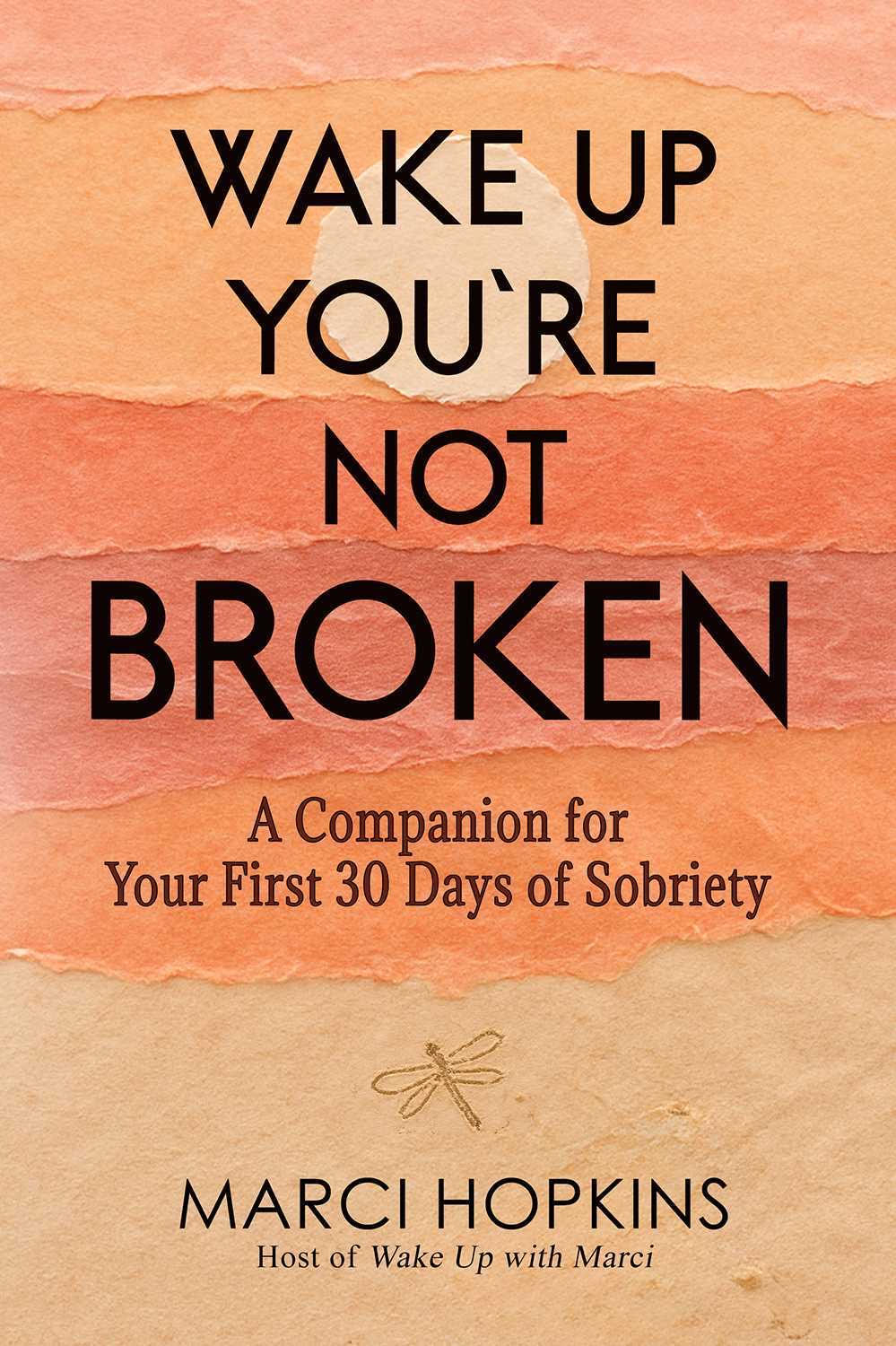
A daily, compassionate guide designed to help individuals through the physical, emotional, and spiritual challenges of early recovery.