-197Days
-23Hours
-26Minutes
-47Seconds





Welcome to Wake Up with Marcy, a deep dive into self-discovery. I’m your host, Marcy Hopkins, and this is the space where we get real about life, transformation, and finding our true selves. Hello all, and welcome back to Wake Up with Marcy, the show where real conversations lead to real transformation. I am so glad that you are here with me today. Today’s episode is all about something we crave and that is connection. But not just surface level connection. I’m talking about deep emotional authentic connection with ourselves and the people we love. Relationships can be so hard but there is hope and it starts with understanding yourself. Yes, that’s what I said. It’s not about changing the other person. It starts with you and that is what we’re going to learn about today. If you are looking to grow in all relationships in your life, then this show is for you.
Our guest today is someone who’s doing truly transformational work in his space and that’s all about relationships. Todd Payne is a seasoned relationship coach with over 25 years of experience. He’s the founder of Connectfully and the creator of Relationship Renewal Program, a powerful process that goes far beyond traditional therapy to address the emotional habits that quietly erode our connections. Todd’s journey has taken him from ministry to coaching. And after a wildfire forced him and his family to rebuild their lives, he relocated to Portugal where he is now, and now coaches individuals, couples, and teams across the globe. Today, we’ll talk about emotional intelligence, the Inog, which that one was new to me, so I’m excited to hear more about that. And uh I I will tell you I took that test and I’m a people pleaser and uh does this surprise you? Yeah, it really didn’t. I I I already knew that. And and where we can, you know, stop the same patterns that we have in relationships and start building real relationships that thrive. So let’s dive in. Todd, thank you so much for being on the show. Thank you so much for having me. It is truly an honor to be here with you and to be talking about this wonderful possibility and hope that uh that is for for everyone who who is in a relationship with another human being. Right. Yeah. Because you know, spoiler alert, we’re all different. Even if we can say like one’s a people pleaser and another one’s we’re we’re we’re different in then and how how we perceive things and how we process we are and and sort of on a cognitive level we can all consent to that uh that assertion. But on the other hand we also all kind of operate as though everybody wants what we want and thinks what we think and values what we value and are surprised when they behave differently than we would behave. So that’s one key thing as well is to not only acknowledge that people are different but exactly exactly.
So for you though your journey started with a failure and I’d love for you to share more about that and what was breaking down in your relationships at that time. Yeah, that’s a great question. Um, you know, so I I did not grow up in a religious uh family. I never really went to church of any kind. I did follow a girlfriend in college to church because that’s what boys do. We follow our girlfriends where they want to take us. Um, but while I was there at church, I I had really what what could be described as a religious experience. And out of that came a calling to serve in the ministry. But when I told my parents that I was going to become a minister, my father said, “You can’t be a pastor. you’re terrible with people. Uh, and sure enough, after a year-long internship, several years into the training, my supervisor filled out my evaluation with the words, Todd has none of the gifts and skills essential for ministry. I The big failure that set me on my journey was that I just was so bad with people, I didn’t even know that I was bad with people. And it was a long hard road to understand how to interact with people, how to lead people, how to um you know just be a human being. Uh but that’s ultimately what led me to the work I do now uh in relationship coaching because when you’re failing math class, don’t go to the kid who aces without doing the homework for tutoring. Go to the one who failed last year and this year is passing because they’re the ones who can walk you through how to solve the problems. And that’s really where I have ended up. Yeah. Well, I think it’s it’s hard to be in relationships anyway and we bring our baggage. Um it communication is really hard. But one of the things that you said was that your father said and and also the gentlemen in the ministry uh is that you weren’t good with people. Why why would they say that? Um, I burned bridges. I stepped on toes. Um, I remember one instance in particular where, um, I got into a tugofwar match over the the American flag with a World War II veteran, whether it should be on the altar, you know, in the altar space in the church. So, just I didn’t really have a sense of how my words and actions impacted other people. And and like we were talking about earlier, that awareness of of the fact that other people are different, that was also not really on my radar. I didn’t understand how to uh read what people were saying or their actions through their own motivations, through their own understanding of the world. I was always taking it in very personally.
And I’ve learned so much of this, you know, through all of my my healing and and my own training, right? to be able to understand other people’s perceptions and and not not realize then that you know I’m not always right right like we just because we feel strongly about something doesn’t mean somebody else does and why do we so inherently believe like we believe something that someone else must believe that and if they don’t they are wrong right you’ve just put your finger I was going to say there’s two pieces to that and that’s the Second one is is a false sense of uh black and white, right and wrong. You can feel the way you feel about it. I can feel the way I feel about it and we can both be completely valid and and have a sort of emotional integrity and internal logic that makes sense and is coherent and and yet they don’t have to agree and and that is a very difficult space to mature into a sort of holding open multiple perspectives being comfortable with gray or with um you know lack of resolution. So that that’s certainly one part, but the simpler explanation is that um that’s just what it means to grow up. It’s just what it means to be a child in a human body and a teenager in a human body and we grow into adulthood and we really don’t even have the capacity to understand what you and I are talking about until our brains are 20 years developed and then we’ve got to go on the journey of of discovery because it’s not intuitive. As I said before, we kind of graduate childhood with the belief that everybody’s like we are. But um it’s a process of discovery to just, you know, to to learn that they’re not and and how to integrate what we discover about other people with our own experience. Right. Right.
So you yourself went through a huge trial and error you know learning period but let’s let’s talk about this this inagram that you found um excuse me and and share with us exactly what that is and about the framework and how did that work for you? How did that create the shift for you? Yeah, great question. you know, after uh 15 years of professional ministry, uh I had I have feet under me. I understood a lot. I had, you know, as you said, learned the hard way, trial and error. Sometimes I call it the rock tumbler. Um when I got a sbatical, a three-month sbatical, and my bishop said to me, “Well, this isn’t just a chance to sleep in on Sunday. What What are you going to do to to improve yourself, to learn and grow over the sabbatical?” And I didn’t have a good answer. And so he said, “I think you should learn about the enog.” and he sent me to a coach and he gave me some materials. Um, and what I discovered in the anagram was all that all those lessons I had learned the hard way, all those anecdotes, all those rules to thumb, there was a structure and a framework that I could put them in and everything made sense. It was as if I was sort of looking through the trees and all of a sudden was uh 30,000 feet up looking at the whole landscape and and everything really made sense. And I came back from that sobbatical and I used it with my staff, with my committees, my volunteers, with my parishioners and discovered the power that it holds for transforming the way that we interact with one another. So that’s how it came to be my main focus. Uh eventually I decided I’d had enough evenings and weekends and I retired from the ministry and and now I do this full-time. Um but to answer your question, what is it? It’s an ancient system of understanding what motivates human beings and it goes back two and a half thousand years or more. Um, and what separates it from other systems of personality like MyersBriggs or DISC Big Five is that it’s really less about observable behavior traits. It’s not about what hap what we do out in the world as it is about the story we tell ourselves because we all walk around all day long saying I deserve this. I was wronged in this way. I should be doing this. I’m a bad person for doing this. And that inner narrative we sort of feel like is is organic and it’s who we are. But in truth, there are sort of only nine stories that human beings tell themselves and they’re survival strategies. They’re the ways that we have succeeded in the world. Um, but we tend to rely on them as the only tool in our tool belt and they’re not applicable in every time and place and situation. So, it’s really about learning what are my patterns, how do they serve me, um how do they get in my way or hinder me, and what do I do in those instances? And then I I also use it uh you know, you made an excellent point in the opening about that the chain we can’t change our partner, can only change ourselves. But one thing the inagram does that I haven’t found anywhere else is it reveals our partner to us. It gives us a backstage view why they perceive the world the way they do, why they respond in the ways they do. And when we have this backstage view, when we see the suffering our partner goes through just being who they are in the same way we suffer for being who we are, there’s this beautiful empathy that blossoms. There’s this space that grows between us that we can now be in uh that connection begins and and grows. Yeah. And let me tell you, I listen, I brought so much baggage into my relationship with and I’ll just say my husband, right? We’ll just talk about that right now because a lot of times our our love relationships are I don’t know priority for some reason. Yeah, but um of course I used to be a victim and I had all the pain that I had and I was always like, you know, he was wronging me and and he had what he brought into the relationship and how his parents raised him and and I always said like he had his head in the clouds all the time because he thought he came from this perfect background and hey, good for him. But I also like today just because of how far I’ve become, you know, I’ve come in my in my healing and learning about emotional intelligence and these things that you’re talking about and having empathy for others and just an understanding that he handles the way that that he things that he does like in our relationship or in parenting because that’s how he was parented. And so these are things he’s learned. It doesn’t mean that we can’t talk about them or now that I, you know, I can share like my perspective, understand his perspective and and we maybe meet in the middle instead of just like you’re wrong, right? And and it it does create this like my relationship with my husband today is completely different. I I mean, of course, you know, nothing’s perfect and we have our moments, but at least we’re be even if we act in a way that that is not so nice, we can quickly turn it around and go, “Wait a minute.” You know, like that was not a good way to respond. We I reacted, you know. So there is so much power in in what you are talking about in creating this change and and let’s talk about the emotional intelligence uh element of this. Can you share more about that? Absolutely. Absolutely. Um I I wanted to just to piggyback quickly on the last comment that you made and and say that um it’s often a moment where chains fall off relationships when we come to the realization that the our partner’s words and actions frequently say more about what’s going on with our partner than they do about us. And it depersonalizes and it’s not he’s not attacking me. He’s just responding the way his brain responds and then there’s this this this space that opens up. So I I just think you you really touched on it beautifully. U to your question, emotional intelligence, I like to say the anagram is the car that we’re going to ride in, but emotional intelligence is the road we’re going to drive down. And um as I work with my uh with my clients, I tell them that there’s four pillars to emotional intelligence. And it think of them like staves of a barrel. Whichever of the staves is the shortest is where all the water pours out. So we’ve got to kind of make sure we we build up all of four of these uh pillars of emotional intelligence. They are self-awareness which the anagram reveals our patterns to us so that we don’t have to hunt around in the dark and and do trial and error to discover them. Self-management uh and the enog again gives us pointers by saying this is what the path of growth for your type looks like. Partner awareness or other awareness and that’s where that empathy comes in where I can see wow my wife this is how she perceives the world. this is how she re reacts to the world. And then the fourth is interaction management or relationship management. We can’t we can’t manage our partner obviously, but we can be aware in the ways you were just describing with your husband of how we interact, how it affects our partner, how to recover from missteps, that sort of stuff. So those are the four key pillars that emotional intelligence can equip us. Uh and the anagram can can help us along the way. Yeah, I like that. I like that. That’s the car and then the and then the road, the journey. I like that.
So, let’s talk about I I mean, you’re speaking my language right now and I it I’m 100% behind and and I don’t just believe I know that it that it works. Yeah. Yeah. But let’s talk let’s talk about like traditional therapy because most times right like we go we have our own therapist or maybe if we’re lucky our partner will agree to go to therapy with you you know and what do what what’s your your feeling on uh traditional therapy? Well I certainly think therapy has its place and I have been in behavioral therapy of various kinds since I was a child. I I endorse it fully as part of of mental health. But coaching is a different thing than therapy. And I’m not a therapist. I’m a coach. And coaching is really um where are we now? Where do we want to be? And sometimes therapy is where are we now? How did we get here? And the coaching uh paradigm is less concerned about how we get here. We still have to revisit that stuff because it informs what our choices are moving forward. But we don’t try to unpack it and solve it. Instead, we begin with a lay of the land and a vision of the future and begin to construct a plan to get us from where we are to where we want to be. Right. Right. So, I’ve done therapy a lot for myself. Um, and I I think it it is important. Um, but I will say like a coach, the things that you’re doing, it just it helps to create change in your life in in a way that a therapist cannot. And yeah, at times that’s true. And and again, I’m a huge fan of therapy and and you brought up behavioral therapy. I mean, there’s all different types of therapy, right? Of course. Um, and and in relationship therapy that I had with my husband, it was it was good because it allowed him to hear why I am the way that I am. Yes. And um with with abuse, you know, like when somebody has abuse uh in their childhood and abandonment and all of these different things and raised by an alcoholic mother and there’s there’s a lot of pain that is there and um when you come from a much better background, it’s it’s hard to understand, right? it it there’s so much more than just the the surface uh you know how things start right so you you bring in your best self and then everything starts you start to see uh you know through that um you know because life happens and and more responsibilities happen and such so um again hand in hand I think very very hand in hand but I find a lot of couples when they come to me um really are interested in a a shift uh that’s measurable, that’s sustainable, and often they they really want to experience it quickly. And coaching really can leverage those points and using the anagram gives us, you know, the heart of the matter in a in a just a few sessions. So people are feeling the difference in 14 days, 21 days. Um instead of sometimes feeling like they have to go months of therapy to really dig in and and get behind what’s happening. Well, in the way that we are today, we need that quick fix. Yeah. So that’s it. It is it is it’s the social media revolution, isn’t it? Six seconds or less.
So let’s talk about your program. Um I mean you’ve touched on it uh collective uh connect let’s see connectfully right connect relationship renewal. Yes. Yes. So tell us tell us a little bit like what’s the process and what what all do you share within your your program? That’s a great question. Thank you. It’s a 16-week program uh sort of a boot camp. A lot of the folks I work with continue with me after that 16 weeks, but the the nature changes. Um, and in that 16 weeks, the we do learning about what the enog is and how it understands people, which gives us some common language and sort of neutral ground to talk about one another. In the anagram, there are nine personality types and we simply use numbers. So instead of saying about my wife, I don’t like when you XYZ, I can say, you know, um it’s a tendency of type two, that’s my wife’s type, it’s a tendency of type two to do these things which I don’t know how to handle. And now I’m not attacking her. Uh it’s it creates that neutral ground. So we learn about the and then we do a deep dive. you uh so I I meet with the couple together, but I also meet one-on-one with each partner and we do a deep dive into your type and your partner and I do a deep dive into their type and then we come back together and we talk about who we are and why and share with our partner and learn and insight. Then we split up again and I do a deep dive with you about your partner with your partner about you so that we can really understand that be behind the stage uh or behind the curtain view and learn tips and tricks. How do I speak to a type two so that they hear me? When I’m listening to a type two, what should I be listening for? Um, then that brings us to about the halfway point in the program. And now we’ve got the structure in place, the language in place. We’ve been doing exercises to build trust and and safety, emotional safety with one another. Uh, now we begin to address the issues that really brought you um to me to begin with in a bespoke fashion. knowing what your type is, knowing what your partner’s type is, knowing what those interactions look like. And now we we can begin to sort of shift the uh the weight around uh have important conversations and and that’s where the real um blossoming, the transformation can take place. Is everything solved at the end of 16 weeks? By no stretch. But are you now equipped with confidence, with tools, um, with a little bit of experience under your belt to, you know, handle the conversations that are to come. Yeah. Yeah. Yeah.
So, let’s What about somebody that’s just they’re exhausted. They think that they’re they’re at the end of their relationship that they don’t see a way out. Is there a way out? Is there a way to change that? Um I would love to say always forever. Of course there is. Uh but I have also been a partner to conscious uncouplings which is sometimes the healthiest thing for for everyone involved. But I would like to say that hope is probably the most powerful human motivator. Fear is a strong one and a lot of us get trapped in cycles of fear or respond out of fear. But hope is stronger even still than fear. And even for those who are exhausted, who don’t see a way out, I like to lift up that um we can only think of the options that we can think of. One of the reasons we go to a coach or a guide is because they have a different perspective. They can bring a different language or a different set of tools. And those can often make the difference because they’re new, because they’re alternative. they they they come at things in a different way. So I like to lift up that if you if you haven’t done this particular way of seeing yourself and your partner that is the enog if you haven’t done work in emotional intelligence then all hope is not lost there is plenty of things that we can still be doing to save uh you know what what is meaningful and you know deep and exactly and I’m going to go back to before I started my work on myself right because the only thing we can change is ourselves That’s right. Is I I did not think I wanted to be married to my husband anymore. And we now are at the most beautiful place and I’m in the best relationship and I never thought that that would be possible. So, I’m telling you that it is. But there is work involved. You’ve got to get educated. You’ve got to create change within yourself. And you’ve got to change how you respond and understand your partner. So, and and I like to say that we all human beings grow as we as we live. That’s just how we are in the world. So, the choice as a relationship is are we going to grow together or are we going to grow apart? And that’s okay. It doesn’t work. Yeah. Sometimes it doesn’t. But with with intentionality, with awareness and intentionality, we can grow together and and have that beautiful uh vision you’ve just painted that making that choice. Yeah.
So, can you give us like two tools that maybe couples, somebody’s out there listening right now that could help maybe to interrupt some of their un unhelpful patterns with their partners? Sure. The first tool I give to everybody uh in my first session when we get together, it’s a very simple tool. It’s just a a horizontal line. Just think of a horizontal line in your mind. Um, at any point in time, every human being is either above the line or below the line. When we’re above the line, we’re curious, we’re open, we’re willing to question our beliefs, we’re playful. When we’re below the line, we’re committed to being right. We are defensive. We’re closed off. It is the default nature of the human brain to be below the line. It has evolved as a threat detection system. So, being on alert is the way the brain is. But it’s tough to be in dialogue. It’s tough to have meaningful connection. It’s tough to make positive change when we’re below the line. So, a simple tool I teach right out of the gate is just to ask your partner and to ask yourself, am I above the line or am I below the line? You’re not a good person or a bad person for being in one place or the other. It’s not right or wrong. But what it does do is it informs whether or not this is the right time to have a conversation or this is the right time to reach out and make a connection or not. And it spares a lot of pain and heartache, a lot of that personal insult from your partner snapping at you or whatever. just do a quick check-in with yourself and with your partner. That’s that’s the first tool I would recommend. And yeah, so I I asked for two. Can we have another one? I know. I know you did. The other one I’m just going to sort of touch on briefly. It’s a little bit more complicated, but I think people can appreciate where it’s coming from. It’s about slowing down the process of conversation. And I call it the three time rule. And what we do is that in the first time, I come to you and I say, “Marcy, I’ve been thinking about this. Are you in a place that you can hear my thoughts? And your job is just to hold the space open and ask curious or clarifying questions and let me share where I’m at. Then we allow at least 24 hours to pass before we have the second time. And the second time, the roles are reversed. You’re going to come to me and say, “Todd, I thought about what you said and here’s where I’m at. I’m going to hold the space open with only curious or clarifying questions and allow you to really share.” Then 24 more hours pass. We come to the third time. And now we’ve both had a chance to be heard in full. We’ve both had a chance to reflect on what the other said. Now we can really enter into meaningful conversation that isn’t reactive. And I find that just slowing the process down intentionally in those ways. Being sure that everybody gets heard um can really make that third conversation quite productive. Well, that sounds amazing. Um you have to make a lot of changes, right, to to do something like that. and and to hold that space open requires some skills and some practice. Yeah, exactly. You got to take a little work on that.
So, let’s just say if somebody’s not at that place yet, what are just some easy little things like they could do to to respond instead of react, right? Like you you get the email that ticks you off. um you know, somebody has said something that you’ve taken in a certain way, even if they maybe didn’t intend it that way, or your your kid pisses you off, like what can you do to respite folks into I call it RDR, which is recognize, disengage, redirect. Um, the first thing that I invite everybody to do is to become more in tune with our bodies. Um, our hearts are always looking to the past and how things were and how they might have been. Our brains are always looking at the future, the threat and concern and worry, but our physical body is always in the present moment. I like to say, you don’t have to pee next week. You weren’t hungry yesterday. So, we we learn all of this great information about what’s going on with us from our bodies. So, we have to first learn what does being ticked off do to me? Do I clench my jaw? Do I do my palms get sweaty? Do my voice get loud? So that we can recognize when we’re triggered. Then we want to disengage. Take a walk. Do a breathing meditation. Write a a note somehow. Get yourself out of that situation because rarely is it as urgent as it seems. It doesn’t have to be resolved in this minute. If we can just break and allow our system to reset, the nervous system uh you know that those chemicals that that go through our mind because we get worked up, they have a halflife and if we can just breathe through it, we will return to a better state. And then redirect, which is pick a different way to approach the issue that you’re struggling with now that you’re in a new space. A different way to to react um and approach it. But another one that was a big one for me to learn was when you approach a conversation. Yes. That’s the above the line, below the line. That’s everything. When when is everything. Yeah. Because it’s like if somebody’s not in a good headsp space or they’re busy or frantic like and then you’re you’re trying to like load them up with something that you want to talk about, it’s not gonna go well. I know. I’m saying to my teenage children all the time, timing, timing, bad. Can I have timing? You’re asking at the wrong time. Right. Right. And but I think that that’s just, you know, somebody has this guttural feeling all of a sudden and then they’re just like right at it and and Yeah. And you know, a lot of the work that I do with folks is around emotional resilience, which is the capacity to sit with your negative feelings and not be controlled or driven by them. And that’s a big part of the relationship getting better is not, you know, being triggered so so quickly and and knowing when I’m triggered, okay, this is how I change that. um rather than those patterns that happen when I respond reactively and then you respond reactively and that’s that’s what we’re trying to interrupt.
So, we talked about I feel like we’ve talked a lot about relationships, right? And changing that. But what you know, one of the things that I did bring up, it’s about changing yourself. How can we even become somewhat self-aware that like I have someone in my life, they can’t keep a job, they can’t stay in a relationship, it’s everyone else’s fault. When do you become aware like what’s the one thing not changing right is what’s the common denominator yeah the common denominator right the common denominator and and so like like even with me and trying to change my life I I kept changing and moving and doing all these different things and things would fall apart and then finally I would be like what’s the one thing I’m always taking with me that’s never changing me you No. So that’s why things are changing. Yeah. Yeah. So how can we start to become self-aware? Like is there a way for us to start you know like having some sort of questions we ask oursel or thought process or I mean I know not everybody’s going to do it but is there a way? Well yeah and I’ll begin by saying I’m a firm believer when the teacher when the student is ready the teacher appears. Uh so you know curiosity about maybe this podcast this conversation that might be the the sign that you’re like okay maybe I’m ready to learn some more. So just be open to little curiosities. But to answer your question about how that’s really where the anagram comes in. I discourage people from taking tests because when we take an anagram test then it becomes about how accurate the report is or how accurate the profile is. When we learn about the system then what we do is we find ourselves in it and it almost becomes an act of confession. I am a type five. That means these wonderful things but it also means this shadow side. I own it. One of the ways that I discovered that I am a type five is that as I was reading one of the enagram books, there was a line in print that I I swear as I read it, I thought to myself, I have never told anybody this. And there it is in print. So clearly this thing knows how I function, how my brain works. And it was I get chills just talking about it. But those are the moments that bring self-awareness about. But it starts with the curiosity and the desire. And then this system will give you tools and and finger holds and footootholds to, you know, crack that that that shell and and emerge with with new self-awareness.
So when you started doing this work and seeing these changes and and you’re a type five, which I guess if you do this work, you’ll figure out what that is. How many types are there? Nine. You said nine. Nine. That’s right. Annia means nine in Greek. Oh, I got you. I got you. Okay, thank you. Um, yeah, but like when you when you start figuring out about yourself and then you start figuring out about your partner like what? Well, let me tell the story. Can you discover through that if you if you are even adaptable or is like every are there more adaptable people for each other that you could learn that through the inagram? Yeah. Yeah. Everybody has a difficult road to hoe. One of the interesting things about the enagram is that it paints a picture of m of maturity. We know what a an unhealthy immature type five looks like. We know what an average type five looks like. We know what a self-actualized type five looks like. And that’s part of how it helps you grow is it shows you the arc. What’s next, where to go, how to get there. Um, but but I’ll share a quick story. So, as a type five, I’m a head- centered type. I take the world in as data. Everything must be tested and proved. My wife is a heart-c centered type. Type two, everything is about relationship. Everything is about connection. And as we’re raising our children when they were very little, and she has a degree in human development, by the way, she says, “This is the better way to parent. this is the better way for us to handle this particular situation. And I and I said, “No, no, no. I know better. I Why why didn’t I listen to I don’t know.” But but because of the anagram, she said, “Ah, my husband takes things in through data.” So, she found an article in Psychology Today and she sent it to me and when I saw the data, when I read it and processed it that way, I was like, “Oh, thank you for sending me that.” And now I’m totally on board with the things that she wants to do. So she just had to talk to me in a different way rather than saying, “Hey, trust me.” Because I don’t do things in that way. I do things with data. She does things in relationships. So learning each other’s vocab, learning each other’s uh points of of uh you know uh importance or priority is really a key to to using the anagram in in relationships.
So what if you have a lot of trauma from your past and Trauma makes everything difficult, doesn’t it? Yeah. Because it’s not just about discovering like, oh, this is how I process information. I mean, you do, but like in a Yeah. In a very Well, I I I believe in a in a even a more warped way because like your brain is has changed. Yeah. 100%. And and so how do we change our brains? because you know I had to rewire my brain and there were many things that I had to do. It’s one of the beautiful things about the human brain that we are now discovering that that the neuroplasticity lasts all the way to the end and it seems like perhaps even beyond the end uh somehow. So there is never a point where we can say well I’m I’m too old my brain won’t do new things. Um but as I understand it neuropathways are like ski runs. the more we go down them, the more compacted the snow gets, the faster the turns become. And doing things in new ways is like cutting through fresh snow. It’s hard to do. It’s physically exhausting. Um and and that’s the case of sort of when we’re when we want change the probably the most important ingredient is being gracious with ourselves is being patient and forgiving and recognizing this is not a linear journey from A to B to C to D. This is a journey of fits and starts. This is a journey of successes and setbacks. And when we are patient and gracious with ourselves, then we have the fertile ground uh to do the work that that lay ahead. And it and it takes years. Took me years. I’m sure it took you you years, too. But that doesn’t mean there aren’t things we can get going get going on right away to to begin to feel some some relief.
Do you think that within a job I was just thinking about, you know, someone in a job and they’re really unhappy in their job and they say they can’t get along with their boss, right? Um and again, you know, this is I think about it today like as someone in a role that uh is over let’s say a department, you know, they’re answering to the higherups and they have a lot of stress to perform and someone under them may not understand what what their perspective or why they are potentially the way that they are. Not saying that they shouldn’t manage better because that’s also a skill learning how to manage. Absolutely a skill. Yeah. Yeah. And there’s a lot of people out there managing people that are not good. I at one time was one of those people because I was Me too. I was thrown into a job that I had no idea what I was doing and I had to learn everything and I was an utter nightmare to other people. So I had I own it. I own it. Um, but so you think you think you you’re so unhappy in your job, right? And I hate my boss and this is that. Like what can we do? Cuz you’re not you’re not going to therapy with your boss. What can you do to try to shift things to try to help it to be better for you in a way like to rethink it, not take it personally. Um and and and maybe if you can make some shifts for yourself, maybe the job wouldn’t be as bad as you think it is. You know, there’s a longitudinal study that Harvard has done, I think it goes back maybe 70 years now, about what is the what makes people happy. And what they’ve discovered is uh that the quality of our relationships is the number one indicator of our happiness. So, you really put your finger right on it. I think there’s a couple of things I would lift up. first and foremost is we tend I think in our modern culture to put a lot of eggs in one basket and um there’s good science that shows the more areas that we have social connections then than then when they go south in one of those areas we are more resilient. So having a a club or a hobby that you know you meet with people or a trivia team or a train building club whatever I don’t know having your family being on a in a church community or in a choir or in some sort and then there’s work. Uh when all we do is work when I see my wife for a couple of hour minutes in a day and I’m with my boss for 10 hours five days a week then it feels like it’s my everything and it can really dampen my whole life. So diversify almost like a financial advice. Diversify is one of the ways that we can find some of that joy and happiness. The other is that when we do understand like maybe what our our boss’s anagram type might be, it really can reveal why they do things the way they do. And again, it depersonalizes it. Uh and and it can give you some tools like um you know, if your boss happens to be an eight, the eights value strength. So when you talk to him, talk to him strong instead of being polite and kind or maybe he’s a four and he values creativity. All right. Well, let’s come to him with unique things and like we can sort of meet people where they’re at by recognizing what they value, what moves them, what motivates them. So if you can’t do that though, is there something like can you do take the inagram yourself and then like try to make changes for yourself so you can help yourself in that situation? is sort of it has large categories and they get ever more refined. So even if we don’t know what our boss or our partner or neighbors type is, we can begin with large scale questions like heart center, head center, body center and we there try different tactics and see and then and then narrow and then see and then narrow. So, for me at least, this is how I do it. But again, I’ve been studying the system for a while. But when you have the system in hand, you you can begin to to spot it. You you recognize people behave in these ways. There’s there’s only really truly it’s archetypal. You know what I mean? So, you’re looking for archetypes and um when you have an understanding of them, you can begin to spot them, you know? Yeah, I spot people pretty quickly. So, Oh, okay. So if you if you kind of understand the whole program or that formula of and the different types of the system, you can actually manage how you you’ll identify like maybe who somebody is like they’re a nine. So this is how maybe I should manage that person. Think about it. I like to think about it like musical scales. If I don’t know if you know much about music, but there’s A and A sharp and B and C and C sharp. Um, so if you think about the personality types like each of us being a different key, then what I do is I play in your key. So I might talk to my child who’s a six in one way and then my wife who’s a two in another way. Same message, same content, but played in a different key so that they heard me. And that’s what you begin to recognize is the key that the other person is playing in. And I can talk to you for an hour and at the end of that I’m like, “Oh, I know you’re playing in the key of three.” Like that’s who you are and that’s fine. That’s great. Am I a you Well, I like what you’re saying and and I really want people to hear this outside too. Everyone listening is that remember when parenting our children, you can’t parent them the same. They’re not No. No. And they don’t necessarily grasp that. Yeah. And it’s hard and it’s just and I also like and this is for me and I God hopefully no one hates me but I can’t stand it when somebody says well I had to do it this way when I was 10. Like we are like in a different generation. Everything’s changed. We have to evolve. And you know it’s the six years between my oldest and my youngest. I’ve had to evolve as a parent as the world has changed and and they’ll say, “Why does my sister get something I didn’t get?” And I’m say, “Well, you and your sister are different people. You’re going to be parented differently.” Yeah. And and and I like what you said also like finding things that you enjoy. That’s so important. Don’t live for somebody else. And cuz I did that myself. I got lost in everybody else. And because I didn’t know who I was. I mean, that was part of my my trauma. and I had lost myself and I you know I was always trying to find happiness and validation through other people and it’s really when I found the the love and connection with myself my inner self like going within instead of outside of myself that so much changed but I’m just fascinated because it’s just you know there’s I just feel like it’s hard to have good relationships it’s hard to communicate it’s hard to understand other people and then just even in society and politically everything’s so divided instead of like just understanding we can have different ideology and you know just different ways of thinking. So it’s it’s just so important to have these conversations. So you know hopefully like you said whenever that student is ready to be taught the teacher is there right and you can’t make anyone listen or be ready they have to be ready for themselves you know but it only takes a just a desire that’s it doesn’t take any skill doesn’t take any experience doesn’t take any readiness just desire all right so for those that are ready to dive in right now so where can they find you and learn more. So, uh, as you’ve mentioned, my my company I founded is called Connect Fully. Uh, and we live in a world where you can spell things however you like. So, it’s spelled with a K. Connect. Yeah. Ko n CF fu ly. You can reach me connectfully.com. You just shoot me an email toddfully.com. I’m on Facebook. I’m on Instagram. You You’ll find me all over. But I like to hear from people. I’m I’m learning. Um, I certainly don’t have a corner on on knowledge and I find every couple brings unique stories of success and challenge and how they’ve overcome it. So, I would love to hear where people are at, what where their wins are, where their struggles are. Um, so yeah, reach out to me connectfully.com. Connectfully I made that a little difficult for myself earlier.
I want to thank you all so much for joining us today and thank you Todd for joining Wake Up with Marcy. And if this episode has brought you clarity, hope or a new perspective, it would mean so much if you could share it to somebody that needs it, a friend, a partner, a family member, anyone that needs this message. Because here’s the truth. Working on relationships doesn’t mean that it’s broken. It means that you love yourself, that relationship, that person enough to grow. And often that growth begins with yourself. So, thank you again, Todd, for coming on the show. Thank you for having me. And thank you all for listening, watching, sharing this episode, and helping to spread the message to others that may need it. You never know whose life you’re going to change just by pressing that share button. So, thank you again for joining me today. It is time to wake up to your worth because your past doesn’t define you. You are not alone and it’s never too late to become who you are meant to be. So, I’ll see you next time on Wake Up with Marcy.

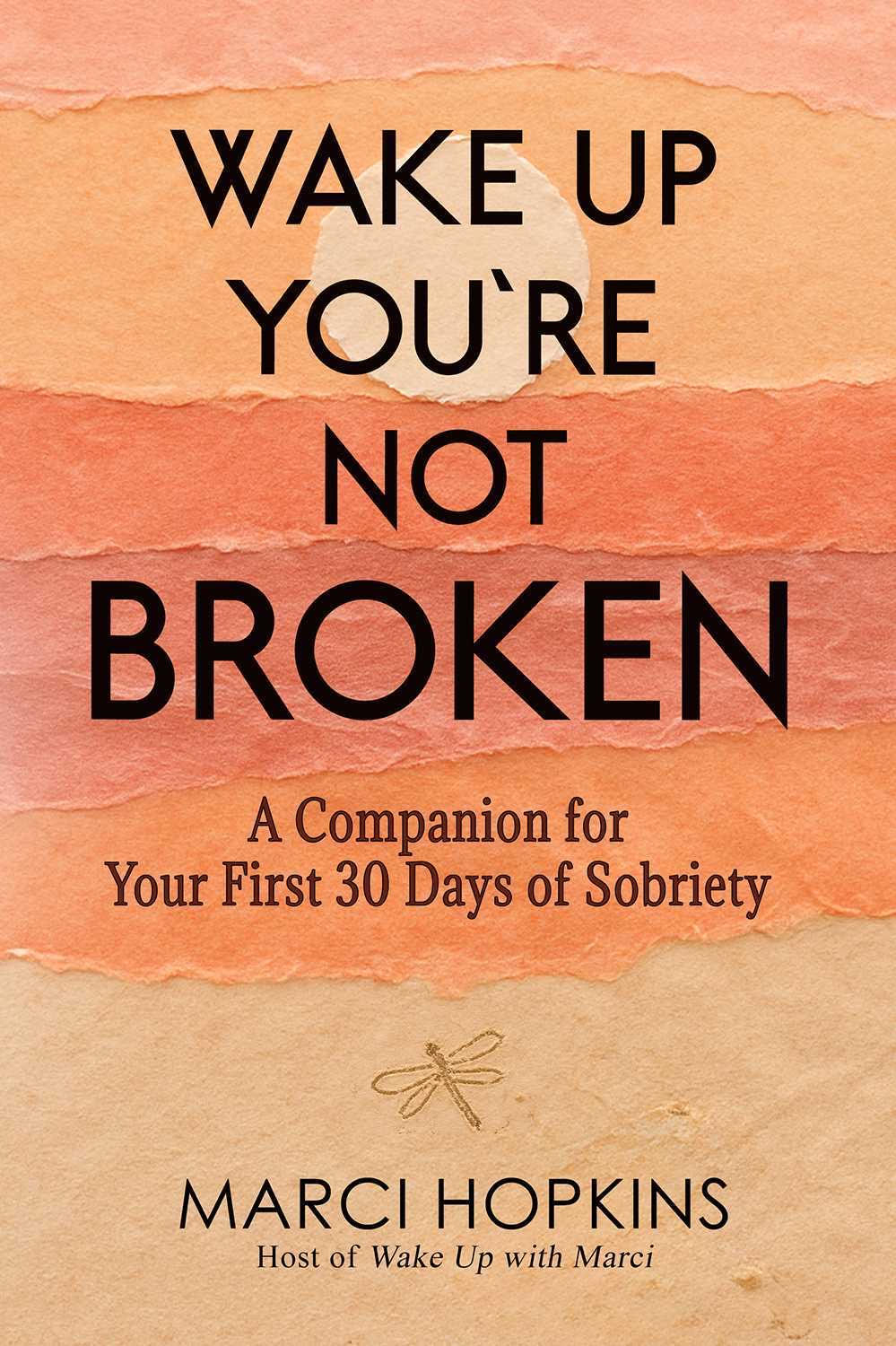
A daily, compassionate guide designed to help individuals through the physical, emotional, and spiritual challenges of early recovery.