-198Days
-9Hours
-36Minutes
-16Seconds





Welcome to Wake Up with Marcy, a deep dive into self-discovery. I’m your host, Marcy Hopkins, and this is the space where we get real about life, transformation, and finding our true selves. Hello all, and welcome back to Wake Up with Marcy, where we share real stories, radical healing, and waking up to your worth. The raw truth helps you move through life’s hardest transitions and come out stronger on the other side. I’m your host Marcy Hopkins and I’m so grateful you are here with us today. We are going to be diving into something that is very close to my heart and that is sobbriety and what it really takes to stay sober. Whether you’re newly sober, sober curious, or supporting a loved one, you’re going to want to hear this. I am joined today by Jen Hurst, founder of Lighthouse Sobriety, author of the 100day sober journal, and someone who is doing incredible work helping women to find confidence and connection in their alcohol-free journey. So, Jen, thank you so much for coming on Wake Up. Yes, thank you so much for having me. I’m excited to be here. you know, we found each other on Instagram, which it there’s such a great sober community there and I’m just so impressed by the work that you’re doing. Oh, thank you. I love Instagram because it’s such a powerful tool to meet other people in sobriety who are going alcohol-f free. It has been the catalyst to growing my business to meeting and creating my sober community has all been through Instagram. And so I think it is a powerful tool if you choose to use it to maybe you live in a place where you don’t know a lot of other people who are alcohol-f free. You can meet people virtually with just a click of the button. and women, I mean, especially for me, that I would never know if I didn’t come out about my sobriety. And so, it has been just huge for me um in my own sobriety who as someone who was living five years, four years in the sober closet to now expanding and being so open about it to then creating these connections through it. Absolutely. And that’s the thing like if you’re just starting out, I love that there is the ability to find these connections virtually until you are more comfortable with it.
So let’s talk about you for a little bit, Jen. Please share with us like the moment that everything changed for you. So the moment, right? There’s that one moment where we really maybe make that decision to create the change for ourselves, but there is that little voice that’s been going on in our head for a very long time. So share with us what was happening for you at the time you said enough is enough. That’s such a loaded question. Um because it was many years leading up to it to where I finally made this click. And in sobriety, I always like to call it this click. I know it happens for many people. Some it’s like this pivotal moment that you wake up and for some it just happens over time and then you’re living an alcohol-free lifestyle and then you realize I want to keep feeling this way. I like how I feel. I want to continue this. And so for me, when I made this shift, when I finally got sober, and I like to say it took me a good year and a half of actively trying, like really trying. I’ve been to three impatients, eight outpatients. I’ve done detox twice. I’ve gotten two DWIs. I’ve like I’ve done it all. I’ve been to AA. I did everything. And so it got to a point where I was, we say it a lot in sobriety and just in life where you’re so sick and tired of being sick and tired. I was physically and I I really felt myself at 31. So I’m 43 now. At 31 is when I made that decision and ultimately got sober. But I found myself last day drinking. I was in detox and I blew a 34. And that wasn’t the highest I’ve heard. I’ve been to treatment. I’ve heard higher. It’s not like it’s a competition. Yeah. But the fact that it scared me because I had been drinking like that for the past two years is that how often did I come this close to not waking up and I physically felt myself and I say this like with all seriousness dying. And I didn’t know if I was going to wake up another day. I was very malnourished. I was mixing aderall with alcohol and at that point it was kind of like I had an out of- body experience is I had been trying for a good year and a half to do this but I just wasn’t ready like I really wanted it but I just wasn’t to that point where I wanted to give it up or let it go because it had such a hold on my life that giving that up was giving up a huge part of my life and was I ready to do that and I think for me it really came down to my health and I looked at myself out of my bed going through the withdrawals and anxiety and shakes and all of those things that are unpleasant in early sobriety, but many of us have to go through. And I looked at myself, I’m like, what are you doing? I had lost literally everything. As someone who had a great upbringing, I had two great parents who rarely drank but had alcohol in the house. I had a good upbringing. I got great grades. I was a straight A student. I got awards. I did really good at my job, but inside I was holding on to this secret that I was in my closet drinking to manage anxiety. And so it can I always like to say it can happen to anybody. But I looked at my life and throughout my journey, which was about a 10-year progression, I lost my job. I always said, “Okay, well that hasn’t happened to me.” And then it did. And then I lost my car. And then I got my second DWI. I lost my license. I lost my job. as I I was on the verge of losing my marriage and I made that decision. I’m like, I’m done. Yeah. I’m so done. And I don’t know what’s going to happen. I have no money. I have no car. My husband’s not talking to me. My parents don’t know what to do with me. I’m calling homeless shelters because no one knows what to do because treatment was supposed to cure me and it didn’t. So, what were they going to do? They had to set those boundaries. I’m like, I didn’t know what was going to happen. and I had a lot of stuff to clean up, but I knew as long as I don’t drink, I can’t make this any worse. And so once I gave up fighting something that I could not control, everything got easier. And it was just like this huge weight of like, oh gosh, I don’t expect anybody to believe me, especially not my husband or my parents or anybody. Because how often did I say, I promise this is the last time. I’m done. I’m done. I’m done. And then I broke that promise. I broke that promise. I lied here and I lied there. But I knew it within myself. And as long as I stayed true to that, everything else just magically fell into place. And like I said, there was a lot of things to clean up. I had to do jail time. I had to do house arrest. I had to pay thousands of dollars in lawyer fees. I went to treatment again. I got my car, you know, I had to get an intoxilizer for two years. um all of these things. But it was so much easier when you make that decision and you make it black and white. I wasn’t trying to stay sober. I did not want to drink anymore. I I had Oh, it made me just sick to my stomach to even think about it of all the things that it took for me. But in sority, all the things that I get to take back and it didn’t happen overnight. But it’s amazing what can happen when you stop putting this one thing into your body. And it’s so crazy how that can shape and form who you are, your connections, your relationship with your husband. It makes such a big impact. And so when you give that up, there’s this period, and I know I’m kind of going more into it, but there’s this period like in your podcast of self-discovery of who am I? Um, but that’s what’s so amazing about sobriety. So yes to um at that moment I was in detox where I made that decision. Yeah.
So but prior to you like even trying to stop was your drinking affecting your relationships? Yes and no. Because again I did a lot of my drinking in secret. No one knew. I waited. I was Did they really not know? No. and not even my husband until I couldn’t hide it. And so I stopped trying to hide it a couple days after we got married because I physically collapsed. I was so exhausted doing everything myself. I was drinking around the clock. I had no breaks and I just didn’t. So they knew you. He knew you as a woman that had alcohol in her system all the time. Well, he didn’t know I was drinking as much as I was. He was completely But that’s what I mean. Like, so did your did your personality not change? Well, once and I how I managed it. Yeah. We like to think we’re so clever is when he bed, I would stay up and I would work and then I just drink or I’d sneak it a little bit. But again, being very careful not to get too drunk too fast so he would notice. But over time when he started when I came out and I stopped trying to hide it and then I was actively seeking sobriety, you know, he would pick up on my quirks of I used to like flare my nostrils like this and I had no recollection of doing that. Um, and of course I would gaslight him and be like, “You’re crazy. I’m not drinking. I don’t know what you’re talking about.” And so it just created this tension in our marriage. But I think previously of course my parents could catch on. They would see me drinking. Um, I think my sister kind of knew that I overdid it a lot of times, but they didn’t know how much. And so when I came out and said I was going to inpatient or when Wayan would tell them um, and when I was getting sober, I didn’t really want people to know. It was really embarrassing at that point of and I prevented me from getting sober for many years because I didn’t want that label of an alcoholic because my view of that is someone who’s weak and again this is just a stereotypical version someone who again the brown paper bag the homeless like you have a problem how come you can’t control it so that would tarnish my ego no and so of course I didn’t want this like dirty laundry aired out so Whan was trying to go through this by himself myself connecting with my sister and all this. And so when it finally came out that I was an impatient and that I was really struggling, no one believed him. They’re like, “What are you talking about? Jen like rarely drinks.” They didn’t know all of the drinking that I was doing in secret before we would go out. And I started this well before I even met my husband to manage my anxiety. I would get really bad social anxiety. I’d get really nervous cuz if you think about it, when I I it’s not the same for everybody, but when I had my first drink, I was 15. I was just starting to like date, meet people, meet my friends, and going to college. I didn’t really even know how to go on a date without alcohol or go to a party without it. Yeah, I feel that’s a pretty common story, right? That it helps with our confidence. It eases kind of that anxiety that we have. Um, and I align with so many of the things that you’ve shared because I’m almost 10 years sober and I Amazing. Yeah. Thank you. And but I was hiding it and I had all the struggles and I tried to get sober for me. The 12step program worked, but the first time I went in, I thought I really wanted it, but I didn’t really want it. I still felt a little uncomfortable when I said I’m an alcoholic. Who wants to say that, right? Um, I love that we now have an understanding more around alcohol use disorder, but it took me a good year of proving myself to myself. I was absolutely an alcoholic and I had a problem with alcohol and I almost lost everything, my husband, my family, you know, and and um my final straw was a DUI. And it was that that click that you’re talking about. It’s like that next morning I went to bed a victim and angry and it was everyone else’s fault and my husband was around more and it was this and that. Um but that next morning I woke up, surrendered and I was ready to do whatever it took. I didn’t have to convince myself anymore. So I was ready. Yeah. Get that. Yeah. And that’s the whole thing is that you have to really want it and you have to be ready. And same goes, we were just talking in my my lighthouse community yesterday about even coming out of the sober closet on social if you want to is that you got to be ready to do that. It’s to not force yourself or feel pressured to do that. But it’s such a liberating choice when you Yeah. admit that and and claim that on social. It was just a pivotal point. I have two markers in my sobriety. The day I got sober, the day I came out, and both changed my life forever. But it’s this whole notion that you got to be ready and sometimes continue to work until you get there. Yeah. The thing is also it’s just we’ve been so programmed to that this is a shameful thing and that you know and you touched on this before about it’s willpower possibly you know or our moral compass like if we my mother was an alcoholic and I now say like if my mother really had a choice would she really choose the bottle of vodka over me? I don’t think so. if if she was in her right mind and not coping with this disease, which it truly is a disease. And that’s what I love kind of moving into how you’re helping others with this disease, right? And there’s six habits that you talk about. So, what are these habits and how do they work? Why do they work so well? Yeah. Well, I started implementing these habits and I don’t know if you ever did 75 hard. Did you ever do 75 hard? Heard of it? I did not. No. Well, I did this in 20 uh 21 actually when I started moving to the country and I started implementing some of these habits because they made me feel so good mentally and many of them I have been doing already. But I think there comes a point in your sobriety, especially in early sobriety when we feel this dip in dopamine because we’re going through withdrawal of having this high dopamine from alcohol is that we can feel low for a little bit. But also just because we’re not drinking doesn’t mean we can can’t do other things to feel better to produce dopamine naturally. And so what I like to do, and I think anyone who is willing to go alcohol-f free, they’re a go-getter. And they want to, they love having a tracker. They’d love having other things to do to number one fill the time, but again, help them feel better, boost that dopamine, and increase their happiness in this process, especially during this dip. And so it also gives them some structure, gives them some goals to achieve when we’re not drinking because I think this big void that happens when we stop drinking. It’s like, okay, if I was drinking a lot, what do I do with that time? These habits can help give that structure, provide goals, and also um to boost that confidence and fill that time. So, one of the habits that really goes a long way and I think everybody should get involved in is exercise. If you go to my Instagram, you will see I might not post about it all the time, but I’m definitely sharing in my stories every single workout that I do. And I’ve been doing that from the beginning with running and things like that. Now, uh, entering pmenopause, I’m really focused on building strength, but the mental benefits, and I think a lot of people think of exercise for the physical benefits. The mental benefits for your sobriety and just in general far outweigh any other thing. I mean, it’s the number one thing that everybody, if you’re physically able to do, should do. And it doesn’t have to be a lot to start. I always go on these 10-minute walks. Now, it’s 20 minutes cuz I’m trying to balance my hormones and blood sugar and all this stuff. But a 10-minute walk is fantastic to help you sleep, which also can be something that happens in early sobriety. You might struggle with sleep. You might be dealing with early sobriety fatigue. So getting outside, moving your body, or if you would like to do strength training, running, anything that just gets you moving, gardening, biking. And what it’s so cool is a lot of the women who join my programs have found recovery in the roads of taking putting on their sneakers, going for a walk, going for a run, is that it can also help process feelings. It also helps regulate our breathing as well. So, there’s so many benefits to exercise from boosting your energy to helping you sleep. So, one of the habits, especially in my program, is to move your body for 30 minutes a day. 30 minutes a day is 2% of your day. And if you think about all the time you spent drinking, put that same effort into moving your body. A great time to do it is during your trigger hour, during that time you usually drink. I always say the best time to work out, number one, is when you get it in. But the best time is the morning because then you get to reap the benefits all day to boost that dopamine which we’re all seeking.
Now another one is water. And why is that important? Especially in early sority. Number one, we’re dehydrated. So especially in withdrawal, we want to hydrate. And I think a lot of us aren’t drinking enough just pure water. And when I say pure plain water, a lot of the women are like, “What? So I can’t add anything to it?” I’m like, “No, it’s easy to do. It’s also easy to not do. Now, why is this important? It can help curb cravings. It helps detoxify our liver. It helps carry nutrients to our cells. It can boost that energy and make us feel better. Reduce any brain fog, early sobriety brain fog that we have. So, water is super important in making sure you’re staying hydrated. And to drink not just when you’re thirsty, but even when you’re not thirsty, especially in the morning. So, one of the habits is drink half your body weight in ounces of water every single day.
Now, the next one is reading. So, I encourage women to read 10 pages of a physical book every single day. And why this is important is because I always say what Maya Angelo says is when you know better, you do better. They’re not going to tell you the effects of what alcohol does to your body and your brain. That’s up to you to do the research. And I made this profound shift in my overall happiness and clarity is when I started reading personal development in 2017. My first book was you are a badass by Jen Sancho and then other books like Mel Robbins or even Quitlit but like Beyond Booze or this Naked Mind. It is so helpful for you to get clarity on your past and also how you can do better in your future. I have learned so much from podcasts, from books that I can apply to my daily life and then also to my coaching life of just again we want to input our into our brain what we want to think, how we want to feel. Feed it the good things, not just news and all that other stuff. Feed it what you want to believe and believe, but think, right? So 10 pages every day.
Then the next one is gratitude. So, I really like to do gratitude in the morning or at night. But here’s the thing is that with gratitude, and it’s been shown, and all of these are sciencebacked to improve happiness, uh increase dopamine and endorphins, all of that. But with gratitude, it’s easy to say, “Okay, I’m grateful for my health. I’m grateful for my family.” But when I got specific, and I got this actually from Rachel Hollis, who wrote Girl, Wash Your Face. Highly recommend you check out that book. She completely changed my life. was that writing five things that you’re grateful for from the past 24 hours. It’s when you really get specific and look for those moments. You can call them glimmers, call them these moments of joy with from yesterday or you could even do this practice at night looking through your day and asking yourself what went well? What were those little things that made my life easier? I can even take out what I wrote this morning which some days were harder for others. I know for me when I started it was really really hard to think of what I was grateful for. So I looked on Google and I asked what can I be grateful for? I have no idea. I didn’t know what this thing was. Um I was super excited that the gas station yesterday had a can of condensed milk so me and my daughter could make these bars because I had forgot it at the grocery store. I’m like, “Oh my gosh, I don’t have to drive all the way to the grocery store.” That’s a specific moment that made my life easier so we could make some bars. So those little things and it can be hard in the beginning, but when you do this every single day, five things that you’re grateful for from the past 24 hours, you’re going to be on the lookout for those as you’re going throughout your day of like, “Oh man, I should write that down tomorrow morning or I should make a mental note. I’m going to put it in my notes app on my phone so I can remember it the next day.” So over time, you’re going to notice what’s going right instead of being this isn’t happening. See, this isn’t happening. I have no friends. My life is so boring in sobriety. To be like, hey, life is pretty good. The sun is out. Yeah. It’s truly lifech changing. Yeah. Yes. Do you have a gratitude practice? Oh, God. It’s, you know, those are that’s one of the main things that started changing my life and the way that I think and and it’s it’s an amazing thing. Like just another one like I I’m always seeing things I’m grateful for. But the other day, like you get a parking space in a in a place that’s very hard to get one. You’re like I’m like, “Thank you, God. Thank you. Thank you.” You know, like be grateful. Like don’t go, “Oh, wow. I was lucky this time.” you know, be grateful. That was good. Right. Right. And it’s those moments and I I really feel like you really feel the gratitude is when things like the power goes out and you’re like, “My god, man, I don’t even actually appreciate the fact that I have electricity or that I have hot water or all of these other things or my gosh that my phone is, you know, working or any of those things.” And so that’s when I think it really hits is like, man, all of those things are going right on a day-to-day basis and we just kind of blow them by, right? So many so many things to be thankful for. Yes. Um, and of course the biggest one is to stay sober. So I I have six habits. The biggest one above all else that is more important than anything else is to stay sober. And so if you can’t do any of the other habits, staying sober is your biggest goal. But the other habits help you to stay sober because again they’re going to boost dopamine. So you’re not going to feel that need to want to escape because you’re going to feel so much better with exercise and water, gratitude, reading. And then the last one is connecting with your sober community. And this can be just a simple check-in. Like I’m just going to check the app. I’m going to call someone. I’m going to list what my gratitude is. I’m going to join a meeting. It can look however you want it to look. You can engage as little as you want. But to engage with someone else, a group who is also alcohol-free because connection is the biggest thing that women come to me for that they do not have. And so who is it Johan Hari that says the opposite of addiction is connection? Is that is how actually AA started was one person helping another person. And what I love about my programs is that I started with private coaching, but then I really wanted to do group coaching because I wanted us to do this together. I wanted us to have a start date. I want them to have a big group, but then also smaller groups. And that is the magic of the programs is that we’re all doing the same thing starting at the same point. And we all have this one thing in common that’s connecting us. And so it makes women feel less alone, happier, like we have friends and it boosts our confidence. We can support each other and help keep each other accountable. And so that’s the six. And so I don’t expect perfection. I just want you to try. And if you if one of the habits is what you feel good with, focus on one. But then I also have women who are go-getters, who are sprinters, who are like, I want to do all six. I’m gung-ho and I freaking want to do this because this helps keep me sober. It helps give me structure and that’s what I need. So, yeah. Yeah. And then I give them trackers, we have check-ins, all of that. All great stuff.
Um, so let’s talk about the self-discovery piece, right? We lose ourselves in our addiction, whatever it is, and how once we do start connecting with ourselves, right? and who we really are and we start loving ourselves again and releasing that shame and releasing our guilt. How can someone start to discover who they are and get to that place where they’re they’re not hating themselves anymore? Yeah. I think the number one thing to do is to start talking about it. you know, whether it’s to one person and I think a good a good book and good books to check out, someone who’s great at this is Bnee Brown. I mean, she’s the queen of shame and I read the power of vulnerability and I thought that was such a great book. But I think starting to just share it whether it’s with one person, whether it’s with a group, whether it’s online and you create like anonymous sober accounts just to start telling your story can release so much. But also, if you want to put pen to paper and just start journaling and start writing out how you’re feeling, I think that can go in in so many ways to help reduce that. Now, it’s not going to happen overnight. It’s going to happen over time. But also what I tell women is to try new things because like I said, everything changes, which can be really scary in sobriety, but a lot changes when you decide to go alcohol-f free because it has such a big impact on your friendships, on your marriage, on your relationships, on your interests, is that you need to try everything again and maybe multiple times alcohol-free to see how you feel. And this is a really good indication now. Number one, try new things. If you don’t know what to do, I list all of these different activities that you can try in sobriety on my Instagram page because when I got sober, started asking myself, what do I do? Yeah. I’m like, who am I? And I think through the process of reading, through the process of trying new things in sobriety, and when you’re at these things, focus on how do I feel after and even during, do I feel really good? Does it give me energy or does it drain me? And so, is it a battery or is it a vacuum? Are there people that I’m around? And this can also impact your friendships. Do I want to hang out with these people? Do we have enough in common when their alcohol isn’t involved? Things change a lot with and you need to change those people, places, and things because those are the triggers uh that can that make you relapse because your brain it’s like you automatically see that person and it triggers the idea of wanting to have a drink. Yeah. You drink with that person. So those are things really important to to recognize and create the change in our lives also. Yeah, absolutely. And that part really was hard for me in the beginning because that’s all you know, right? Yeah. They’re like the only thing you have to change is everything. I’m like, wait, wait, wait. I have to change my friends. And it didn’t say I didn’t just naturally cut them out. We’re still connected. We just don’t do as many things together. I stopped getting invited to the gettogethers and that really sucked. But I also invited new connections, new friends, all of that. Once I started to open up and I started to connect, it just naturally happens. And the ones who truly are your friend will stick around. They will. And they’ll appreciate you and love you no matter what. And then if others fade, we can just accept that and let them go as they do. Because as long as you’re showing up as yourself, you’re going to meet those people that are connecting with you, that are falling in love with you and want to spend time with you, the real you, not just the fake version of you or you who you thought you should be and who alcohol made you because it is two different people. And so, yeah, I would say just writing, sharing, talking, um, trying new things with an open mindset. Don’t knock it until you try it. I mean, gardening. I didn’t think that was my thing. I like it. I love it. I know. Like, I discovered so many new interests, too. And what? Oh my goodness. Well, I started getting really curious, honestly. Like, history became really important to me. cultural uh different cultures became really interesting to me. Not important but interesting to me. I wanted to know more. Whereas before everything was just about where I was going to get that next drink. The other thing that’s become really satisfying for me is well I’m in love with audiobooks. I I I swear I don’t want to use the word addict addiction, but I I can’t stop listening to my audio books anymore. I love them so much. And so it’s just really interesting. And the other thing is what I’ve realized that I love is I love some alone time. I used to feel so uncomfortable with that and and time with my kids that didn’t have to revolve around drinking. So, you know, those are a few. Isn’t that crazy? Because I’m the same way with alone time is that when I was alone, I would that was my time to drink because I was so nervous and awkward to be with myself. It was different, right? It was the the alone time was different. Yeah. And then now I crave it. I’m like, if I can just get especially now in the summer, kids are home, full-time job, all of that. Like, if I could just get a few hours to myself, I replenish by being by myself. And so I know and that’s what’s so cool about sobriety is understanding I’m actually not an extrovert. I drank to become extroverted because I thought that’s what people wanted. I’m actually an introvert. I feel so good. And so what I do like I know you like a long time too is I get these hotel stays by myself to replenish to re reboot my batteries because who I come back as is black and white. I come back so relaxed, so happy, and that’s how I know, okay, I love solitude, and that brings me peace. And so, how can I find these little moments throughout the day where I can get a little bit of solitude? So, I started going on these silent walks, which is really hard for me. I also love audiobooks and podcasts, just to listen to myself. Yeah. Just to offer like again on these little moments. If you can’t get a hotel stay, again, I don’t do this all the time. I do it a few times a year. Then how could I do that throughout the day so I don’t break down? So, okay, I’m after lunch or like this, I just I need like a little 5 to 10 minute pickme up. I’m just going to go outside and go for a walk. And so I do that throughout the day to energize myself. Yeah. Yeah. I noticed in the beginning and this has become something that’s kind of I guess a ritual if you will is I needed a lot of sleep in in the beginning a lot of rest because our bodies are going through so much right we are recovering and our bo our brains are on overdrive with the rewiring that’s happening right so just think if you’re getting over a disease of any sort your body’s healing So, I say give yourself grace. And I used the afternoon a lot of times, you know, that kind of 2:00 lol. I was like, I’ve got to lay down and replenish my soul and reboot. And I would lay down, and I still do, whether it’s 15 minutes to 30 minutes, and I do a guided meditation. And so sometimes I’m very present in the meditation or sometimes I just need a little a little sleep and then I’m back at it. You you’ve just got to give yourself some grace and just recognize what you’re going through. And and we all need that that reboot. And it’s okay not to constantly be on the hamster wheel or please everybody or that perfectionism. And I know that’s a big thing that we have to let go of also. Yeah. Absolutely. Absolutely. And I think a hard thing to do is that rest, but it’s so needed, right? We all need to What is it that one’s saying? Everything works better if you unplug it for a little bit. Just like my computer before this call, I just had to reboot it. It needed a reboot. It was working way too hard and then it’s like, yeah, okay, I’m I’m back. So, give that same grace to yourself. And like you were saying, the early sobriety fatigue, that’s 100% my clients go through it. 100% of those. and they’re so surprised when they learn about it. But it can last, you know, 1 to 3 months, you know, usually 30 to 60 days. But again, treat yourself with so much kindness. And the fact that if you do choose this, you only have to go through it once, which is so good. Um, and the rest that you are getting is so much better than when you were drinking. a restorative sleep, the REM sleep that you’re getting. Even if you’re not getting a lot, you’re especially if you used to drink to fall asleep, it will balance out. You’ll find new tactics. But I always say 2 hours of sober sleep is still way better than eight hours of drinking sleep. And so again, yes, take that nap, go to bed early, don’t, you know, leave the dishes, don’t clean the house, just really be gracious with yourself. Absolutely.
So, what are some of the ways, like let’s say somebody out there is questioning their drinking, right? And we’re all at different levels. What are some ways that they can maybe get the help that they need? Yeah. And I think it’s it’s so so the amount that they’re drinking or what they would like is so different where they want to take a break or maybe they’re just questioning their relationship with alcohol. I listed some questions on my Instagram the other day where you know instead of asking yourself am I an alcoholic just ask yourself would my life be better if I drank or if I didn’t drink what is the goal when I drink why am I drinking what is it that I’m looking for in that of just a lot of questions and so if you’re questioning your relationship or just maybe want to give it a try I always say give yourself and take it for a test drive take sobriety or alcohol-f free for a test drive, give it at least 30 days. If not, I mean, if you really want to see a difference, go 90 days. Yeah, there’s so much happening in the brain where dopamine can start to restore. I mean, so many and I think any break from alcohol is fantastic. But what we’re doing with 30-day breaks is we’re just going through the hard stuff over and over again for these monthlong breaks. If you really want to get to the good stuff, go longer. But let’s not bite off more than we can chew. Consider if you’re open to taking a 30-day break, but even before that, start reading. So, some good books, my two favorites are This Naked Mind and Beyond Booze. Pick those up. I think they are so helpful to understand and learn more about it. And different approaches of, okay, what does alcohol do to my body, to my brain? Learn more about it before you even stop. and to again if you would like and really starting to get that inner work of how you feel about it especially in this process or even before start writing out how you’re feeling all of these feelings that you’re having start writing it out getting it out so often the answers are already inside of you you’re just not giving yourself the opportunity to figure out what that is and maybe you don’t know the answer but whatever you’re feeling and thinking get it out and see if there’s anything more to it. But my number one thing is start asking some questions. Maybe even consider, could I have a non-alcoholic drink instead? You know, if I’m going to a sporting event, could I do this experiment and go to it and not drink and not have a $15 beer and actually have a $10 soda? I don’t know how much they or could I have a water or could I have an uh at athletic brewing? Could I have an any beer and see how I feel? Okay, could I go to this concert? Can I actually not drink or maybe even just have one drink instead of getting hammered? Um, it’s a lot of these experiments and so often these women and of course men too, they’ll go to these things, they’re like, “Oh my god, I had a great time. I can’t believe I thought I needed alcohol to enjoy this to and to watch a baseball game.” And so we have to prove and debrainwash ourselves from these beliefs that were ingrained from early on that you need alcohol to do this, do this, do this. But could you be open to just trying it? Okay, I’m just going to try it. And you can always go back to drinking, right? But have you ever tried it without drinking or treating yourself in other ways? So maybe for instance, instead of getting the $15, $20 beer, you’re going to spend that on dip and dots and you like that’s my sober treat today. and I don’t have to pay I pay for it. I or of course I have to pay for it but not the next day unless I’m lactose intolerant. Um but in different ways that you can treat yourself that you don’t have to regret, right? Yeah. So those are all good. I just um uh we already talked about you can go on Instagram or Facebook, find groups, find communities, and start getting a little more educated and also understand you’re not alone. I love that there’s sober coaches like you. Someone can really help them through this so you don’t feel like you have to do it alone. Someone can actually teach you through and guide you through. And then there’s mindfulness drinking coaches. There’s 12step online if you want to check that out. Obviously, if you’re drinking excessively, go to rehab. Um, talk to your doctor because you should not detox on your own. that is very very dangerous, right? So, if you’re drinking to a certain degree, like really taking a look at that, but there’s so much more help out there and there’s also medical support um with the cravings and such. And I’m really interested in that. And then obviously, it’s not just about putting down that drink. The real work is about how you are rewiring your brain and changing your thinking and your mindset. And that sounds like a lot of what you do, Jen.
Um, so this 100 day journal that you have. Tell us about that. Yeah, it was I’ve been thinking about it for a while and I started it I think it’s my second program where a client was like, “You should really have a journal for this stuff.” I’m like, “Oh, okay.” And a lot of the things that I create come from client feedback and I adjust my programs based on that. Now, I’m not going to take every ch make every single change based on the feedback, but it started as something to guide them through my programs where it lists the gratitude, it lists your goals, it lists a to-do list, it lists your workout for the day, and it lists your days alcohol-free. And so I created what I would have wanted and what I guide the women through in this process where on one side and in the beginning pages I introduce you to the journal with having you set just one goal writing it as if it’s already happened. Then we get into why that’s important. Because if you don’t have a strong why, that’s the whole basis of this. You’re going to fall back on that the entire your entire life of why am I doing this? Why is it important to me? And then we’re going to remind ourselves that throughout the pro throughout the journal and then giving them these little tips throughout the first 10 days of what you might experience and what you can do to help. So every single day has a saying at the top to motivate you or a simple tip to add to your sober toolkit. And on the left hand page is a page to jot down maybe a to-do list to write out like I was saying how you’re feeling. I think gosh, if there’s one thing I regret, I wish I would have saved my journal pages from early sobriety. I actually I wish I would have journaled more. I get it. I do. Yeah. Oh man, if I could have had those to look back on of the mindset shift, it would have been huge. But I want you to journal. I want you to write this out. How am I feeling? What is happening? Um, and then we list the gratitude. You’re going to list your goal. There’s a brain dump. how to plan out your day, your workout. So, I just giving you a structure where it’s not complicated. It’s not a complicated journal that’s gonna ask you these deep questions. It’s to keep you on track. So, you’re showing up for your workouts. You’re listing your days alcohol-free. You’re listing your gratitude. So, it’s everything all in one place to guide you through a 100 days. I love it. Yeah. Yeah.
So, what’s the one thing you want the listeners to walk away with today, especially if they’re feeling stuck, unsure, or questioning their relationship with uh alcohol? Well, number one, you don’t have to have everything all figured out. You know, I always like to say stay in the next 24 hours. Focus on the next 24 hours in front of you. And you don’t have to think of not drinking forever. I always say take drinking off forever off the table and just focus on the next 24 hours of what do you want for the next 24 hours? How do you want to feel in the next 24 hours? But I also feel like the key to sobriety and the key to growth is being able to feel discomfort and not run from it. And that one thing I say to myself all the time is that I’m not going to die from anything that I feel nervous about even before recording this podcast or before I do anything nervous. So now my kids say it going to school on the first day. Hey, you’re not going to die from feeling anxiety, from feeling nervous. And it sounds so stupid, but for me, when I’m anxious, I feel like it’s life-threatening. I feel like I’m going to die. When I can say, “Hey, okay, Jen, you’re not going to die.” Then I’m like, “Okay, I’m not going to die. No matter what, this will not kill me.” And I think a lot of us drink to cope with stress and anxiety and nerves. And my son even says this. He’s like, “I know, Mom, but I feel like I’m going to die. I know, but you will not die from giving this presentation. What if it all works out?” So, your ability to feel emotions, whether it’s to celebrate to when you’re feeling sad or anxious, whatever you’re drinking to cope with, to change how you feel, remind yourself it’s okay. Like, the key to sobriety is being able to feel discomfort and knowing that you’re not always going to feel this way. and it will get better. But the key to growth is being able to sit with it and invite in tools to help you process it in a healthier way. So, you’re not going to die if you cannot fall asleep, right? You’re not going to die from going to a party and you’re the only one alcohol-f free. You’re not going to die from any of this stuff. The key is just feel it. And once you can get through those hard things, you’re like, “Oh my god, that’s going to boost your confidence in so many ways.” So, and you do get so much more confident when you when you are sober after you do all this work. It’s amazing. I used to drink to be confident, but it really made me weaker. Isn’t that crazy? I drink to be happier and make me unhappy. I drink because I was anxious and it just made me even more anxious. Exactly. like whatever you’re using alcohol for, you’re going to get that back tenfold the other way. It’s gonna be amazing. Yeah, it’s a beautiful thing.
Jen, thank you so much for coming on Wake Up and for your wisdom and for being vulnerable and for all the work that you’re doing. It’s just been fabulous having you on. Thank you. I appreciate it. It was so good to chat with you. And if anybody has any questions, you can find me on Instagram. I’m always an open book. If you’re looking for a community, I have my lighthouse sobriety community. I have my dry 100 group coaching program if you’re looking to remove alcohol for a 100 day break to see how you feel. Um and of course, you can always um email me or check out my website, too. Absolutely. Well, whether you’re sober, sober curious, or just wanting a change, change change with your relationship with alcohol, I hope today gave you hope. And Jyn’s next group coaching program begins October 6th. And you can find more about that at join lighthouse.com. And of course, her Instagram, which is amazing. You just talked about it at Jen Leehurst. and we’ll have everything in the show notes. And as always, if you’re looking for more support on your healing journey, I also have a tool that will help you and that is my book, Chaos to Clarity: Seeing the Signs and Breaking the Cycles. And please, if this touched you, share with someone who needs to hear this because there’s so much information and we need to spread the word about this. And if you’d like to hear more or see more, please subscribe for more real, honest conversations. Know that you’re worth it and we’re walking this road together. So, thanks for waking up with me and Jyn today and I’ll see you next time on the show. Bye.

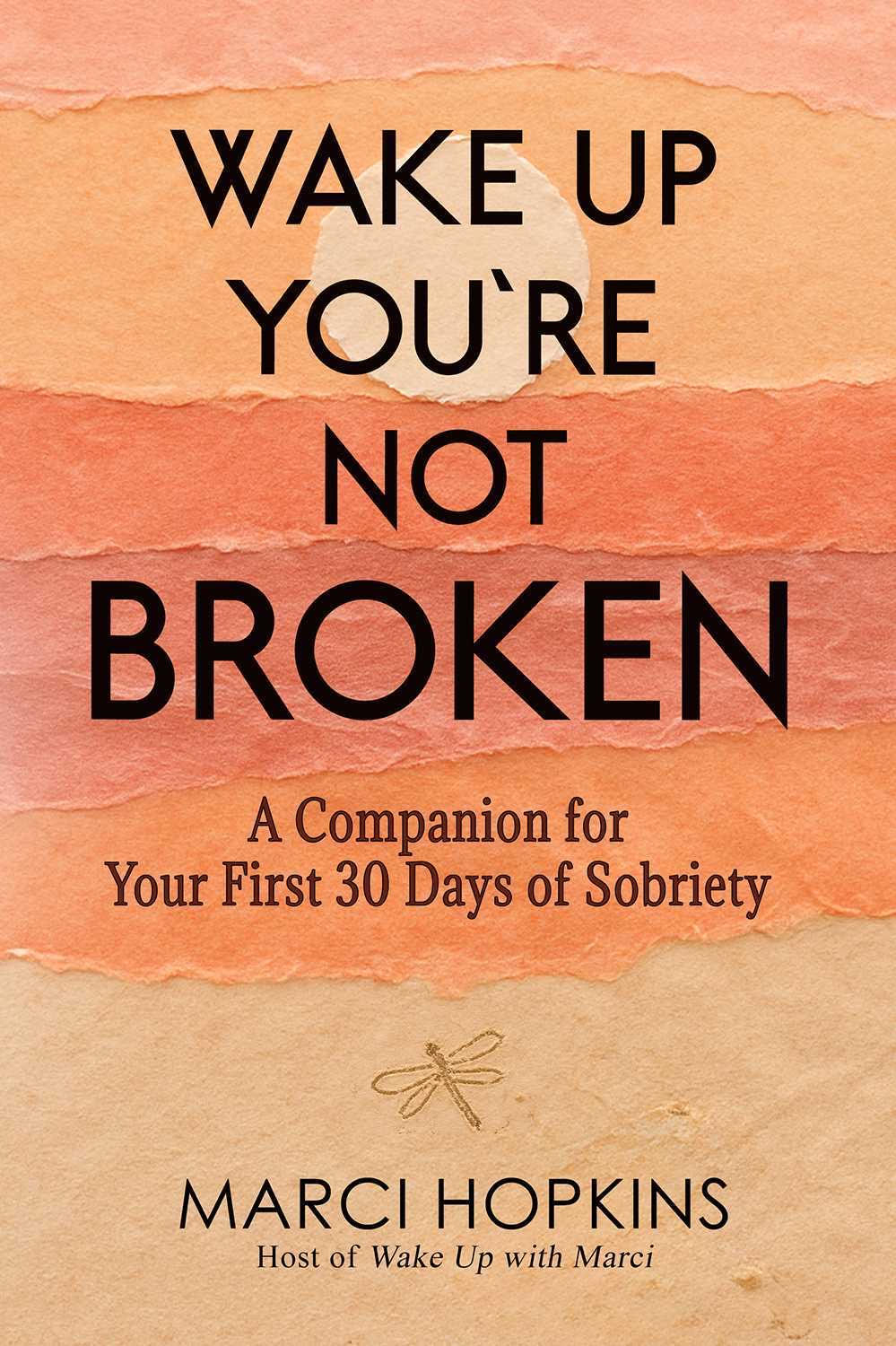
A daily, compassionate guide designed to help individuals through the physical, emotional, and spiritual challenges of early recovery.