-166Days
-23Hours
-43Minutes
-26Seconds





How can I I can’t imagine not living with this substance, alcohol, or having a sober life. So, what if I just drink one cocktail? What if I just, you know, maybe I can just do this socially? Um, and so sometimes when we’re really struggling with the throws of addiction, that rationalization is part of the negotiations of, you know, this is Wake Up with Marcy, a space for honest conversations about healing, recovery, and women’s wellness. I’m Marcy Hopkins. Take a breath. You’re safe here. Let’s begin.
Hello all. Welcome back to Wake Up with Marcy. I’m so grateful you are here today. I’m your host, Marcy Hopkins, and this is the show where we have real, raw, and transformational conversations designed to wake you up to your truth, your patterns, and your life. And today’s episode is deeply personal to me because we’re going to be talking about something that so many people are silently navigating, healing, sobriety, and the courage it takes to rebuild your life from the inside out. And I’m super excited to be joined by Olivia Verhaltst, a licensed therapist specializing in complex trauma, relationships, and maternal mental health. But she’s also one of the powerful expert voices featured in my book, Wake Up, You’re Not Broken. And her contribution really speaks to what happens after the decision to change your life. what happens when you remove the thing you’ve been relying on and you’re left with yourself and you start facing all the things that you’re going to have to face. So Olivia, thank you so much for joining Wake Up with Marcy and being a part of this book. I’m just so excited to have you part of it. I am so honored to be part of it, Marcy. I loved how we’ve gotten to work to with each other in the past and I was so excited when you reached out and to learn about the whole purpose of this book. I think it can be a really chaotic and uncertain landscape to navigate initial sobriety and so be yeah thank you and yeah because that’s what we’re going to be talking about is the first 30 days of sobriety and walking that path.
And I want to start with something that you shared in your contribution to the book. You said that sobriety is rarely one single moment, but a process filled with negotiations, setbacks, and small victories. And why is that so important for people to understand? Great question. Um, part of my contribution to this book is really honing in on the subjectivity of people’s experiences and how as a trauma-informed therapist really really working with individuals with trauma, which a lot of individuals who struggle with addiction will report having trauma histories. I think it’s important um to lend nuance to these topics. And so that’s why I started there in my book contribution. Um, I think that a lot of the time, and I’ve seen it take place, even though I’m not an addiction specialist, I’ve seen it take place with individuals who struggle with any type of addiction. It’s a series of um, negotiations. Relapse, we know, is part of recovery. It’s not an overnight decision, right? Addiction is going to do whatever it can to keep us in the throws of it. It’s serving a purpose. It’s not there for no reason, right? Um and so to find other ways to achieve that purpose of coping right in cases um it takes a lot of time. It takes a lot of trial and error. Any lasting change in our life is going to go like this. And so for people who can’t see me, um it’s it’s going to involve some regressions and it’s not going to look perfect and it’s not going to be tied up in a bow. So it’s a very hard decision to come to. Um takes a lot of internal external support and navigation.
Yeah, there’s a real internal battle that goes on um prior to admitting that you need help because there you’re negotiating with yourself because you’re so afraid. This is the only way you’ve ever known. And for me, you speaking about the trauma in the book is so important because that was a big part that was what I was pushing down for so long with the sexual trauma, uh the abandonment, alcoholic parents and so on. And so I did use alcohol for all the years uh that I drank to to push down that pain and to cope. And it really affected my life in a very negative way. And once I made that decision to get sober at 45, it was when well the biggest gift was actually being able to face those things even though it was so so hard once I was ready to face those things and to heal from them because yeah, I mean it’s it’s like you know just putting a band-aid on it, right? And and even if we learn different ways not to drink, uh we’re not going to be healed. Yeah. Uh just because we stop drinking. You speak from such wonderful wisdom and personal experience on this that it really is sometimes the bravest decision that somebody can make. You are articulating well it’s not easy. Um, and when it comes to addiction of any kind, drinking, other substances, I think what often gets missed in the whole landscape of addiction healing, um, at least, you know, online and know things like that is the why, right? Trauma informed care switches the lens from what’s wrong with that person? Why can’t they just stop? You know, I know it’s not. It switches that question to, well, what happened to this person? What’s going on with this person? Why why do they do that? How did that at one point we have to imagine help them? And what did it help them with? And that’s not enabling or saying to keep going, but it’s lending curiosity to the table, which is pivotal for healing and making real changes moving forward. I love that.
So what what does it actually look like to to learn how to live without something that your mind and body have relied on for so long? In the beginning, I imagine it’s very very hard for people um to kind of be able to sit and learn how to tolerate. Um, this is after, you know, withdrawal and after all the biological and chemistry changes we go through, right? Because we’re not trying to dig into things the second that someone’s stabilizing for sometimes for a very long time. That’s a that’s a really important part of the process of healing. And then eventually people are able and you mentioned this before ideally and they have the support to do this um to look inward and kind of get to the deeper stuff. I mean, in your recovery, Marcy, um, how long did that take you, and you don’t have to divulge it, but like after you stabilized and when you did start to recover, um, when is it that you got to do that deeper inner work that you’ve referred to in some of your podcast and Yeah. So, well, really, you know, the book is wake up, you’re not broken, what to expect in the first 30 days of sobriety, right? So that’s really what you’re going through physically and mentally, what is happening to your body, the tools that can help. But once you once you start healing and you’re no longer detoxing and you can start facing those things. Um, I did that through the 12 steps. So community is is vital to get involved with no matter what kind of community it is as long as it’s a community that’s helping you to get and stay sober to learn from the others that are going through or have gone through the same. And this the 12 steps is structured to help you through that healing process. And also going to a therapist is very important alongside doing this work, the 12step program. In the 12step program, you start to and I talk about this in my book, what I learned through each one of these steps and and those aha moments for me and how it allowed me to continue that work uh to heal and forgive and learn and to live in gratitude and such. really really to change your mindset in different ways to learn to to look at life and live life. So it’s when you really start to re you you recognize who who all has harmed you, right? And then letting that go, making an amends with others. But the biggest part that it’s was so um healing for me was allow allowing myself through step four, five and six also to see my part in things and becoming you become very emotionally intelligent through these this 12 steps. So, it’s recognizing your role in in relationships and things that are happening like like that programming that you’ve been that you’ve had, the things you’ve been pushing away for so long, living in a victim mentality. And so, it doesn’t allow you to really heal and work on yourself. And and the only changes we can really make are are how we respond to life. And um so it’s through those 12 steps and it it was in the first year that I started to be able to do that deeper work. Um but I will say through all of this for me we we talk about the physical and the mental part which is so vital. the spiritual side and and turning yourself over to a higher power and having faith and having spiritual guidance has been pivotal in in creating change in my life and and getting and staying sober. Yeah, that’s beautiful. And I think in many ways, you know, if there was a gold standard treatment, the one size does not fit all, you hit on a lot of the things there. you hit on the idea of community. I’d imagine that in 12 steps or someone who goes to AA there’s a sponsor and and that that availability so mentorship I should say um also treatment um truly clinical and medical treatment seeking a therapist um being able to stabilize physically you mentioned all these things and you mentioned spirituality which for some people can be absolutely um oh my gosh just a huge protective factor in being able to to see a bigger purpose. You also mentioned something else there that coming back to those initial that kind of acute recovery stage. You mentioned that in the step program there’s kind of like a letting go of sorts that ultimately you reach and I wanted to name that I always say trauma recovery which has a very close relationship to addiction recovery. Um, trauma recovery really at its core is grief work. Um, like grief work around shattered expectations, needs that have gone unmet. Um, really grieving what you didn’t get or what happened to you and shouldn’t have. Similarly, a lot of grief happens in addiction. Um, you’re grieving in addiction healing. You’re grieving people that have maybe enabled that now you have to step away from. I think I mentioned that in my excerpt. Um, like there’s some acute changes that happen where you might lose some people that have kind of helped you stay in addiction unconsciously or consciously enabled that. Um, yeah. So, I also wanted to just mention the grief around that and the grief around like losing this substance and this tool that you that you really were.
That is true cuz that’s so terrifying. It really is. And I lied awake for many nights trying to figure out how I could stop drinking, not stop drinking, normalize my drinking. When I first went in in 2014, uh I I was sober for about three months and I I started comparing my story to other people in that were in the rooms like, you know, well, wait a minute. I’m still still a good mom. I’m still there for my kids. I’m still active in the community. I’m still running my home, you know, doing the things. I’m not waking up drinking. I’m not what we think of is this idea of an alcoholic, right? And these bad these stories people are telling. I’m like, I’m not that bad. So, I convinced myself I didn’t have a problem. I convinced everyone else around me. And and plus the fact a lot of people will say, “I had no idea.” Well, that’s because you’re drinking in the home, right? you’re drinking differently when you’re not around people. So, I convinced myself along with everyone else that I did not have a problem. And a year later, I was back in the rooms with a DUI. I mean, and and within that year, I initially said, “Oh, I’ll just drink a glass of wine. I’ll reduce the amount that I’m drinking.” And then just slowly that slippery slope, the progression, things in life were happening. And I just got to a place where it got really bad. And so we do have that negotiation with ourselves that we don’t need the help or maybe we can do it differently or maybe if I just drink this I I’ll drink beer instead of wine I won’t you know it won’t be as bad right but initially it will be because your body at the end of the day um becomes addicted. I mean it it all goes back to that reward system um our ner our nervous system and and many many um physical physical reasons why we continue to drink along with the mental part of it. Um, so it it’s just fascinating how we can convince ourselves that we don’t have a problem. And then I just want to help people to know, you know, maybe you don’t have to hit that rock bottom and and that’s what you’re talking about too, like negotiating and and maybe see if you can drink differently. And if you you know, you can’t if you really can’t, then then I really recommend you starting to to think about getting help. that was going to be and should have been the end of my statement there and where I was headed is that oftent times those same individuals who are like, “Oh, I’ll just try a little bit.” Yeah. Something inevitably does happen when indeed they’re a problem drinker or substance user. something’s going to happen that brings us back to this place of maybe we really do need to engage in real recovery work here and not just kind of you know there’s a lot of things that are going to keep us in in addiction. So um I like hearing your story because clearly it took a lot of bravery and it took a really you’re kind of normalizing the trial and error that it took um to get to really getting the help that you needed. It sounds like I think that’s important to hear because hope too that like I can do this.
Yeah. And listen, getting help is it’s hard, right? To especially when you when you most of your life you felt like you had to do everything on your own. And if you’re a survivor, would you wouldn’t you say like you you’ve always felt like you had to do it on your own and you’ve built up so many walls and just to let someone in, getting vulnerable, that’s hard. Oh my gosh. What would you add there about vulnerability and getting vulnerable? Yeah. add in that that trait or that um trauma response of hyperindependence um which again a lot of people who struggle with addiction are trauma survivors um so that makes sense adding that the hyper independence and it makes getting help even more difficult but I mean yeah what would you say to those people who struggle with that hyper independence who are like ask for help like that is so comfortable I can do this on my own yeah what would you say like say you can’t. First I say you can’t. Agreed. Agreed. Um you you stay sick in isolation. I’m going to say that first and foremost. Um and being vulnerable and this is something I’ve had to learn. Being vulnerable and asking for help has been uh the strongest thing I’ve ever done. And really it shows so much strength when you are asking for help. And the irony is we think we have to do it all and nobody’s there to help us around us, but there are so many people that are just waiting for you to ask for help. So many and free resources that that exist too like Yeah.
So tell us about some of those resources. Yeah. Um I wanted to quickly mention Yeah. I think that for the person who is really fearing taking that step and getting that recovery for all the normal reasons that one would um the only thing worse or more hard than that recovery will be doing it alone. Um so I agree with you that that would be the only that would be the more even difficult part. Um yeah so there’s a lot of different um resources. I mean, I know a lot of people that go to AA. I know a lot of people that do go to um therapy. I know eventually sometimes couples therapy can be a resource because addiction and inevitably will impact the people in your life and the relationships in your life. And if you have someone who’s going through that with you, um eventually after you stabilize, after you begin to do your own inner work, couples therapy can also be really key. Um and then of course um rehabilitation and um outpatient therapy, inpatient therapy for those that need it. It really runs the gamut. There’s a lot of different ways that recovery looks depending on the situation, context, and nuances and substance.
The other thing I just want to touch on because I know that you work with mothers. Um talk to us a little bit about that post-traumatic uh factor because I would think that that would possibly be one way that women are are coping. Sure. Do you mean for example like the postpartum era? Postpartum. Yes. Yes. Yeah. For those birthing people and their partners. Um like Yeah. I think postpartum is an incredibly vulnerable time. You nailed it. And when we feel vulnerable, of course, it’s a risk factor to return to vices that help us get up in the morning, look forward to something, give us temporary pleasure even though they’re giving us long-term hardship. Um, so it’s very possible people might turn to their vices during this time. Um, and if that’s you, I mean, that is a time where I think, especially if you’re a partner of a birthing person, it’s like, oh, I don’t go through any postpartum stuff. That’s just for the mom. Like, I don’t have a postpartre. You do, dads and partners. Um, and in fact, it’s a very stressful time for you. So, you too can say, I am struggling with postpartum. um and these these weeks following birth and navigating this biggest life transition I’ve ever been through and I need help. Um and then of course, yeah, moms and birthing people too, you deserve and there’s a whole new niche um in the therapy world called PMHC’s. I myself I am one paranatal mental health certified clinicians who specialize in that vulnerable sacred and oftentimes wonderful by the way time frame of life and so seek out a PMHC therapist um if you’re needing one to talk about depressive symptoms, anxiety, anything like that. Now Olivia, do you do that virtually and do you only work in one area? Yes. So, me myself, um I am a psychotherapist who works virtually fully and then I go into the city twice a week to teach at NYU. Um but I am a virtual therapist who works with a team of other therapists, some of which are in office, um which is super cool, some of which are fully virtual. And if you’re looking for a postpartum therapist, going to postpartum support international is great. or my business maternal trauma support. We have a trauma and or maternal health directory of therapists, doulas, psychiatrists that we’re building. Um, so that’s another major resource hub for people. Amazing. And I’ll put some um sources down in the description. Also, I have um some experts from Mountainside Recovery. Uh Recovery America, Shatterproof is a huge one. And so if you are looking for support and um Olivia again I just want to thank you so much for being part of the book Wake Up with Marcy and that the work that you do as a psychotherapist helping others in complex trauma maternal mental health and relationships and you you’ve just added so much value to my book and just I I I I’ve known since the first time you were on Wake Up with Marcy I don’t know it was like three years ago. I mean, you just you add so much value and um that’s it. And I just and by the way, I love the way you talk. I just want to let you know that, too. No problem. It’s very meaningful for me to hear across the board. Those are really wonderful compliments. I feel very similarly toward you, Marcy. And truly, um I was honored to to be asked. So, thank you so much for having me. I appreciate you.
So, a first thing, um, I want to to go over kind of some of the things that kind of a a rapid fire, if you will. So, I want to ask you a few quick questions. What’s one truth about sobriety people need to hear? Oh my gosh, good question. Um, that you cannot do it alone. Oh, that’s what I was gonna say, Olivia. I love it. Sorry, I took the words out of your mouth. No, no, I wanted to hear from you, but that’s it. I mean, they need to hear that you can’t do it alone and you’re not alone. Um, what’s one thing someone can do today if they’re struggling? With um addiction or with mental health? Addiction or mental health? I mean, like really, it’s a mental health disease. Yeah. Reach out to someone somewhere in your life for support. Doesn’t have to be a therapist necessarily. It can be your best friend that you can rely on that maybe they’ll offer encouragement, resources saying, “I am not okay. I’m struggling.” You know, I love that. Okay, this is kind of loaded. What does real healing feel like? Oh my gosh. So, it’s funny. Um, I I absolutely believe that healing is so unique to everyone’s journey. The other day I had someone say to me, Marcy, quick side note, healing for me felt like I could answer people in my life without being defensive and I could actually sad. Yeah. Another person was like feel uh healing for meant that even though I have urgences with addiction and wanting to pick up that substance, I felt the craving, but I didn’t act on it. That can be healing. So that’s that’s one of the things I talk a lot about in my book is cravings. And cravings are real and you are going to have them. So do not uh don’t live in a world where you think you’re not going to have them because you will. Um yes, the cravings last for about 20 minutes and you may feel like you’re going to die if you don’t give into it, but you won’t. You won’t. And it is very very hard because you’re changing physically and mentally when it comes to this uh this action this disease and again this is with anything any habit you know that you have so it’s about um one of the tools that I love is called it it’s it’s move a muscle change a thought right so you can’t think about two things at one time the craving will will subside and do something get up go for for a walk, go for a run. Um, you know, get yourself out of that environment. Um, and and you know, whether you can chew gum or I even if I had a craving, I would have grapefruit juice with salt on the rim. Do something that’s going to help you through that craving because they’re real. So, it it’s not it’s not a fantasy that this is you. It is actual your body is going to crave a substance. Yes. Or a behavior. Yeah. And the behavior we’ve associated as the automatic response. When I feel this craving, I will or me to pick up that substance. I promise you that there is other behaviors that you can take instead. Even though it feels impossible right now, but there are. Exactly. So, you know, like for instance, if you’re someone that that has that 5:00 glass of wine, right, every single day, well, you you’re going to crave that. That is that is normal for your body and for your behavior. So, it’s it’s changing that, right? Maybe instead of starting cooking at 5, you go for a walk and and and or you know, put something else in your glass or you got to change you got to change things. Um,
So what would you say to someone who’s afraid to start? I would say try to feel the fear and do it anyway. You can do it scared. That’s it. That is so Don’t wait. I love there’s recently I was just doing some research and stuff and it was about um don’t um don’t wait for for a time you’re ready to start because you’re never going to feel ready. Y you got to you got to do it scared. You got to do it anyway. You got to take the action. Then you’ll be ready. There’s a great misconception. You hit it on the head that um it that I will feel ready, perfectly ready for this one day. I will be prepared. Um, and then, oh, I can’t I can’t quit drinking this week and I have a wedding. I can’t quit drinking next week. I have that I have that um, you know, work party. Um, but then that thong will No, there will always be something. So, feel the discomfort and try it now anyway. There’s no better time than today to take it. Yeah. In the beginning of my drinking, when I quit drinking, um, there’s one thing you do in in AA. It’s called 90 and 90. So you commit to 90 meetings in 90 days. And I recommend to everyone to to commit to that because you’re you’re creating real change in that 90 days, right? And so I had Thanksgiving during that time. So, I had to take myself out of my normal routine and that was a time I drank a lot because it it was around it was like a family reunion every year and everybody drinks a lot. So, and I was a part of that. So, I had to make my way through that and there was a wedding that weekend uh with the family. That was a hard time but I did it. But you did it. That’s incredible. Well, interrupted in my meetings. I did I I used my sober tools. I had my sober toolbox which is in the book and uh you know kept close with my um my sponsor and I hung around the people that didn’t drink. You know, you just changed there. And I have to go into sessions in a few minutes, but I want to I wanted to make sure I said because it’s so important what you just named. Um that a lot of people will if if you don’t want to get to the meetings, then you won’t. But if you do, you’ll on the work trip or after the long day or after the weird weekend that you’re having, you’ll find a way to get there. You will find a way to get there. You’ll get right off the plane and go there, right? you know like there’s there’s a way when there’s a will find the meetings or Olivia like you talked about you’re virtual now there are virtual meetings now there’s so much it’s virtual now that’s a great thing that came out of co.
So I just want to thank you so much and this conversation is exactly why I wrote wake up you’re not broken because no matter where you are in your journey you are not alone and you are not beyond healing and if this episode spoke to you please make sure that you follow wake up with Marcy so you don’t miss out what’s coming up next. Share this with someone that needs to hear it. Uh because the more that we share, we comment um and subscribe. The the more we grow the channel and more people will hear this message. So to get your copy of Wake Up You’re Not Broken and hear from Olivia and so many other powerful voices inside the book, please go to Amazon. I’ll also have the link in the description. And it’s time to wake up. It’s time to wake up to your possibilities and to the best life possible. So, I’m Marcy Hopkins and I’ll see you next Thursday with a brand new episode. Have a great week, everyone. Bye bye.

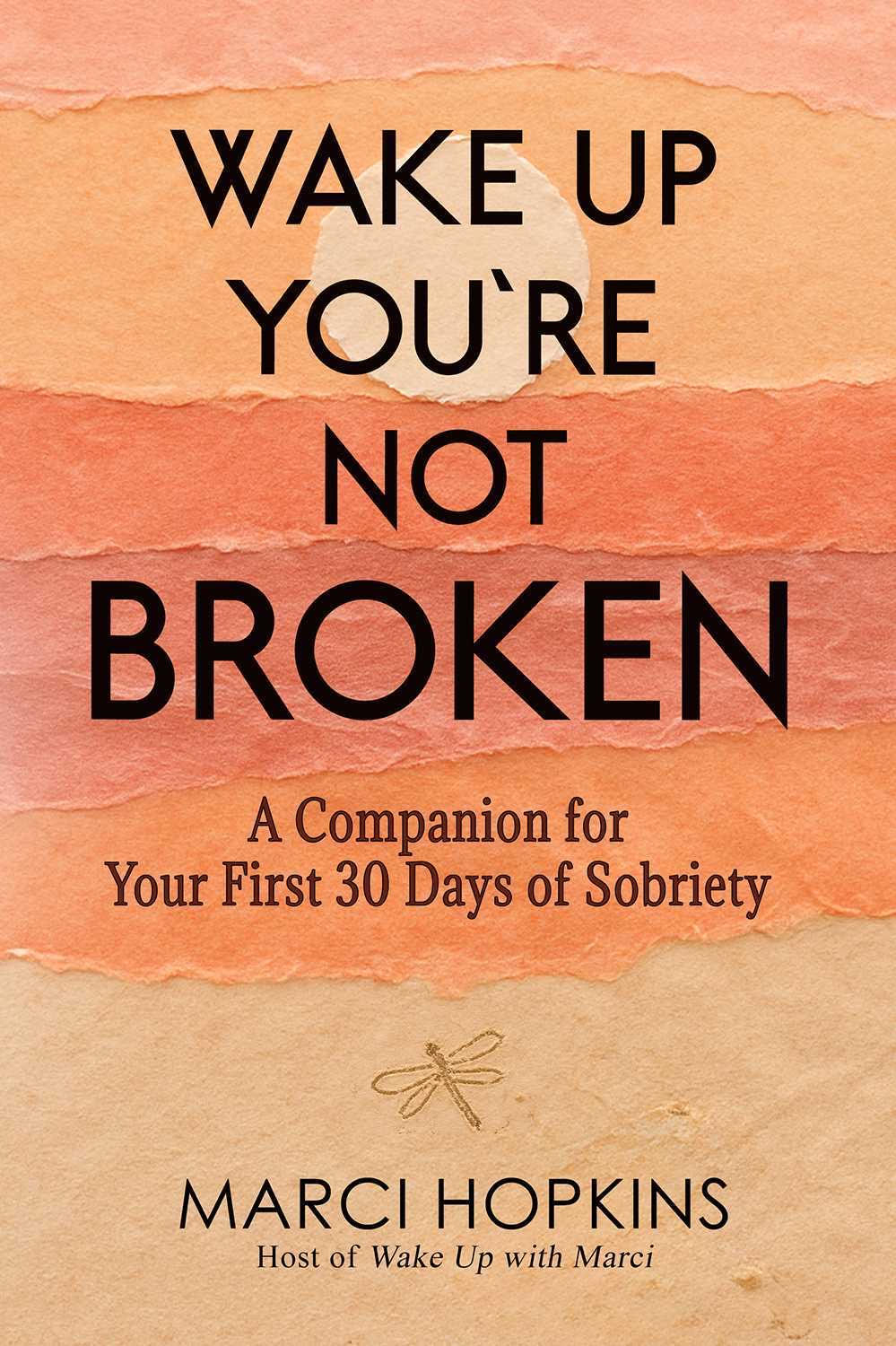
A daily, compassionate guide designed to help individuals through the physical, emotional, and spiritual challenges of early recovery.