

So many of us were taught that asking is selfish, that having our needs creates conflict with others. This story isn’t just about a mother and daughter, that this happens in all relationships I’ve created. And that’s called the care method. And this can be used in any relationship to communicate clearly, honor boundaries, and stay rooted in your worth. She faced the shadows of addiction and the weight of a secret path. But she didn’t just survive. She chose to transform. Now as an award-winning host and advocate, she’s giving a voice to the voiceless, empowering millions to heal. This is Marcy Hopkins, and it’s time to wake up. Am I saying yes out of fear or love? But here’s something important to understand. Our brains really don’t perceive reality objectively. Neuroscience shows that the brain is constantly predicting based on past experiences, emotional memory, and expectations. You are allowed to speak your truth. You are allowed to have needs. You are allowed to choose yourself even in relationships you care deeply about.
Hello all and welcome back to Wake Up with Marcy where we have real conversations, raw healing, and we learn to wake up to our worth. I’m Marcy Hopkins, your host, and I’m so grateful you’re here with me today. And today, I’m going to do the show solo, and we’re going to talk about something that impacts every relationship in our lives, and that is that there’s two sides to every story, and our perceptions are different. And when we don’t know how to communicate through those differences, it turns into frustration, resentment, and emotional distance. So today, I want to share a very real situation that I just experienced with my daughter, and I want to walk you through something that I’ve created, and that’s called the care method. And this can be used in any relationship to communicate clearly, honor boundaries, and stay rooted in your worth. Know your worth. Right? It’s hard to sometimes know our worth.
So, over the last few days, my daughter’s home from college and and she’s going to be leaving soon and and I’m going to be leaving soon also. And so I I really wanted to spend some time with her and I’ve been trying to make plans with her. Now she’s 20 years old and from my perspective it felt really one-sided. It felt like everything was evolving around what she wanted to do and when she wanted to do it. And if I’m being honest, I did keep I kept adjusting myself to try to make it work. I was putting other things to the side that I really needed to address or or be a part of, but I wanted to be with my daughter. So, I agreed to plans I really didn’t want to do. Some of them weren’t great for me, meaning there was an exercise class that she wanted to do. And at my age, it really wasn’t a great fit. But I was willing to do it because she wanted to do it and I wanted to spend time with her. And I said yes anyway even though it wasn’t good for me and I wasn’t honoring my boundaries. And why did I do this? Because I really wanted to spend time with her. Because connecting with my daughter matters to me. And eventually this all led to an argument because she was trying to make it work for herself and I was trying to make it work on my side. But the reality is underneath that argument like initially it was anger but really it was the feeling that I wasn’t being seen. That’s how I was feeling. And I didn’t feel like there was a give and take. But that’s when I realized that this story isn’t just about a mother and daughter. That this happens in all relationships. It happens in friendships, at work, in any family dynamic, in partnerships, anywhere that one person keeps adjusting and the other really doesn’t realize it.
But here’s something important to understand. Do our brains really don’t perceive reality objectively? Neuroscience shows that the brain is constantly predicting based on past experiences, emotional memory, and expectations. So that means we interpret situations through our own emotional lens. We fill in the gaps without realizing it. And two people can experience the same moment and walk away with completely different perceptions. So when that conflict happens, both people often feel right. And that’s why communication matters more than being right. And I just want to expand a little bit more on that interpretation of the situation through my emotional lens because I was thinking back to times that I was being more selfish or I was trying to do things that I wanted to do when I was younger and now that I’m older, I regretted it. and and so I’m trying to push that objective onto this situation. Right? So that’s that’s how we can think about that. Right? If we’re dealing with somebody that’s younger or comes from a different place, has different lived experiences, we are trying to fill in those gaps or push our own emotions or situations or stories on to that other person or onto that situation. So, it’s really important that we learn that this is happening and that’s where I came up with the care method so that I could help shift these changes in my life and my relationships and protect myself and I really believe that it can help you too.
So, the care method that I’ve created the first is communicating effectively. communicating effectively and not emotionally reacting. When we feel misunderstood or dismissed, the brain’s threat system activates and that’s when we raise our voices, we get defensive, we interrupt others or we shut down, right? We just get angry and we leave. But effective communication really slows things down. So the way that we say it is so important, right? like saying you’re selfish or you never make time for me. That puts someone else’s defense mechanisms up or their walls up or they don’t hear you. But the way that we say it, if we could shift how we say it, like I want to spend time together and I’m feeling hurt because it doesn’t feel really balanced right now. So the way that we say it is so important. Starting anything with you, you do this, you make me feel this way is automatically putting someone on the defense. So expressing with I statements, I feel this way when and that shift changes everything. So I want to share an exercise with you. So, I want to pause and try this. And so, instead of saying in a situation like this, you don’t care. Of course, I know my daughter cares. We know the other person cares, but we say you don’t care. But what you really mean, what that feeling is underneath that is that you feel unimportant and you want a mutual effort. and maybe the other person doesn’t even realize they’re doing that. So, we we learn to practice speaking with a meaning, the meaning of what we’re trying to get across effectively and not emotionally charged and that’s communicating effectively.
And then asking for help without guilt or expressing our needs. So many of us were taught that asking is selfish, that having our needs creates conflict with others. So we overaccommodate, right? We become people pleasers or we stay quiet and through that resentment builds. So asking for help or expressing our needs without guilt means being honest without apologizing for existing. So instead of hinting or hoping someone notices, right? Like we we think that somebody’s going to know what we need. No, they’re not going to know what we need. We need to express that. So I need to please be considered through this. I need this to work out for both of us. I need to balance the perspective here for us. And if we change how we are expressing ourselves, we change how we feel and we change how the other person perceives it.
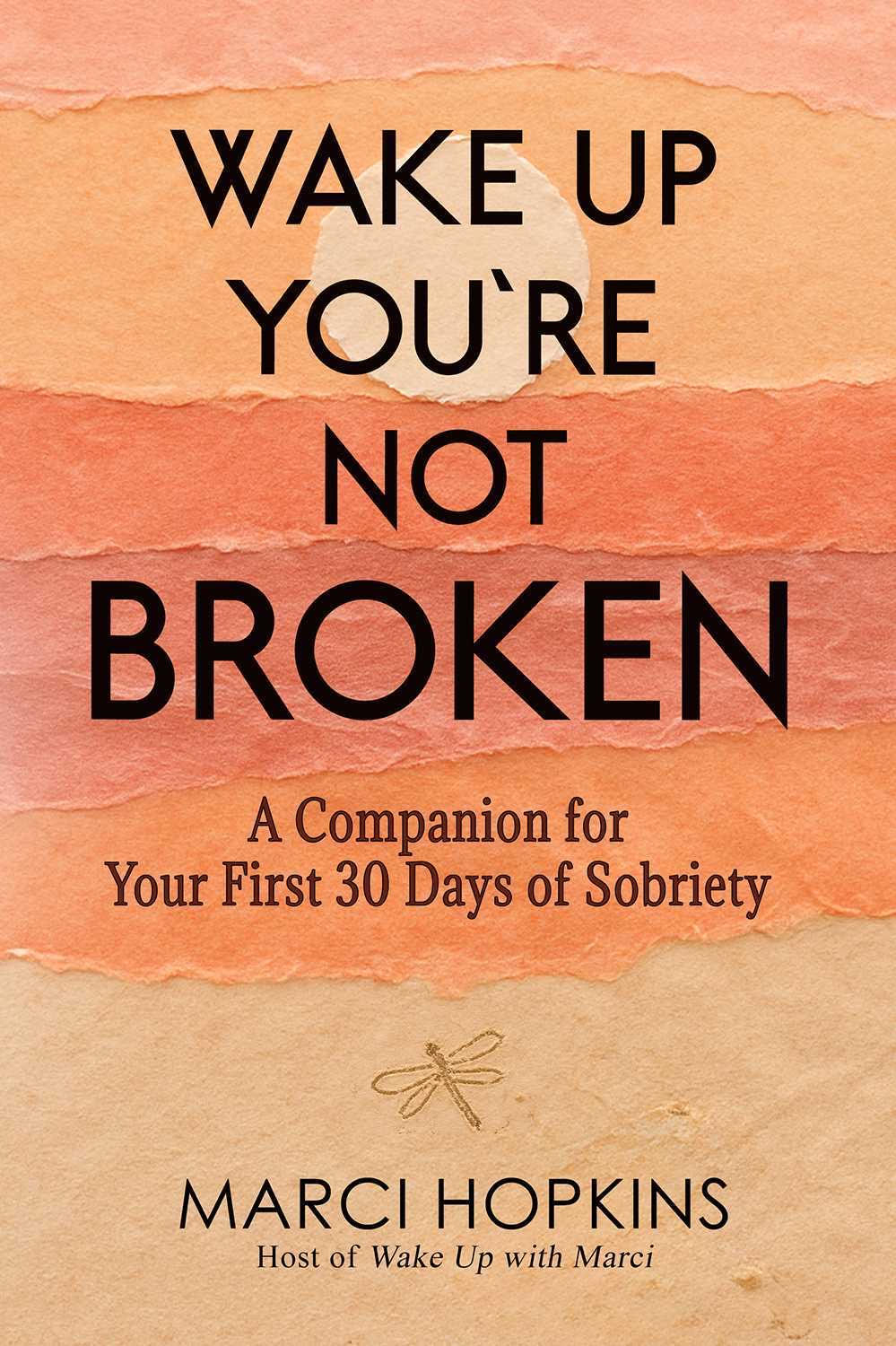
So, I just want to take a moment to share about my new book, Wake Up, You’re Not Broken: What to Expect in the First 30 Days of Sobriety. And we’ll be right back. Are you in the first 30 days of sobriety or wondering if now is your time to start? Hi, I’m Marcy Hopkins and I wrote Wake Up You’re Not Broken just for you. It’s a real raw guide to those first 30 days. What no one tells you, what you will feel, and how to keep going. This isn’t about perfection. It’s about progress. Order your copy now on Amazon. Remember, you’re not alone. You’re not broken. You’re waking up.
I want to give a little uh exercise. So, think to yourself, complete this sentence for yourself. I need you fill in the blank so that I can feel you fill in the blank. Example of that, I need us to plan something we both enjoy so I can feel connected instead of resentful. And we can say that for them too. And we say with no apology, no justification. That’s a clean ask. That’s a clean way of asking.
And then there’s reinforcing your boundaries. Right. Boundaries. These are hard ones. These are hard ones. Very hard. I’ve had a lot of difficulty with this. And we have to remember these are healthy boundaries. So they’re not boundaries where we’re being a jerk in any way or boundaries that are walls. They’re clarity, being clear about what’s important to us. So psychology shows that unclear boundaries lead to emotional burnout and resentment. Reinforcing boundaries means not overexlaining, not people pleasing, not abandoning yourself and your needs to keep the peace. For me, this meant recognizing I can love my daughter and stop agreeing to the things that don’t feel good for me. And you can say that about anyone, right? I can love my husband and stop agreeing to the things that don’t feel good for me. So I want to have a little exercise here and wherever you are ask yourself am I saying yes out of fear or love? Will I resent this later? Am I honoring what I am capable of doing or am I just doing this because I want validation and I don’t want to feel uncomfortable because I am putting up my boundaries. So if resentment comes from this, right? if you are answering these questions that you’re doing them and because you’re fearful of upsetting somebody else or that you’re going to resent it. If that resentment is likely, then your boundaries need to be reinforced. So practice saying that doesn’t work for me, but I’m open to another option. Say that over and over. That doesn’t work for me, but I’m open to another option.
And then finally, there’s embracing your worth. Self-worth isn’t built around affirmations alone, right? We hear about affirmations all the time, but it’s built through selfhonoring, honoring yourself. So every time you speak honestly, ask for what you need, reinforce a boundary, your brain rewires around that self-rust. Embracing your worth means believing and acting like your needs matter and believing. Remember believing that. So I want to give you a little exercise that can help you with this. So, I want you to repeat this. My needs are valid. My time matters. I don’t have to abandon myself to be loved. And then ask yourself, where have I been shrinking? Where have I been staying small to keep the peace? And that’s where your work begins.
And this episode is not about blame. It’s about understanding that there are two sides to every story. Perception shapes every reaction and communication determines connection. And the care method gives you a way to communicate effectively, ask for help without guilt, reinforce your boundaries, and embrace your worth without burning bridges or betraying yourself. So if this resonated with you, hear this clearly, please. You are allowed to speak your truth. You are allowed to have needs. You are allowed to choose yourself even in relationships you care deeply about.
So I’m just so grateful that I’ve had this time with you. And this work is something I’ve I’ve created through chaos to clarity from stuck to thriving and learn how to apply the care method in real life situations just like this one. And I have the link below for you. I hope you will check that out because this is life-changing. And if you’re ready to stop over adjusting and start showing up with clarity and confidence and selfrust, then just check out that link below. And please, if this episode spoke to you, please like, share, comment, subscribe on YouTube, share it with someone that needs to hear it, needs permission to stop shrinking, too. So, thank you again for being here with me and I will see you next Thursday with a new episode. And until next time, wake up to your worth. You are worthy. You are not broken. And you are not alone. I’ll see you next Thursday.