-166Days
-13Hours
-46Minutes
-28Seconds





I had this fixed mindset before that that oh my life will be perfect whenever I don’t have a disability and then I can achieve every dream I have. Well, when I got to college and I graduated, I had a bachelor’s degree. I had success, but I still had my disability, but I had confidence. That just is what has been driving me to go out and to help other people. Now, good morning all. Welcome back to Wake Up with Marcy. I am so grateful you are here today. Thank you for watching. Thank you for listening. Today’s guest is super important because she is living proof that the limits other people place on you don’t define your life. You do. Michelle Steiner lives with an invisible disability and was told she couldn’t go to college, couldn’t succeed, and couldn’t build the life she wanted. But she proved everyone wrong. She graduated from Slippery Rock University, is a published writer featured in multiple platforms, and now works as a parah educator helping students with disabilities succeed. She also shares her journey through her blog, Michelle’s Mission. Michelle, thank you so much for joining us on Wake Up with Marcy. Oh, thank you. I’m so excited to have this conversation. It’s great to be here today. Yes. And I know that you are going to enlighten us in so many ways and the work you’re doing is amazing.
But I always like to to rewind a little bit, you know, get some of that backstory and start in the beginning. When did you first realize that that something you were experiencing was different than others? I first realized that whenever I was in kindergarten. In fact, that’s when my teacher started to notice that I was really struggling in the classroom. I had difficulties in preschool, but I was my parents first child, so we thought, “Okay, we’ll go on to school and it’ll be okay. I’ll catch up.” And I really didn’t. Uh, it was really evident that I was struggling in the classroom. I struggled to write my name. I struggled to tie my shoes, counting, anything math related. And it was really visible that I was frustrated. I grew up with a a lot more adults than I did kids. in that in my early early years. So, everybody could see that I was really struggling with that. And my teacher recommended that I get tested for having a learning disability. And sure enough, I have one. At that time, they didn’t give it the name or even like having limited hand dexterity. It was more of a blanket term, but that the school staff knew I was not going to be a mathematician by the time I was five or six years old. And my parents explained to me that I have a learning disability. and that I learned differently and I had to repeat kindergarten the following year and in a different school in her district and began to receive the specialty instruction.
So tell us a little bit more about the diagnosis and what exactly it is. Sure. I have dcalculia which is a math learning disability. So it’s not that I see numbers backwards but it affects how I understand how they work. I just have a real hard time with that. My mind can get lost in the steps of the problem. I still don’t know all my fact families, addition, subtraction, and multiplication. I’m also not able to read the face of a clock. I can see that there’s numbers. I can see that there’s lines, but I can’t tell you what they mean. So, I have to use my Fitbit. I also confuse my right from my left. And it can be hard for me to budget, leave a tip, that sort of thing. And I also have limited hand dexterity in both of my hands. And whenever I was I was growing up, I had bad handwriting. But everybody just thought, “Okay, she’s doesn’t have good handwriting.” And that I didn’t know that there was a reason why I was struggling with that. And also with my motor skills. I mean, things would fall out of my hands. I couldn’t I’m I’m not able to lock or unlock doors very easily. And I also have visual perception issues, but that is in my brain, not in my eyes. So that also affected my eye hand coordination. Yeah. And I not able to use an escalator because I don’t know when I’m supposed to get on or get off of the escalator. And I also have difficulty uh just with my reaction time. And it’s one of those things I’ll blink over a ball comes in my field of vision and I’m not able to drive because of it. Wow. And now is this something that’s very common? It is estimated that one in five people have a learning disability of some sort. So it is it is a common thing. Yes. But growing up like what was that like for you since you didn’t know and you weren’t diagnosed? Like how how did you view yourself? How were you seeing things? Right. I viewed I can remember though that first it was really difficult for me during those school years. All I wanted to do was to do well on a test and do well in my classes and learn and make my parents proud which I always did and I wanted to fit in with my peers and that also was really difficult too. So I remember being really frustrated just frustrated with the work and wanting to to learn and then I’m thinking well I’m spending all this time studying and it doesn’t seem to be getting me anywhere. And we spent lots of long cheerful homework sessions with my parents at times, but they made me go to school even when I was struggling. And with my peers, it was hard, too. Because I went to a very small school district where everybody knew each other. And if you were one of them, you fit in. And if you weren’t, you uh had difficulties. And I can just remember because it was so small. Even when I was in regular ed classes, everybody could see that I was struggling. they saw that I went to learning support for classes in math or other subjects and or to even have a test read to me and to get that extra time. So, I couldn’t hide that fact and I quickly got labeled the outcast. So, it was really difficult for me during those young years.
It must have been really hard. It So, how did that shape you? How did you learn to get through that? because young people can be so mean and that’s where we’re building our self-esteem and our identity and so how was that for h for you like how did you get through that my dad found out that I was good at reading and writing so I I was able to be in regular classes for that and then my father found a story about a dinosaur that I wrote in second or third grade and said wow this is really good and I didn’t hear anything up until that point that I was I thought I wasn’t good at anything and then reading and writing became in my world and that helped me through a lot of those difficult times and it also led me to be the person I am today. As I got throughout school, it got a lot easier for me academically. I was in all regular ed classes except for math in a resource room by the time I was in high school. But socially, it got a lot harder for me. A lot of my peers started to form groups and they were more defined. It just wasn’t, okay, you you played with the kids in your in the classroom on the playground or you didn’t get invited to somebody’s birthday party. this was actual solid groups that were really forming and I didn’t feel like I fit in with anybody and a lot of that bullying really intensified into like threads and just it was more constant. So I realized I wasn’t having that connection with my peers in my school. So I found a an arts group right outside of my high school that I got to meet other kids that didn’t go to my school and they like the same things I did. I I wrote for their newsletter. I did some other acting things with them. I mean, we did a lot of fun act and some community service so I could finally shed that reputation of an outcast that that had me for so many years and it made going to class easier. And also I found my writing group that for adults that I still go to and they got to see me grow as a writer and a person and they really encouraged me you should write about having a disability and I said oh no that’s way too personal and I wrote some really bad poetry and some other things I would have wanted to share today but they always said you should write about that and I put that on the shelf for a number of years and 20ome years later we still meet once a month to talk about our writing and we’re still in each other’s lives And I think that was really helpful too. And I had older friends and that was really that were doing the right things.
I love how you focused Yeah. you focused on the positive and you found other other communities and sources of friends, right? Like things that you were interested in and and you didn’t feel that you were only isolated in this small group of people. And I love that you looked outside of that circle, but then you said that things changed as you went to college, right? And and that was really what sparked your self-discovery journey. So, can you share that experience with us? Sure. I knew I always wanted to go to college, but I was afraid could I do it? And I had a lot of people who didn’t think I could. I had a learning support teacher who said, I don’t think you can handle college because of the math. But I was determined. I had a psychiatrist who told me when I had to get the testing for accommodations, he said, “Oh, um, based on your scores, I don’t think you’re going to make it past community college. I get to community college and there’s even more stigma. If I ask for a calculator, people I can remember a professor saying, “Oh, no, we don’t use those in our class. We use our brains.” I had an adviser who told me I was going to have limited job choices. And I also had peers that thought that just even getting extended test time was cheating. They thought we were getting the answers. And everybody just said, “Oh, you could try harder.” And I didn’t use those services because of that that stigma that surrounded them. And I was really hard for me. But when I finally started to use them, I was able to pass my classes and I graduated with an associates degree in early childhood education. I moved out on my own for a number of years. I worked some temp jobs in a daycare, but I always thought to myself, I really want more for myself. And that’s when um things started to happen. I had to move back in with my parents for financial reasons. And it was during that time I decided I’m going to go back and give university a try. I carefully researched the programs that had the least amount of math and science possible. I made sure they had disability accommodations. And this time, I used having a notetaker. I used the extended test time. I advocated for myself and I got really comfortable with doing that. And I found I had a much better experience. My grades improved dramatically. I made deans list for a semester and I graduated with a bachelor’s degree despite being told I couldn’t do it. And that’s when things really started to shift because I had this fixed mindset before that that oh my life will be perfect whenever I don’t have a disability and then I can achieve every dream I have. Well, when I got to college and I graduated, I I had a bachelor’s degree. I had success, but I still had my disability, but I had confidence. That’s just is what has been driving me to go out and to help other people now.
Okay. So, let’s rewind a little bit because, well, first of all, somebody can look like they have it all together and they don’t have confidence. And asking for help is very difficult. and you were faced with a lot of negativity and the things that these adults are saying create this mindset and this idea about yourself. Exactly. Where how did you find that strength with inside of yourself? like what what were the positive factors that allowed you to shift how you were thinking and then also build on that confidence and advocate for yourself. A lot of it was having that group for my writing group hanging out with them because they couldn’t fix that. I had a disability but or I was doing poorly in a class but we could go out on the weekends and we could have fun. we could laugh together about that and I or I can meet somebody for coffee with that. So that really helped with having that. My parents definitely were were that uh encouraging too as I as I went throughout school and with that I think that was helpful. I think it was also having a purpose and having that plan and I think that that was the real thing was just having that purpose and thinking okay there there’s a reason for this. I don’t know what it is yet but I know that reason’s going to to happen. And I think that above all that, it was just going in and doing it scared. I didn’t know what my future held whenever I was uh at community college getting my associates degree. I certainly struggled with my purpose even after I moved out on my own for a while. And I didn’t know what was going to happen and I certainly didn’t know what was going to happen when I moved back in with my parents for for a number of years. But I just went and I did it afraid and it it worked out for me. I love that you say that. I did it afraid because if we wait until we’re ready, we’re never going to start. And we just everything I do, I do afraid, right? You say yes, even if you don’t know if you can do it. But getting out there and as you start doing things, it does get easier. You figure it out. And if you fail, so be it. You did it and you learn you learned something through the process.
So let’s talk about you struggled with imposter syndrome. And this is a big one for a lot of us. What kind of thoughts were going through your mind at that time? When I was at university, I thought, “Oh, someone more qualified can do this. Somebody knows more than I do. I I don’t belong here. They’re they’re going to tell me I don’t belong at this point.” And that was what was going through my head. Even though in reality I knew, okay, no one can really take you away from something like going to school. But in my head, I thought that person knows more than I do. I’m I’m not smart. I I can’t do this. And that’s that’s something I had to learn to break away from. I had to learn there are some things in life. Yeah. That that I can’t do. And I had to make wise choices. For example, I couldn’t I knew I couldn’t be a certified teacher. I I knew that my test scores would never even get me into the college of education and I certainly couldn’t teach some of the content. All the kids even know as I as I work as a teacher’s aid, do not ask me for help with math because I can’t do it. Um, but I also knew there were things I could do and I had to focus on those things in my life that I was able to do and I could do well with. And that is really what helped to break some of that imposttor syndrome because when you’re doing things that you know you can do and you enjoy doing, you’re not going to feel you’re not going to feel like a phony. You’re going it’s going to be genuine because it’s it is going along easy for you. Yeah. And that’s something we do a lot, right? We focus on what we can’t do instead of focusing on the things that we we can do. We’re all given gifts in different ways, but then we start comparing thinking we should be good at everything. And that’s just not the case. We’re not good at everything. And focusing on our gifts, that that’s really powerful. And that is a great lesson for all of us uh to to learn and a great message for all of us to hear. So, cuz it’s hard. I mean, we can be told 15 fabulous things about ourselves and one person says something negative and that’s the one thing we focus on. And I still to this day will do it myself and then I have as we focus on myself. Yeah. I did a talk the other day and everyone was like raiding but this one woman was like, “Oh, I think you could have should have started off this way.” And then I kept focusing on that and then I’m like, Marcy, there were six other people that told you how fabulous it was. Why are you focusing on that one thing? You can’t make everyone happy, right? Exactly. You can’t. It’s true. Yeah.
So, I’m just going to take a quick moment. I just had my new book come out, Wake Up, You’re Not Broken. What to Expect: The First 30 Days of Sobriety. Because the truth is, this is not about willpower. It’s all about having the right tools. So, we’ll take just a minute and we’ll be right back. Are you in the first 30 days of sobriety or wondering if now is your time to start? Hi, I’m Marcy Hopkins and I wrote Wake Up You’re Not Broken just for you. It’s a real raw guide to those first 30 days. What no one tells you, what you will feel, and how to keep going. This isn’t about perfection. It’s about progress. Order your copy now on Amazon. Remember, you’re not alone. You’re not broken. You’re waking up.
Welcome back and thank you, Michelle, again for being here. And your story is so powerful. And you’ve given us such incredible examples to live by, to learn, and and to work on our strengths instead of feeling defined by our our challenges. So let’s talk about you right now and and how you are helping other young people. Right. I am working as teachers aid in a school and I love working with my students. I work with seventh graders this year and sometimes it’s like hearing a recording of myself at that age. I hate having my disability. I wish I didn’t have it. And I get to be that encouraging voice that gets to go in and say, I get to tell them it’s okay to have a disability and you are smart and you can do this and you’re capable. And I also think to myself, I also show my students how to advocate. I think that’s really, really important that they learn how to do that because one day all my students will leave me, but for so many of them, their disability is going to be there. So, I try to encourage them if they have a question to go up to their teacher and I’ll go up for support with them, but they need to use their words to ask and they’re going to have to learn how to advocate for for themselves. So, I think starting now is so crucial to that to just, you know, plant that little seed and to get those little steps. and they might come in there and they might be a little bit afraid to ask for help, but before you know it, they’re they’re raising their hands and they’re they’re able to ask for that. And I I just think that’s so important. And I think to me, right, and when I first started out, I I’ve really worried, oh, I can’t do math. There’s so much I can’t do, and there’s so much I don’t know. And I can remember somebody saying, oh, if I was in your position, I’d want to be a god. I’d want to have be this all- knowing person. And I think to myself, well, nobody knows everything. And it’s okay not to know all those things. And that took me a while to figure that out. And I also think it’s important, too, that with having a disability, I can now see I have something that maybe somebody that doesn’t have a learning disability can do, I can have that empathy to go in and understand what many of them, not every single one of them is going through, but what a lot of them are going through academically. And I think to myself, if I didn’t have my disability, I think I would still be a caring person. I think I’d still want to work with somebody, but I would lack knowing what it really is like to be there because I’ve sat where a lot of them are today. And now I can encourage other people to be able to uh go after their dreams as well.
So with that going after our dreams and advocating for ourselves if somebody’s having difficulty with that what’s one thing that they could do to start today? One of the things you could start to do is just to be able to uh identify what you are good at and what you enjoy doing. I think that’s the first step because if you go out and you’re finding ways to find joy in your life then that’s something that you’ll be able to feel successful with. I think that’s the first thing is identifying well what do I like to do? What am I good at? And whether you make that into a a side hustle or your main job or if it’s just something that you do uh when you have time that’ll bring joy in your life. So I I think that’s the the the first thing is knowing what you’re good at and also thinking maybe what you’re not so good at and avoiding that as much as you possibly can.
Yeah. Love that. What’s something that you wish more people understood about invisible disabilities? I wish more people understood that invisible disabilities are real. Because a lot of times whenever people see me and I tell them I have a learning disability, they say, well, you don’t look disabled. And I have to explain, well, some disabilities we can see, other ones we can’t. And some think, well, that’s a compliment. And there’s nothing wrong with having a disability, whether someone can see it, whether someone can’t, but it’s still there, no matter if a person can see it or or they can’t. And I also think I I also get this with people who do know me and I’ve had success. They’ll say, “Well, you must have overcome your disability.” And that’s not necessarily true. I mean, I have had success, but it doesn’t mean we overcome something. and it’s it’s okay if there’s things I can and can’t do, right? And you’re more like working through it. You’re learning to live with it in a in a strong way and and helping others to do the same. I mean, and there’s also diseases that you can’t see, right? And you know, I have the disease of alcohol use disorder. I’m over 10 years sober now and I’m helping other people through that. But just because somebody sees me a certain way, they don’t know my struggles. They don’t know what I’ve been through. And I think it’s very important that people understand that you cannot judge a book by its cover. And I always say that because you do not know what anyone else is going through. And so, please don’t make that assumption that that you know or or compare in any way.
So, let’s talk about your blog, Michelle’s Mission, and what kind of impact are you hoping to make through the your work and your writing. One of the things I my mission statement is to encourage, empower, and educate people with and without disabilities. So, what I want to do is be able to educate other people about what learning disabilities are because there’s so many misconceptions. And I also want to encourage people that have learning disabilities to be able to go out for their dreams or any disability with that. And I want to empower people with disabilities to have that in their life where they’re they’re leading a life that they they they want to live and making the the decisions that they want to about themselves. So th those are some of the things I like to do too. And I also think with the writing though, I do a lot of nature analogies. So, I might talk about the process of accepting my disabilities like a flower that’s unblooming or the transformation of a butterfly. That that’s a big one for me. I love butterflies as well. And I try to make those analogies with that and in a simple way that someone with a disability can understand that or someone that maybe isn’t aware of that and they can see that connection between nature with that. And I also like to put pictures up that I take on my walks and other places, too. I I love going on my walks and I get that chance to stop and smell the roses and I get to notice details that other people would miss while they’re driving. So, I get to see a rose blooming or I get to see a lily and I get that chance to stop and take that picture. And people say I bring out the details that they would miss in a flower. and started to realize I do get to see those details that others miss. And then I started to realize in my own life that with having a disability there was a lot of beauty that I almost missed with having one. And if I didn’t have that experience, so much of that I would just miss out on.
Yeah. Well, Michelle, I can’t thank you enough for coming on the show and sharing your story. And your story is such a powerful reminder that success doesn’t come from being perfect. And none of us are perfect. It comes from understanding yourself and finding what works for you. So if you are watching this or listening and you’ve ever felt stuck, overwhelmed, or like something isn’t clicking in your life, I want you to hear this. You are not broken. Sometimes you just need a new approach and the right tools to move forward. So, please, if this show connected with you or if there’s somebody out there that you think could hear this message, please share it with them. Please like, comment. It helps so much to grow the show, grow the me message, and just create that ripple effect. So, thank you again for being here today with Wake Up with Marcy. Thank you so much, Michelle, for your wonderful message. Byebye. All right. Bye-bye everyone. I’ll see you next Thursday with a new episode. And remember, it’s time to wake up to your worth.

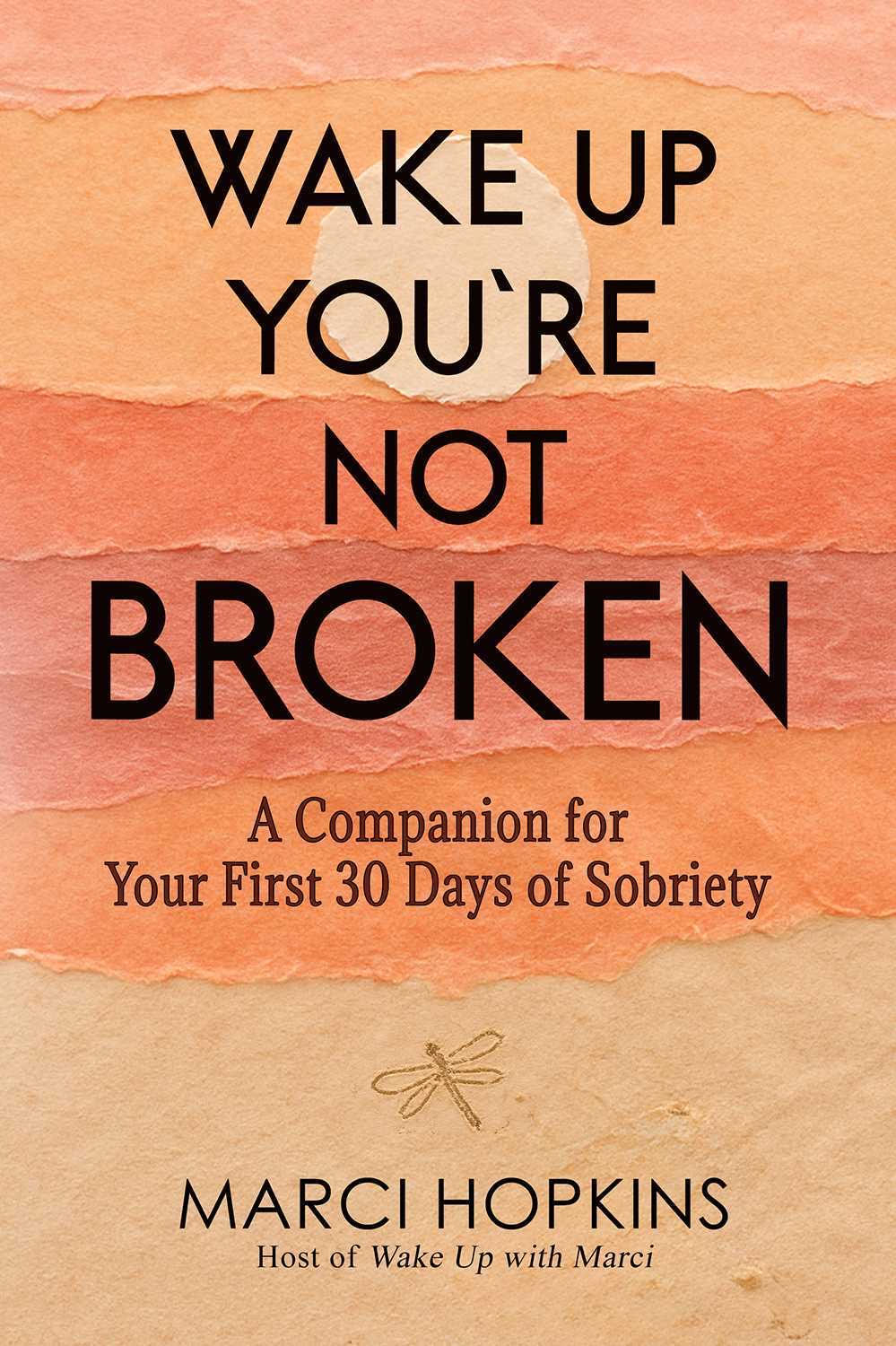
A daily, compassionate guide designed to help individuals through the physical, emotional, and spiritual challenges of early recovery.