-166Days
-12Hours
-22Minutes
-56Seconds





A wife looks at her husband and says, “I’m done. If you don’t go to rehab, okay, I’m leaving with the kids.” He doesn’t think he’s got a problem. He thinks she’s a problem, but he don’t want to get divorced. He loves his wife. Maybe he doesn’t have any money. Should take the house. He ends up with none. Who the hell knows? Everybody’s story is different. This is Wake Up with Marcy, a space for honest conversations about healing, recovery, and women’s wellness. I’m Marcy Hopkins. Take a breath. You’re safe here. Let’s begin. Amen.
Hello all and welcome back to Wake Up with Marcy, where real conversations lead to radical healing. I’m your host, Marcy Hopkins, and today’s guest is someone whose journey is nothing short of extraordinary. From years of addiction and homelessness to becoming one of the nation’s most trusted voices in recovery, Richard Tate is proof that no one is too far gone. He’s the founder of Multiple Life-Saving Treatment Centers, host of the number one mental health podcast, We’re Out of Time, and co-author of the powerful new book, Experiencing Transcendence. Thank you so much for being on the show, Richard. Thank you for having me. You know, you said experiencing transcendence. I always call it transcendence because my co-author threw in the subtitle without telling me. I always forget. Thank you.
Well, listen, Richard. I mean, you have quite a story and you have come back from the depths of darkness and now are helping thousands and thousands of people. Can you take us back where addiction had taken hold of you and what was happening for you at that time? Sure. So, at 12 years old, I stole pot out of my father’s bathroom drawer and I brought it to my friend Christopher and we smoked on the side of his house. And, you know, I wasn’t a popular kid. I was 12, but I wasn’t popular. And um I always felt less than. You know, we didn’t come from a broken home. I looked good on the outside, but I was getting beatings every day. And and so was my brothers. And my middle brother, who was special needs, got it the worst out of all of us. Wow. And and I had a lot of shame around that because I wasn’t always able to take the beating for him. And so that was hard. Yeah. And then at 17, my grandfather passed away and he was everything to me. Everything. Yeah. And then my father left the family for another family to start another family with a woman that he uh was cheating on my mother with and fell in love with. And I guess it was okay because he spent 28 years with this woman and had two children and he did it better the second time around. And so I’m proud of him for that. I I really was. But when he left the house, unlike me, when I had an amicable separation, he just stopped paying on the house. Stop paying on everything. Oh my god. And you know, my mom and my brothers were leaving and they said, “We got to go. We can’t live here anymore.” And I didn’t understand. So I was 17 and I said, “I’m not going anywhere. this my house. It’s where I grew up. Not going anywhere. The um knock on the door came and it was the sheriff’s and they said, “You got 10 minutes to get out of here.” Oh my god. And I said, “Wait a minute. This my home.” And he said, “Come here.” And he took me to the door and there was a note on it and it was a three-day toquit notice. And I said, “What does this mean?” And he said, “That means you’ve got three days to pay the mortgage or quit living here.” And it’s been four days. You got 10 minutes to grab your stuff and leave. Oh my god. And I guess after the beatings and after my grandfather died and after my father left the house and then losing the house and all of us going to my grandmother’s to stay in a one-bedroom apartment, I just fell apart. I didn’t have the tools. I was just a baby. Yeah. And I lost 25 years to drug addiction. And that’s what happened.
Were you using all through high school? Oh, yeah. I never took a sober breath from the time I was 12 to like 37. Yeah. I mean, not a sober breath. Were you drinking every day or coping? That that’s how you were coping. Were you using drugs? No, I didn’t really like drinking. I was smoking pot every day. Yeah. Okay. which as you know isn’t great till you’re like 23 to 25 when your frontal cortex and your brain has stopped developing you know it’s it’s it’s fully developed that wasn’t great I was doing a lot of cocaine at 15 or 16 I found maybe a little earlier I found cocaine I was snorting it all the time and then one day my dad tells me to take my car down the hill to a mechanic and I take him down the hill and I wait for the guy to finish it. I guess it was an hour or so and uh he drives me home. Okay, I don’t understand. I don’t remember the details, but he drove me home and he locks himself in my bathroom in my bedroom for like a half hour and I start banging on the door. I’m like, “What are you doing in there?” And he opens the door and he shoves a glass pipe in my mouth and lights it. Now, this is an adult, okay? Uhhuh. And I took that hit and my whole life changed, okay? And I never smoke I never snorted cocaine again, ever because it was a waste of cocaine. So, I was smoking it all the time. And sometimes when I had a lower companion around or a girl who shot heroin or whatever, she’d shoot me up with the cocaine and then she’d shoot me up with the heroin. And I’m convinced that the reason I’m alive because I loved it so much is because I was afraid to stick a needle in my own arm. I’m afraid of needles. Right. So you wouldn’t do it, right? So if she wasn’t around, you weren’t doing it. Yeah. Well, the many she’s that weren’t around that didn’t do it because you know whoever was around who knew how to do it, that’s who you line up with. Absolutely. That’s who you were surrounding yourself with.
And I’m sure you had a lot of difficulty in relationships during that time. Relationship. No. What are you talking about? What are you talking about? I mean, relationships. Come on. You had to have some relationship. I was a disaster. I was a disaster. Every relationship I had uh went up in flames. I was completely illquipped. I could never put anybody first. I was completely selfish and in my addiction. Since then, I’ve reached out to everyone I could think of to apologize. I’m so sorry. Right. I mean, I was horrible. Yeah. I mean, I’ve never hit anybody or anything. No, but I get what you’re saying that. But I was just horrible. I was horrible to these people. Well, listen, I mean, that’s when your addiction, that’s all you’re thinking about.
So, this led you to homelessness. You your story. Yeah, but I wasn’t homeless. Exactly. Okay. Well, I wasn’t homeless very long, Marcy. You know, you lose your apartment. Okay. And then you get another apartment and then you lose another one and you you know because what happens is if you’re working or you’re doing whatever you’re doing and you’re getting money, right? The paycheck hits your hand and you’re thinking, “Okay, I got to pay rent. I got to pay the electric bill. I got to pay the phone. I got to pay the gas. I got to do all this stuff.” And then the money hits your hand and they turn into crack coupons. Okay? There is no rent. So, you know, you stay a lot of nights in the $30 crack motel, okay, right throughout the city, the shady the shadyiest places. Bed bugs. Like, if you turned on a a black light Yeah. you’d be horrified in one of these things. I mean, they’re just horrible. And let me ask you during that time though did you ever were you ever confronted with a situation where you you didn’t feel I mean can’t couldn’t have felt safe in that environment but was there ever like a life-threatening thing that happened for you during that time? Oh yeah. Well, let me go back first and then I’ll and then I’ll get you there. After you run out of $30 a night Yeah. Okay. You got nowhere to go. So, I was homeless for about two days. I mean, look, staying in crack motel isn’t homeless. It’s almost homeless, but it’s not homeless, okay? Even though you don’t have a home. But I spent a couple nights. I went to the marina. I didn’t know where to go and I went to Marina Del Rey and I snuck on a boat with my friend Trish and we slept on the boat uh for two nights. And on the second night, people came back to their boat and woke us up. And we got so scared and we ran and we ran away scared. As far as the dangerous situations, I got shot at twice. I was held hostage for 12 hours until I could figure out how to escape. I fell out of a taxi cab and rolled down a hill and almost got hit by a truck. I mean, and that’s just what I remember. That’s just off the top of my head. I mean, look, it’s it’s a hard life. Yeah. Certain point, you just get exhausted. You run out of money. You get exhausted. You got nowhere to go. You’ve been beaten into a state of reasonleness and you’ve you’ve faced your reality and you either sink or swim. If you sink, you go into what’s called a learned helplessness, right? And then and all that means for the viewers is what’s the use and you give up. And the longer you stay on the street, the worse it gets. So you got to get off the street now.
Like you’re there two nights, you’re you’re gone. I was at my friend’s house uh uh his business place of business. I asked him for $1,000 to go to treatment. He gives me cash. I’m like, “No, no, no, no, no, no. You got to walk me across the street to the bank and get me a bank check.” So, he got me a bank check for $850 to go to sober living. And uh I had $150. We filled up the tank. I got a carton of cigarettes because I smoked back then, a bunch of beef jerky. I had 20 bucks in my pocket and I went to sober living and that’s how it started. So when you were homeless for those two days, was that the moment that you were like, I got to make a change? Not really. No, not really. What was it for you? What was it for you? It doesn’t work that way. It’s over and over and over and over and over. one disappointment after the next after the next, one disaster after the next, one incident after the next. It’s just and they pile on top of each other. So, if I had to think about it, it would be, yeah, the homeless thing was maybe the straw that broke the camel’s back. But I I was out of money. I was out of money. I had no more I had no home, no money. I I had a car that barely worked. And I was 30 32 at the time. And I didn’t even get sober, I don’t think, until 37. Wow. Well, yeah. And I get that because I’m I’m sober, too. But I my drug of choice was alcohol. And I understand like it took me a long time to get to the place where I was ready to stop, to surrender and say, “I can’t do it anymore.” But like for me that final straw was a DUI and I had turned against like my husband and my life and felt very sorry for myself and then it was like that happened for me and it was like the final thing that I was like all right I’m about to lose everything in my life that I built up. So I guess that’s what I mean like there’s like this one glimmer of hope that you’re you’re like okay this is where I’m done. I’m done. know, Marcy, for me it was different because I had already lost everything. Yeah. I had I had nothing. I didn’t have a husband or children or a career or any of that. I had nothing. So, there’s only so long. I mean, it was a gradual decline, right, until I just couldn’t take it anymore. I had no more I had no more options. And you know when you when you hit that space that’s where the growth happens. Yeah. Yeah. Because without that for me Yeah. it doesn’t happen. Right. So for you you had no no more options but sounds like you had a wonderful friend that was willing to help you. How did that path take you? Like did you relapse through that period of time? Oh absolutely. I I was relapsing. My first sobriety date, my first AA meeting was in 1988. I didn’t get sober until 99, Valentine’s Day. Then, I mean, that’s how many relapses I had. I had more relapses. I had more sobriety dates than there are dates on the calendar, which is why we don’t throw anybody away. Ever. Yeah. because I was the single biggest loser in AA history and nobody threw me away. Yeah. And that’s the most important thing, right? You know, and and I will say another thing. I always had God in my life. Yeah. Always. And my prayers would go like this. God, I know you’re disappointed. Please help me stay safe and I promise we’ll try again. Thank you, God. I love you. Amen. Yeah, I love that. Those were my those were my prayers. I love that. Well, for me, I mean, God changed everything for me. Like, I had like I had God always in my life and I well, not always, but I had in my upbringing. And when I went into recovery, I mean, that’s what saved me. It’s like one of the primary things was having God in my life. And that’s that’s hard for a lot of people because they have the the old idea through organized religion, right? And this fear of God. So that that can hold a lot of people back. Have you found that? When you have the mean god, when you have the horrible god, the mean god. Yeah. Yeah. Okay. It doesn’t work. Okay. But, you know, I don’t know how I got my god connection. I have no idea. I mean, I think I developed it with all the beatings. And so, that was the only thing I could find and it just happened. It was just intuitive. My parents never talked about God. I was sent to a religious Jewish school, the most orthodox Jewish school in the nation. But we weren’t even reformed Jews. We weren’t conservative. We weren’t reformed. We were nothing. I was sent there on punishment. I’m not kidding. Yeah. Yeah. I’m not surprised. Yeah. And but I didn’t let them at the school dictate who God was to me. I never did. because I knew better. I knew Yeah. I knew it made me feel complete. And so I wasn’t changing that for anybody and I still haven’t.
Let me ask you through your story. You said when your father left that you were happy for him. Yeah. Not not when he left. When I went to the funeral. I went to the funeral and first of all I have no idea I mean why they wouldn’t call me to say your father died but it’s like you know I mean I grew up in LA my entire life so it’s not like my father is going to die in that town and no one’s gonna it’s not going to get back to me. That’s not reality. Yeah. So, I walk in to the funeral with my friend Lauren and we walk in and I swear it was like an EF Hutton commercial because I look exactly like my father. His children look nothing like him. His other children from this other family. Yeah. And people were like, “Right.” And it got real quiet and I sat down and you know my buddy’s like, “Are you okay?” And I’m like, “Dude, this is my old man. Nobody’s going to tell me where I can be. I mean, you just I walked in like I owned the joint. Swear to God, because I wanted to see what this was. Okay. And he doesn’t have any friends. So, his children spoke for him and his brother-in-law spoke for him. But the children really loved him. They were wrecked. They loved their daddy. He did it better the second time around. Yeah. And so I’m proud of my father. Well, it’s amazing that, you know, forgiveness is a a very hard part of this, right? Like we we hold on to the pain, which is a lot of the reason why we continue to mask it. I mean, I think it’s incredible you let that go. That you were able to let that go and not hold on to it. I couldn’t for a long time. But I realized at some point, I don’t remember the time, but I realized that a man cannot be successful or I couldn’t be successful if I was mad at my father. I couldn’t. Yeah. And so I went away with him for a weekend. And I talked to him and he took it. He took it and we hung out for every month for like a year, but then it just ended because, you know, he was a bad time and I just didn’t I didn’t want it. And when my daughter was born, okay, he asked if he could see her, but he’s not safe. He’s not safe. And I’m the dad now. Yeah, I’m the dad. So, he never met my daughter. He never met her. And he never met my son. And I don’t feel bad about it. I just don’t. You had that choice to protect them in Yeah.
So, fast forward a little bit. Like, so you went into your first rehab facility and you never been to rehab. Never been to rehab. So, where did you go? Sober living. A men’s sober living. just went to sober living and and a ton and a ton of therapy. Wait a minute. I didn’t have any money to go to rehab. I called up uh Promises before they shut down because that’s all I knew, right? Yeah. And but I called the poor one, the one in West LA, not the one in Malibu, because, you know, I figured I don’t have any money and not going to be greedy about it. And they asked me for $20,000. Oh, wow. And I was like, “If I had $20,000, I wouldn’t have a cocaine problem.” And she didn’t. And And she goes, “Excuse me?” And I said, “You don’t know what I said. You don’t know what that means.” And she said, “No.” And I said, “Then you can’t help me.” Yeah. And I was out there. But with sober living, take us like what exactly is sober living? Like I know my mom, she went to multiple rehabs in jail, right? And you know, she went to the halfway houses and the sober living homes. But for those that maybe don’t even understand that, like what what exactly do you get out of sober living? You just brought it up for me. You just started my memory back again. You asked me about the one time that really the light went off and it was in sober living and it was on my first day. There’s eight or 10 bunk beds in this master bedroom and they’re all filled and their only one that’s available is one on the top. Now, these things sway back and forth and we’re there and I I’m telling you, 18 inches from my head, from my laying down, 18 in is the roof is the ceiling and you know, one of those cottage cheese ceilings, right, with the right and bed swaying like this. Every time the guy moves down down there or I move, people are coughing and sneezing and, you know, snoring and just, you know, and I looked up at the ceiling and I said, “What the hell have I done to myself?” And then it was over. It was over for but but I had two years and nine months and then I got loaded again for 15 months and then I got sober for good on uh October 3rd uh 2003, right? And you know that’s my story and I’m sticking to it.
So tell me for those out there that don’t really understand addiction and listen even when you’re in addiction you know or you you’re learning about it there’s so much to understand but what’s one of the like the biggest myths about addiction that you wish more people knew? Well the biggest lie in addiction treatment is you have to do it for yourself. Nothing nothing’s killed more people than you have to do it for yourself. And I can prove it. Yeah. There’s only two types of people that come to rehab to treatment. Only two. People that want to get well and people that want to get the heat off. That’s it. Yeah. That’s it. Okay. So, if that’s true, and it is, then the people that come in to get the heat off would never get sober. And that’s not true. They do get sober. So, it’s just one of those things that some idiot parroted to some other idiot and then he uh parrot it to the next well-meaning person that didn’t know anything and it just kept evolving into something that means absolutely nothing. Well, I believe that you have to make the decision for yourself to actually do it. If you’re not ready, you’re not going to. At least that was my experience. No. No. Completely false. Sure. Because think of it this way, okay? A wife looks at her husband and says, “I’m done, right? Finished.” Okay. Yeah. You don’t go if you don’t go to rehab. Okay. I’m leaving with the kids. He doesn’t think he’s got a problem. He thinks she’s a problem, but he don’t want to get divorced. He loves his wife. Maybe he doesn’t have any money. She take the house. He ends up with none. Who the hell knows? Okay. Everybody’s story is different. But that guy doesn’t want to get sober. He doesn’t. Yeah. No, I’ve had I’ve had a hundred hundreds of those. I’ve probably had a hundred of those already at Carrera and we’ve only been open two and a half years. Yeah, I get it. But for you, Marcy, you needed that. You needed to do that. And the problem is when people have that experience that’s true for them, they think it’s true for everybody. Not you. Everybody. Everybody feels that way. Right. Think of it this way. When you go to AA, Yeah. Okay. People in AA whose lives were saved in AA. Yeah. So many think that’s the only way to get sober. They do. I’ve been in thousands of AA meetings. Yeah. Well, I don’t think that, but Yeah. Of course not. Yeah. I think about my mother because my stepdad at the time, we did an intervention with my mother and she actually went to Promises in Malibu. Ah. but she didn’t want to get sober and she tried but then she got resentful towards my stepdad and it was just a long road of her like I said in the rehabs and the jails and I don’t know I but why does it stick for some and it doesn’t for others I mean is there an answer to that well first of all back then treatment was you know nowhere near what the treatment is today. Nowhere near. Okay. So many different modalities and this one works for this one and this one works for that one and right and nothing ever works on its own. They work in a synergy effect, right? Think of it this way. When someone’s at Carrera, you’ve got 40 hours of treatment, okay, a week. That’s 160 hours of treatment a month. That’s three years of treatment. That’s three years of regular therapy. Now, let me ask you a question. In what universe are you going to do three years of therapy and not come out a different person? It’s not possible. Well, that’s the way I do it. That’s true. That but that’s the difference, right? I mean, I was going to therapy for years once a week. And then when I immersed myself in the 12 steps and started doing the real work on myself and stopped depending on everyone else and did my own work, everything changed. But you didn’t get nothing out of your therapy. That was a foundation. No, therapy was mand I I needed that. Absolutely. That’s right. That’s exactly right. Yeah.
So, okay. So, you’ve gotten sober and now what took you into the space of now helping people through the ways that you have and opening these facilities? It was an accident just like everything else in my life. It was an accident. All I wanted to do, my other business ended. There was a bill SB899 that went into effect and my business was over in one day. So I moved to Malibu to retire. I was like 37 years old and I’m retiring. I mean just first thought wrong. My buddy Sarge used to call me first thought wrong. So, I go to Malibu and I buy this big house and it’s big and you know, I just came from a tiny little condo. So, I’m only in about a thousand square feet of this house because it’s too big and it’s not making me comfortable. It’s scaring me out in the middle of nowhere. I get that. Yeah. Right. Yeah. And so, I started a men’s sober living there. Wow. And you know, therapy had really helped me. So I grabbed a therapist and I wanted these people to get therapy sessions three times a week at the Men’s Sober Living. Well, cut two, the state comes down and they’re like, “You’re practicing illegally.” And I’m like, “No, I’m not. It’s a sober living.” And they’re like, “Yeah, but you’re providing treatment.” And I go, “No, I’m not.” They’re like, “What’s the therapist doing here?” I said, “Well, they’re getting therapy. Right? That’s there’s nothing wrong with giving more than you promise, right? And helping people out. They’re like, “Hey, dude, that’s treatment.” Okay. So, I didn’t know that. I didn’t know that. I knew nothing because I’d never been to rehab. I get that. Yeah. So, I went ahead and got my license and and that’s how it started. Unbelievable. Yeah. Incredible. Yeah. Yeah. It was It was a godshot. Listen, I don’t know what I’m doing. I’m just moving forward and I’m like, “We good here. Just do what I told you to do.” Okay. And I just do it. And And nobody lives that way. When I tell people this, they look at me like I’m nuts. But I I get it though. I really do, Richard. I mean, a lot of times people ask me, “What’s next? What are you doing? Why’d you write your book? Why do you do this?” And I’m I’m like, because God told me to. God healed. You know, he’s the one who guided me to do this. I feel like I’m relating to you with that. Is that you know like I’m not writing goals out like I’m gonna write a book in three years. That’s that’s Oh, I always write goals but but but that comes there too. Um you know Yeah, you’re right. You’re exactly right. I feel the pull. I feel the like I don’t hear voices or anything like that. I just feel the pull and then I go that way. I love it. That’s I I totally get it. I mean, listen, I don’t have voices in my head, Richard. Not yet. I just wanted to make it clear. They’re like little ideas come to me. I’m the chairman of a healthc care corporation. I need to make this clear for the viewers. Very clear. Yeah. Yeah.
So, you say that once the trauma is healed that the need for self-medication disappears. Self-medication. Share with us. self-medication is is the solution to problems because you don’t have the tools for other solutions yet, right? Yeah. The these using works until it doesn’t. And when it doesn’t, you develop new tools, right? 100%. Yeah, that’s how it works. Yeah.
Well, tell us about Carrera. So Carrera is really special. First I want to say something about my other place. The place that I founded, Cliffside, Malibu. They merged after I sold it. They merged with another place and now that place has been taken over by the bank and I just found out about that yesterday. These people donkeyed off my legacy there. Yeah, I’m so pissed off because I wanted them to do well. Now, yeah, they uh when I started Carrera, I grabbed 31 people from my old place. They wanted to be with me. They wanted to start a love call again. They wanted to do it where love is the foundation of everything. That’s how we do it here. We’re a family. Okay. So, I called them all and they’re like, “Yeah, let let us give our notice.” and they just all gave their notice. Okay. And all came over here. Yeah. The bummer is that Cliffside was just awarded the number one treatment center in the country. Wow. Only I’ve got everybody from there. Yeah. So I’m the So Carrera me. Yeah. So Carrera is the finest treatment facility in the country. Now I already knew that. Okay. But it’s it’s important to point that out. Carrera is the most special place. I am more proud of that than anything I’ve ever done in my life other than having my two children. It is the single most exclusive high-end drug and alcohol treatment facility on the face of the earth. And it was designed that way. And I have no ego about it at all because if someone was doing better stuff and and sometimes these places do do something and I I grab that little nugget from this place and I grab that nugget from that. I’ve always done that because I want the best place. No ego at all. Okay. It’s just it is what it is. It was designed that way and it’s just the most comfortable place to do the most uncomfortable work that you’re ever going to do. But right then you’re thriving. And I’ve g I keep saying I I’m like nuts. Okay. We have given back over 10,000 people back to their families. There’s nothing more esteemable for me than that. Nothing. Yeah. No, absolutely not. Where where is it exactly? So, we’ve got a location um in the Dhini Estates, which is the top of the Bird Streets. Just magnificent. It’s got a it’s got it’s actually got a worldass spa in the facility. It’s just amazing. And we’ve got uh a place in Malibu on Broad Beach with steps right down to the beach. It’s magnificent. I mean, it’s the most I call it God’s house because it’s the only house I ever lived in. Yeah. Yeah. It’s the only house I ever lived in where I was comfortable and I gave it to my treatment center. First thought wrong. Yeah. Is this attainable for for most or I mean how can some No no no this is for the top onetenth of 1%. Okay. But sometimes there’s this one insurance policy or that that works, but very rare. Not very rare, but rare. But I’ve got a a treatment center called One Method Center, which is an and 80% of the staff at Carrera works at One Method. So, you’re getting the best treatment you can get. There is no class system, right? Yes. They don’t get spa treatments and they don’t Right. all the all the extras. Right. Right. Right. But as far as the treatment and they’re in beautiful homes in Chevat Hills, you know, a nine iron from Chevat Hills Country Club. These are very nice homes, a very nice neighborhood, but it’s not Carrera. And for 500 bucks a month typically, which is your deductible, you can get 30 days of free treatment there. Amazing. So, it’s it’s it’s again the whole thing is I’m so proud of it, you know, and when you don’t work for five years because you’ve got a non-compete and you’re sitting there living the h the life of a Malibu housewife, right? You’re thrilled to get back going to work and and helping people again because you feel bad if you’re not helping people, especially if you have the ability to do it. Right. Exactly. And you yourself have made such lifechanging transformation and want to be able to give that to others.
Let’s talk about the families. Okay. I mean, it’s a helpless place to be. Yeah. So, let’s talk about the families. What’s the first step for them? Well, the families got work to do, too. Yeah. Okay. And we’ve got family systems that we have, programs that we have depending on the individual to work on what the family needs. Okay? But look, I’m a father. Family to me in this system is everything. When a father or a mother sends me their child, I’m like, “I’ll take care of it. I promise.” Yeah. It drives me nuts. It just does. And you can’t do it this long and not be an empath and be destroyed by it all the time. That’s why I get emotional because Yeah. It’s so horrible, you know? It’s like I’m full of the trauma. I take on all the trauma of everybody else and it’s like, you know, and then I’ve got to be in therapy three times a week just to keep myself, you know, together so I can help people. Yeah. Yeah. I get that. Yeah. It is so hard because I’m involved in other organizations that I help with and the mothers telling the stories of losing their children. I was in a meeting yesterday and one woman lost three of her children to addiction and it’s just heartbreaking. I also know what breaks my heart too is the lack of understanding of the kids out there using and you know there’s these stories you know Jinzers aren’t drinking as much and that’s all fantastic but there’s still so much work that needs to be done and the awareness that needs to be we need to get out there so much more and and and make people understand like My daughter alone tells me all these guys are doing cocaine all the time.
This is the most important thing I can tell your audience. Okay, we are out of time. If you’re a parent and your kid is doing drugs and you don’t get him into treatment or her into treatment immediately, then you’re going to bury your kid. It’s not if, it’s when. You cannot go buy cocaine on the street or pills on the street. You cannot do that. If you do it, they’re laced with fentanyl. If you don’t have the tolerance for fentanyl, okay, you are dead. Okay, these is this is happening to kids, straight A students at at a party, school parties, okay, with all their friends on the weekends taking a pill or a powder. Okay, and they’re dead in a minute, less than a minute. Okay, we’re out of time. Do you remember sh right it took I mean it would take me two hours to put my daughter down. Okay. I mean I’ve got 16 years into this kid and 12 into the other one. Okay. I mean I couldn’t get over this. There’s no way. There’s no way. I would just die. I would just die. My heart would break and I’d fall out. There’s there’s no way. I know. I I was just watching some of the videos one method and the parents that have lost their children to fentanyl and it was one of them the child thought that they were buying something else and the person knew that it was laced with fentanyl and she died immediately. Yeah, that’s exactly right. And those stories happen all the time. Yeah. They all think they’re getting something else, Marcy. They all think they’re getting something else, but there’s fentanyl laced in all of it. It’s a national security issue. It’s terrorism. Terrifying. Tire. Yeah, I get. Yeah, 100%. And I know this is what do you know that I that I have at one method we take care of the military and veterans. Do you know that they’re coming in, the military, the active military is coming in on fentanyl, swearing that they’ve never taken it really? And why is that? I mean, like, what’s happening? I don’t know. If I’m China and I’m sending all these precursor chemicals to Mexico just to make certain that they get to the United States. If I was China, I’d want my rivals military stoned, wouldn’t you? To get through it. I mean, that’s not good. No, because it affects our readiness. And we are in a more dangerous world than we’ve been in in my lifetime. And I’m 59. Yeah. Yeah. So, I’ve done some living. Yeah. I got to tell you, like it’s just heartbreaking, but I I am grateful for conversations like this and the work that you’re doing. And the more conversations we have, the more we normalize this and get more help out there, right? And more of an understanding. You got it. Yeah. You got it. What you’re doing, what you’re doing, Mars, is is fantastic. Okay. Because it takes all of us. It takes all of us. You know, there’s there is no podcast. You’re you’ve got a great podcast, but yesterday I was scheduled for a podcast with I don’t even think anybody listens to it, but I’ll go on anything, okay? Because all day long, every day, I want the same message heard, which is if you love your children, okay? have the conversation about the fentanyl early and often. Okay? Early and often.
I had a conversation with my son when I dropped him off to his first day at middle school, seventh grade, and I said, “Hey, buddy.” Yeah. I want to tell you something. He said, “Yes, Daddy.” I said, “You can’t take a pill from anybody here or a powder from anybody here, a vape, nothing.” He goes, “Daddy, we’ve talked about this a hundred times.” And I said, “I know, buddy, but this is the first day you’re going to middle school. It’s a different deal now.” I said, “Let me tell you how it’s going to happen. Someone’s going to offer you a pill or a powder or a vape or something and they’re doing it because they need you to cosign their bad behavior. They want it. They want a partner in crime. They know they’re wrong. And if you go with them, it makes them less wrong. Don’t cosign anybody’s bad behavior, buddy, because I love you and I will not get over it ever.” And he said, “I know, daddy. I love you and I never will. I promise.” Okay? You have to talk to your kids like that. Okay? If you don’t, if you’re too busy with work or there’s something else going on or whatever, then get your priorities right. Well, also, they pretend it’s naivity and they want to stay in that. And I mean kids are doing drugs in seventh grade. I you know I I don’t know why I remember my daughter cuz she we have a very open relationship. I I want to keep that because you and your husband you and your husband my daughter and I because I I want her to be able to tell me anything. How did you not think that was funny? I’m going I’m talking serious here. All right. She would talk about like these kids doing drugs in high school and I’d bring it up to the mothers and they would all say, “No, that’s not happening.” Yeah. Because, you know, they’re not they’re not Look, if you’re not involved in your kids’ life, you’re gonna have problems. Yeah. They didn’t ask to be had. You had them. They didn’t have you.
I know, Richard. I can’t thank you enough for coming on the show and thank you for sharing so openly and for all of the work that you do. I really really appreciate you coming on. Well, I’m not running for office so I can be as honest as I need to be. All right. Thank you. Thank you for having me. Thank you again. And listen for all of you out there. If this touched you or you know someone, please share it with someone who needs this message. Like, subscribe, leave a comment, and let’s let’s do this together, guys. Let’s make this a normalized conversation so we can help others out there. And please stay honest, stay truthful to yourself and to others. And remember that your story isn’t over, and it’s time to wake up to your worth. And I’ll see you guys next Thursday.

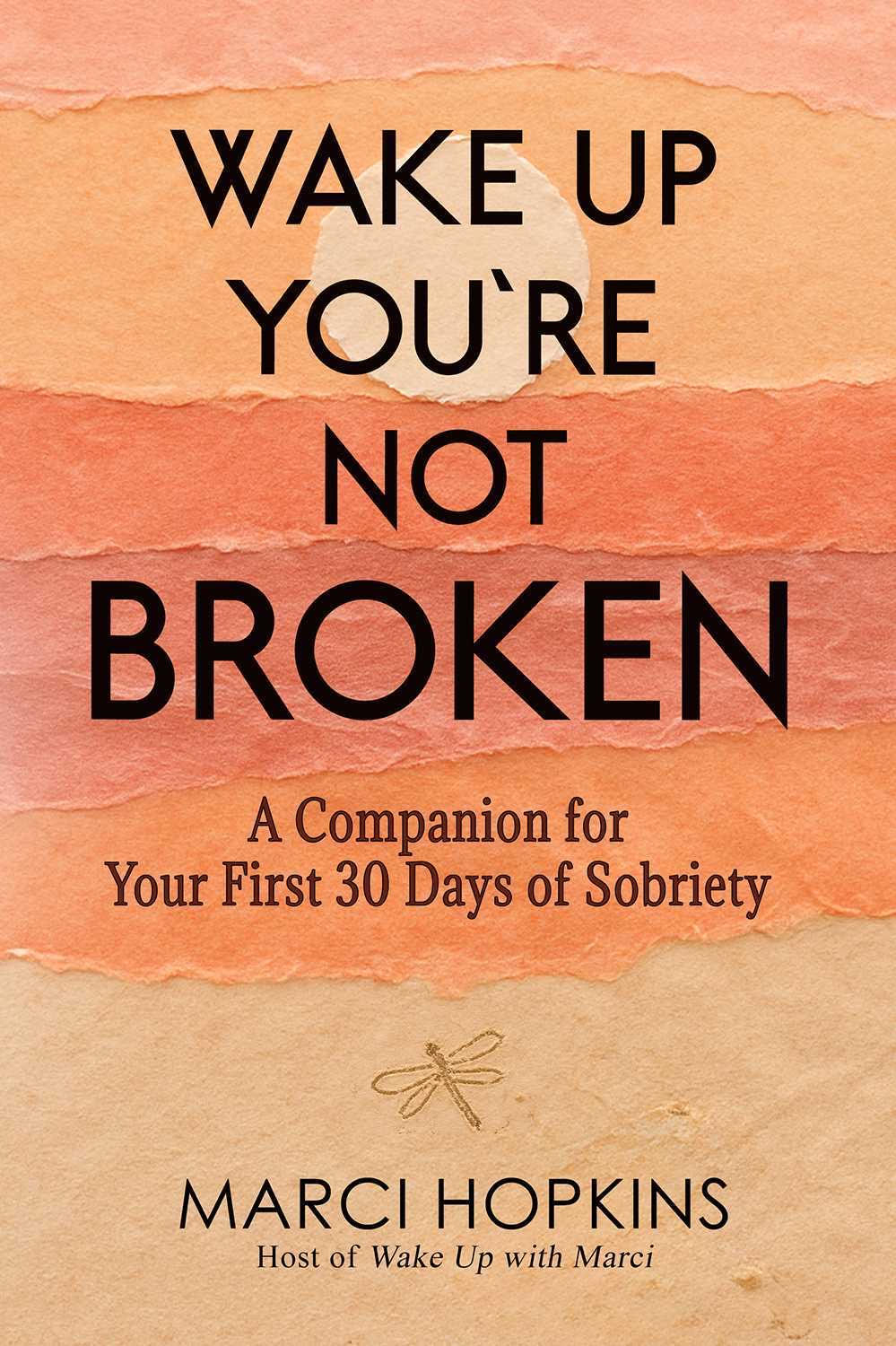
A daily, compassionate guide designed to help individuals through the physical, emotional, and spiritual challenges of early recovery.