-110Days
-6Hours
-42Minutes
-4Seconds





Your habits weren’t really fulfilling your life and you started questioning your relationship with alcohol. A big reason why I quit drinking as well, not only for myself, but my daughters were getting to an age where especially my older daughter would start to notice when I was sloppy. It’s not as easy for us to just wake up and say, “I’m going to stop drinking for today.” If you can’t drink in a responsible manner, you shouldn’t drink. This is Bill Raymond. For over 20 years, you’ve known him as a leader in DTC marketing, building brands, driving growth, and helping others find their voice in the chaos of the digital world. But today, you’re going to meet the man behind the success, the founder of LA Sober, a movement that’s redefining what sobriety really looks like. Because this isn’t about quitting, it’s about choosing. choosing clarity, choosing connection, and choosing to live fully awake. So, take a deep breath. You’re about to wake up to a new way of living with Bill Raymond. I try to understand what men go through. My nickname was Bubba Billy. Oh, it’s just changing those bad habits. And I accepted everything about me, the good, the bad, the ugly. For people that have been married 50, 60, 70 years, what’s the key? communication.
Hello all. Welcome back to Wake Up with Marcy, where we dive deep into real conversations, radical healing, and waking up to your worth. I’m your host, Marcy Hopkins, and I’m so grateful you are here with us today. My guest today is someone who’s flipping the script on what an alcohol-free life looks like in today’s world. Bill Raymond is a DTC marketing expert, podcast host, and founder of LA Sober, a lifestyle brand, and movement helping people redefine clarity, connection, and living well without the booze. Bill is helping others to see that sobriety doesn’t mean boring. It means bold. You don’t have to lose your edge to find your peace. Bill, welcome to Wake Up with Marcy. I’m so glad you’re here. Thank you for having me, Marcy. I’m so glad to be on this early morning for me. I know it is so early. You’re there in LA. I’m here on the East Coast, so it is a bit early. So, thank you for jumping on and taking time to be on the show. And I was so grateful to be on your podcast, LA Sober. I had the opportunity to be in LA recently, and while I didn’t get to meet you then, it was it was a great experience. So, thank you, Bill. Yeah. though. Thank you again for making time for us. And I apologize for my mishap. I I had my dates wrong. I was on travel and the the boss, the wife said, “You’re not changing it.” So, but Owen stepped in. I feel like that happens so often, but you listen, you made it work, right? That’s what we do. We have to make it work. Things happen in life. And that’s a big subject around what we do and our lives. And a lot of times people can get really stuck in that. But gratefully we can now with our sober minds especially learn to to be solutionoriented. Right. No, it’s so true. And the anxieties that I used to have with with anything at all would be tenfold. And now you just I take it all all on as it comes and I get through it in a much easier way. It is a much easier way and that’s why I’m grateful to have you on and we’re going to talk about your story and so I mean you have done so much. I mean, you worked in the media world, branding, scaling brands, come scale my brand, you know, leading like major campaigns. And then something changed for you. You noticed like your habits weren’t really fulfilling your life and maybe even holding you back a bit and you started questioning your relationship with alcohol. So, can you share with us what was happening at that time?
I think it’s probably easier if I just start from the beginning and and and it will be quick, but so I grew up in Palm Springs. I’m one of many few people that you hear that grew up in Palm Springs. For those that don’t know, Palm Springs is a desert community about two and a half hours outside of Los Angeles. And I grew up in I was a preeie baby. And with that came some learning disabilities. And one of them was I had a really bad speech impediment. And so I didn’t learn how to talk until I was like five. And then all through grade school, my nickname was Ba Billy. And today things aren’t like they were back then where I think now they really look for if you will get bullied and such. Well, back then they didn’t really do that. And so all through grade school, my parents moved me to a Catholic school that was a small school, so they would really help me. And I had a speech therapist, but my, you know, going through grade school like that. It really hurt me, right? I mean, it made me so self-conscious and it made my confidence a lot lower. Well, I powered through it and then I went to school in San Diego at SDSU. Then I moved to LA in like 97. Partied all the way through it. Had a good time, but always got got all of my work done. Always had a job. And then in like 2001, I started my own media company out of my apartment and it was called Media for the Masses and did very well with that. Like we seriously went from rags to riches. Had a couple of really big hits. Did great but you know with that came a lot more stress. Grew that to like $20 million in buildings and then wanted to start a family and that’s when I joined forces with my company now which is Canela Media. And I’ve been here for over 20 years and we’ve done very very well. We are one of the largest direct to consumer marketing companies inside the nation. We sold that to private equity in like 2008. But along the way, there are some things that you have to give up, right? There’s no pain, no gain. And so with me, I was always bettering my clients, bettering my company, doing the best I could at being a dad, the best I could at being a husband and a friend, but I was not working on myself. And while I didn’t really hit like a rock bottom to say, um, there are countless moments through my life that I can look back on that drinking just didn’t work for me. It didn’t make me feel good. And I have a very addictive personality. So with that, I go all in on everything. I mean, because my wife will go to me, well, why can’t you just have a drink of like a glass of wine? you know who you married like like that’s not me. Yeah. And about two and a half years ago because I haven’t drank in I want to say 31 months after a a big night out in LA. And then I jumped on an early flight to Miami for work. Ended up, you know, going to events and going out and partying and yachts and everything that goes with that. Yeah. I woke up that Tuesday morning on my I said, “I’m done.” But I said, “I’m done today. I’m done today.” And that was what I needed to not put the stress on myself that say, “I’m never drinking again.” To me, it was I’m done today. And slowly but surely, it just became routine, but I’m only sober from alcohol. I’m not sober from natural things. Um because for me, alcohol was the main crutch that it was one that I just couldn’t control at times. Yeah.
Well, you know, I love what you’ve shared through your story and I speak to women a lot, you know, through my show and and through my messaging, but you yourself are doing the same thing. We’re doing the same thing that I always speak about for women, right? trying to balance everything like trying to be the best in work, trying to be the best dad, try to be the best husband, the best friend, and while you’re trying to right build this this company to support yourself and your family, right? I think that that’s there’s a lot of pressure that comes with that. And then for women, it’s about maybe balancing work, the home, the kids, all the things that come with that, right? And I love that you openly talk about how hard that is. And a lot of times I think that a woman will look at a man and be disappointed in areas, right? Maybe they’re not giving enough to their wife, right? Or to their kids because they can’t because of the expectations at work or the drive to try to build that. So later on in life you can have that time more time right. So the sacrificing through that and would you say that you felt that and that not only were you drinking maybe at that time did you still have your speech impediment? Yeah I mean I I still do. I mean like like it still comes out. I think just for about that is once I just accepted it and really didn’t give a about it. Uhhuh. And no one really cares and if it comes out it comes out but that’s just who I am. But yeah right and that is about the self-acceptance and all but would you say that you felt what is the pressure you feel through that? Because again, I think women need to hear the other side of it. Like what kind of pressure are you feeling through that? Would you say that your drinking escalates or you feel you feel like you are letting down others when you’re trying to balance all of that? For sure. I think as as men, we don’t share with our friends like women do. My wife has a very close group of women that they go they play tennis together. They they go on trips together. Oh, believe me, we share everything. We share everything. So, who are you sharing it with? Who do men share it with? Because I know my husband, he goes out and, you know, asking questions and they’re just talking about maybe the golf game with, you know, or, you know, sports or whatever it is. Yeah. I mean when when I started the company, I put these expectations on myself for me to be successful, for me to be the man. And you know, growing up in Palm Springs and then living in LA, I mean, there’s a lot of successful people and you look around and you go, man, I need to keep up with this, you know, and I have to pay the property tax and I need to pay for the nanny and and all those things that come with it. And while it’s great, it is stressful, especially when the kids are younger because when the wife has kids, when you have kids, we both do, they go, it’s like the kids are number one and you are number one and then you become like number four or five. Yeah. And when I come home from work, the last thing they want to do is listen to me complain. They go, “Well, I’m with the kids all day.” Which I get, but at the same time, it is juggling act. And I think for people like myself, I have ADHD. So I know that I’m one that has a very difficult time saying no. I always say yes, but I say yes without really thinking about it. And it puts more pressure on myself. Right.
Right. And so you talked about well the speech impediment and ADHD. My son was just diagnosed actually a couple years ago. Sadly, he went through all of his younger years with ADHD and I had no idea just strictly because he has also something called Twice Exceptional. So, he’s very smart and he was able to navigate everything without it and it came out in college. So, why I’m saying this is because I realize the the difficulty it is to have ADHD and get through life and be productive. for him. I don’t know, maybe you have hyperactivity. He doesn’t have that. It’s just hard for him to be a self-starter and keep things organized and and that sort of thing. So, I mean, you really with the expectations of dealing with a family and being successful, I’m always fascinated by what women expect out of life and expect out of their partner and then what their partner is going through. And you went through I know it had to and you you have said this as far as the speech impediment and how that affected you, right? And your confidence and and that can really hold someone back to be able to like they could end up hiding and isolating and then also with ADHD. So you you really had a lot to overcome through all of the expectations of society and family. And when you say that you were partying and drinking and being a part of like for a woman, it’s not as easy for us to just wake up and say I’m going to stop drinking for today. It’s more I know this doesn’t look right, but then I’m at home. I’m lonely. I’m isolated. So much easier to pick up that glass of wine. So, how can someone start to build that confidence and really address things that are holding them back?
So, I’m going to tell you a quick story. So in 2008 when we were selling the company there you bring in all the companies that are going to look at buying you and you go through these meetings in like four to six hours and you go through a huge PowerPoint and the executive team gets up and goes through slides and then there’s questions and answers. We had a rehearsal and I was so nervous I couldn’t talk. I remember this day I couldn’t talk. I was stuttering and my CEO, my business partner for 20 plus years said, “I got it, Bill.” But that made me feel like this big. Yeah. And I remember the night before I was in my hotel room and I used to not be able to sleep like for like a meeting like this like even this today even like this I I would have not slept last night. I would have been just worked myself up and and just got in my head so much. And it was it was a moment that I will never forget and oh my god why can’t I just be able to do this? like I know the information. I know how I run this company. And but the crazy thing was that the night before I was drinking in my room like that’s going to help. But I know that’s what I knew. Even though it was doing the complete opposite, it was making it was making everything worse. Yeah. And I totally get that because well I got a long story and I shared with you and I always drink but mine got really bad when I got in front of the camera and I started using it as liquid courage and it just made everything worse. I mean I couldn’t think right you know so I realized that we start to use drinking as a coping mechanism so often or other things right whether whether it’s shopping or whether it’s drugs or you know sleeping pills whatever it may be right I feel like we all have a lot of ways that we we cope when we struggle in difficult ways and I think a lot of that comes back to our confidence our self-esteem our self-worth. So, when you decided to put down the drink 31 months ago and and bravo that you didn’t have to have a rock bottom, but you recognize I think there’s a lot of people out there that question their drinking recognized that it’s not adding value to their lives and maybe taking away from it. So, what helped you through that time? because maybe someone out there doesn’t need to go to rehab or AA or get a coach, but what helped you during that time? It was my time to quit. Like it wasn’t like I thought about this one day. Like this was Yeah. over 20 years of drinking like like I tried to ride that bike and I just couldn’t do it. it. I just could not do it because there was those times when I would just go through the fun zone, block out, and I didn’t want to feel that way in anymore. And so me it was just taking one day at a time and not what are the steps did you have some mindset things that you started doing more change morning routine? I know you talk about rewiring your brain and you know bringing in that clarity and different ways of thinking. So, kind of like what what would you do to try to help you? I know it was a decision and I get that just ready to surrender. Like what helped you through that? I started surfing again a lot more and that really grounds me. I started working out more. But I was just a lot kinder to myself. like I believed in myself and I accepted everything about me, the good, the bad, the ugly and I’m okay with that. And I will say this that because I tried to quit drinking before COVID, but I was still taking sips of my wife’s drinks here and there. I will say that this time I think one thing that really helped me was micro doing mushrooms and because it just gave me enough of a happiness up here that allowed me to not want to drink. And I know that that my soberous journey isn’t for everyone. Like I know many people that if they do anything at all they’re going to just turn and keep going down that road. Yeah. when you have that addictive personality. Yeah. And and I will say that I have to be super careful with everything I do. Like I am a very addictive personality. There’s a reason why I’ve been able to build this company. There’s a reason why that I when I was drinking out to 5 in the morning, still go to that meeting at 8 a.m. does how I I I’m wired. But with that comes a lot of bad stuff, too. So for me it was just taking it one step at a time and again being kinder to myself and being okay with with everything about me.
What I love that you said and this is for men and women is like letting go of really that perfectionism, right? Cuz I for so long was trying to keep everything so perfect on the outside so I didn’t have to deal with the mess on the inside. And so when I stopped drinking and I actually started my first show, Coffee with Marcy, I had to get to a place where if I messed up, I wasn’t beating myself up for days, you know, or hating myself in that moment or just have it paralyze me in that moment. I would literally laugh it off. I mean, I had to start looking at things so different. I’m like, like I’m human. I’m going to make mistakes, you know, and I do things. I try to do my best when I put my my mind to something, just like you’re saying, like, I’m all in. I’m all in. That’s just how I’m wired. But it is letting go of that idea of being perfect, whatever that is. And maybe that stems from like for me I believe a lot of that was the abandonment that I I dealt with as a younger child and just always looking for acceptance like love me love me love me you know I’m you know I’m perfect but in reality I wasn’t but I love that you’re saying that because it’s the same like you let that go you’re kind to yourself you give yourself grace I think you’re in that solutionbased mindset and just kind of laugh things off. If you laugh it off, no one’s really going to pay attention to it. That’s what I noticed. Right. No, it’s so true. And I can speak from my own experience. So, my 10th grade year in college, my parents were no longer able to support me and the amount of stress that came with that because I I was still running with that same friend group that they had everything paid for and then moving to LA. that’s super expensive and trying to keep up with that and then starting the company. I always put these high expectations on myself that were sometimes unattainable. So I think now I I’m doing my best to while I still stress out about it, I still go, “Oh my god, I need to hit this number to retire. I probably don’t need that number, but that’s just how how I but and if I don’t make it, fine. I’m still going to be okay. I’m trying my best these days to really enjoy the journey because we’re only here once and and trying to get out of my head and be present because I I for people like us, I’m always in my head. I overthink everything. I think about what everyone’s thinking. And I’ll take it back one one more thing is that a big reason why I quit drinking as well. Not only for myself, but my daughters were getting to an age where especially my older daughter would start to notice when I was sloppy. She would count my drinks. And she’s also a very addictive person. I she’s me to a tea and I’ve been very open to her about I mean of course I’m open now. I mean I I share like I’m very I’m I’m very transparent with it. But I wanted them to know that if you can’t drink in a responsible manner, you shouldn’t drink and that’s okay. You don’t have to drink. Yeah.
I I’ve been navigating that with my daughter in college and just trying to like and I still question it like what’s the normal exploratory thing here or what are red flags, right? And I’m very open in the conversation. I think there’s a lot of people out there that still don’t talk about it a lot with their kids and I think it’s such a disservice because they need to learn. They need to learn what what alcohol is, what it can do to you, and how to drink, what it looks like, what’s good, what’s bad. You know, make them aware, not maybe not to think about all the time, but make them aware, make them educated. So, I love that you’re transparent about that. And and I believe even if we do have it within the family, it’s it’s something that should be discussed. And so, through this journey, tell you know, saying that you love the journey and and enjoying the journey. I I too think that’s so important because I I am always like what’s next? What’s next? What’s next? And like somehow I think that’s a validation thing. So I have had to really work on staying present. And I also got to say, Bill, I didn’t know men would think about what others were thinking. I thought only women did that all the time. We overanalyze everything and ruminate like can’t sleep because we think about what we said and what somebody else is thinking. Yeah. No, I I mean I’m I’m not sure if it’s all men, but I know that’s how I am. Um common ground. I’m I’m appreciating that, Bill. Thank you.
So, let’s talk about LA Stober. Like, how did that come about? I have a silent business partner and he would come in to town and before when he’d come in town we’d go, you know, out the bars, hang out. Well, he’d still come out, but I wasn’t drinking, but I also wasn’t sober. I would, you know, either be micro doing or maybe some THC gummies. And he started calling me LA sober. And I’m like, that’s kind of catchy. And then before I started my first company, Media for the Masses, in 2001, I was looking to start like a street wear brand and I was going down that road. I also owned a bar at the time. I really like that name. So, I went online and I’m like, I’m gonna buy that URL. And I was able to buy it from someone and I bought it. Yeah. Yeah. And then and then I went to DMV and I looked on before I went is LA sober available and it was and I went in and the guy’s like you won’t be able to get that. I’m like Chuck available. So I got that surprisingly. Yeah. Slowly but surely I’m like I don’t know where this is going to go. I have no idea. I’m already working 60 70 hours a week. It’s the last thing I need. But I’m like I’m just going to start it. So, I started the company, designed the website, made some merchandise, and now I have a podcast and I still really don’t know where it’s going to go. I just really enjoy it. This is therapy for me. So, it’s like free therapy. I’m helping others. It keeps me on my journey. I started a podcast and as long as I’m helping myself and helping others and I know through my connections I believe this will go somewhere. I know that if I wasn’t running Canela Media I believe this would be a lot bigger now but I’m okay with that that it’s not a sprint it is a marathon. Yeah. I like to think of us now as a soberous media company where um I can speak to people like yourself that have struggles or people that don’t even maybe have a struggle with alcohol or drugs or or any addiction, but they’ve been around. Everyone has been around it. Everyone has been impacted it in some way. And I think having a forum like this, especially for men, like I get from a lot of my friends, Bill, thank you for doing what you’re doing. Thank you for being so transparent. Thank you for allowing us to become transparent and that really means a difference to me. Yeah, I love that. I remember when I started my show because somebody reached out, a man reached out and it’s like, why is everything for women? Like there’s not a lot of places for men to go and I try to understand what men go through, right? Because I I feel we have different pressures and expectations and the ways that we think and and what we go through. And I think that through the even through this conversation, we’ve seen that you’ve gone through difficult times just as women do, right? And and dealt with the self-confidence and trying to figure out drinking and trying to navigate it all and how difficult it is. But it’s like you don’t have the girlfriend that you’re sitting there unloading on, right? And I think that that’s that’s our own form of therapy that we’re we’re always turning to our girlfriends or maybe sometimes we’re just making it worse because we keep complaining about it. But I think it’s fantastic that you have created this platform where you are helping men to have a safe place also to know they don’t have to be perfect and life sucks sometimes and this is how I did it and that and and maybe this can help you too. Yeah. I like to think of it as clarity is currency because when you are going through things you at least in my past I would use alcohol substances reckless activities to try and numb not only the pain but just the stress. It was really real not the pain at that point. It it was really the the stress that came along with it and it just made it more difficult. But when you’re in it, that’s all you know. And when you come out of it, like it’s so much easier. Like I don’t know how I live that way for so long. And once you see the light, it really is so much easier. It makes life tfold better. I used to drink a lot of wine. I used to drink a lot of wine because I thought, well, it’s only wine. Yeah. And so wine’s like like like like I’m rich so I can drink wine. And I There’s that perception. I get it. Yeah. Yeah. And I drink a lot of wine for a long for like 10 years. There was like I I would drink probably a bottle a night. And my wife’s not a drinker. Like she drinks but she’ll have like she never f she’ll have one drink but won’t even finish it. That wasn’t me. That’s not me. I don’t get that. And but I started drinking plain hot water just out of the instant and it was something it would just calm me down and I would drink it at night and the and I still do it at night inside the morning and my wife go sorry. It’s very good for you. Oh yeah. At first, my wife’s like, “You’re drinking just hot water.” Now, she drinks more hot water than I do. And and it’s just it’s just a nice easy and it’s cheap and it’s free. Yeah.
So, so let’s talk about being vulnerable. I think vulnerability can be a lot of people can look at that as a as a weakness. And I know you and I are on the same page that you know that’s that’s really more of a superpower if you will. How did you as a man become okay with being vulnerable and what are your feelings around that? I think it goes back to again as a child with a with a speech impediment. I don’t think I learned how to express myself and tell people around me how I was really feeling. And I think that was something that didn’t help me through difficult times. And I’m not sure when this really started, but I think I finally just realized that the more I can talk through things I’m going through, but not just in my head, like vocal and and out loud, I think it helped me. So in some ways it it was selfish like like it was selfish for myself thinking well how can I help myself and once I started to do it I enjoyed it and I still do and I think that if it if it’s helping myself and helping others it’s a plus. I will say while I’m great at this, I’m still not great at always telling my wife exactly how I’m feeling. Like my wife thinks I’m the worst communicator in the country. So, I think it’s different, right? It like like it’s it’s easier for me in a forum like this than sometimes really being 100% open to loved ones around me. But I am getting better at that, too. I got to tell you, I think that a lot of people have difficulty with that, right? It’s it’s easier to open up to a stranger, people will say, than it is to someone, a loved one that you’re close to. My husband and I had to really navigate our that ourselves because I grew up in in a home where you expressed yourself, then somebody blew up and there was a huge fight that would ensue and then you acted like nothing happened the next day. So I just learned to push my feelings down and not under I didn’t know how to communicate that. So that was that was my impediment, right? Like I didn’t know how to communicate, right? So what my husband and I have learned is when finding the right time to communicate when something needs to be addressed, right? because we we don’t want to talk about the difficult times and our feelings necessarily, but I think that we being aware of what’s going on with your partner or being open and just saying, “Hey, I want to talk to you about something, right? Like setting it up. Let’s find a time where we can actually be open, right?” And then the words that we use using I I feel this way. This has been going on for me. Um, maybe even expressing like, you know, this could help me if if you’re able to do that or I’d like to be there more for you or allowing them to to speak and and not reacting to it. Not reacting to it. You may not agree with it. You may not believe that you I mean, you maybe didn’t do something intentionally, but just accepting like we perceive things differently. And and I think that communication and we’ve heard this, right? Like for people that have been married 50, 60, 70 years, what’s the key? Communication. So I think yeah, learning to be that vulnerable person and communicating. My husband and I have had to really learn how to do that, too. Yeah. I think when when you get married, I mean, I was the same person but so different being I’ve been married for 22 years. And you change a lot like like you change, your partner changes, the people around you change, your kids change, everything. Everything, right? Like like we’re totally different people than we were. We had different we had some some friends that we had at the wedding and we don’t talk to. So, it’s like your entire life changes. Yeah. But it it’s so true that you do need to learn how to communicate in a respectful way and it’s okay to be honest about your needs and wants because if not, it won’t work. And it’s you you have to be okay with having those difficult conversations at times and being okay even if they don’t agree with you. That’s okay. We are all different people. I was down in San Diego about a month and a half ago and there was some things that were bothering me and usually at night what what I do is I put in a podcast. I always fall asleep with one ear pod in. Yeah. Just allowed me to like drown out my thoughts so I could just go to sleep. I get that. I I was in a hotel room with my wife and I didn’t allow myself to put in my earpods at all and I just sat there with my feelings I had and made myself think about it. And in the morning, I was like, do I talk about this to my wife now when I know I have to jump in a car with her and drive back to LA with my daughter in the car? And I probably should have, but I could I know me. I couldn’t not bring these things up and it wasn’t crazy like difficult thing, but there were some things that I wanted to talk through. Yeah, sure. And it was a difficult conversation. And in the beginning of the car ride was difficult. I mean, my wife was not happy with me. And but we had to stop by a friend’s house. His dad’s not doing well. And then it lifted a weight off of us and they weren’t like life-changing things I had to bring up. They’re just things that I wanted to talk through. It’s life. Yeah. And it made things, you know, I I was able to get it off my chest. It’s all those things that drive us to every addiction we have. Like like if you’re like it’s such a simple route, but unless you talk through it, Yeah. they’re not going to improve. Like you you can only run so far. You can only run to drinking, drugs, porn, gambling, what I mean. All these things that allow you to occupy your mind in a way so you don’t have to face what’s coming at you. We see that all day long. 100%. And I think that oh it’s just changing those bad habits and and realizing that you can and making those small shifts, small changes and bringing in that clarity. Like you said, there’s nothing like moving on like my book chaos to clarity. It’s a beautiful, beautiful thing. It’s been so great having you on, Bill, and just really enjoying the conversation and thank you for being so open and honest and vulnerable with me and the audience. Thank you, Marcy, again. It was nice to finally meet you, not in person, but on the the Zoom and and thank you again for coming on the LA Sober Sessions podcast. We enjoyed it. But yeah, I mean for for me again, this is free therapy and I’m just building a movement for people that that struggle with things that I do. I I know that I’m not alone and I know that for people that put a lot of uh things that they want to do in life, they put this stress on themselves, the more open that I can be, the better. So, how can people get involved and find more about you and uh LA Sober? I’ll have it in the show notes, but why don’t you tell us? Yeah, so the website is lasober.com and then on all the socials, it’s we are LA sober and then uh you can find this on on Spotify and on your pod podcast apps as well as on YouTube. If you search LA sober, it will come up. Fantastic.
Thank you again for all of you that are here with us today. Thank you for listening. Thank you for watching, taking the time to be with us. And I want you to know if you are in the early days of sobriety, I’ve written something just for you. And that’s my new book, Wake Up, You’re Not Broken. What to Expect in the First 30 days of sobriety. and it’s now available on pre-sale on Amazon. It’s a compassionate, practical guide to support you in those raw early days of healing. My god, those first 30 days are hard. Boy, it was a dark time for me. But I want you to know that this is a blueprint to help you through that very, very difficult time. I’m 10 years sober and I want you to know that it’s not easy. But this is the biggest gift that you can give yourself. And no matter where you are starting from, you are not broken. You are becoming. I just want you to know that no matter what you’re going through in life, that you are not alone. That there is help out there. All you have to do is get vulnerable, surrender, and ask for it. So now, let’s wake up to our worth. I’m so excited to see you again next Thursday with a brand new episode. Have an amazing week, and I’ll see you soon.

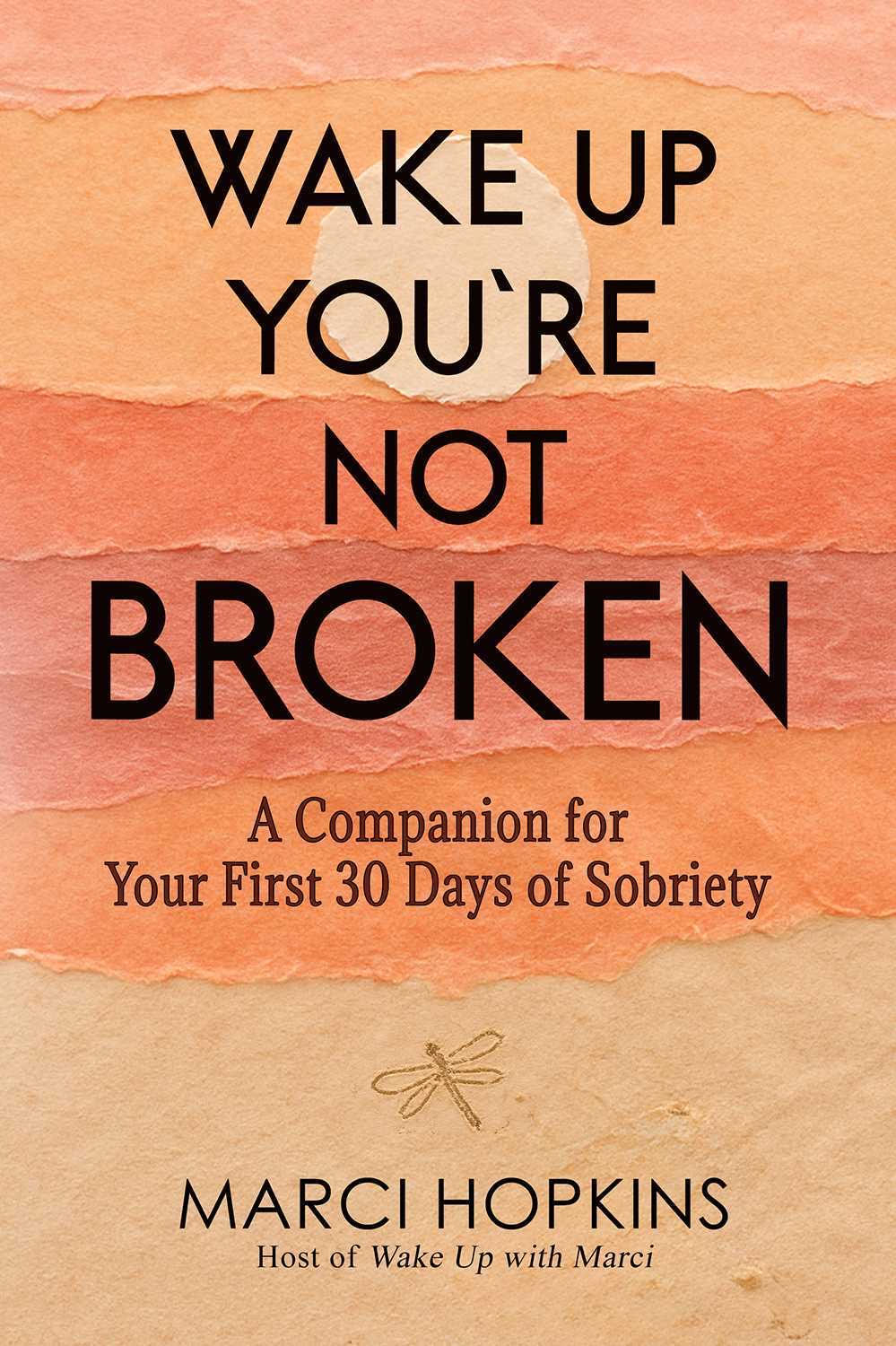
A daily, compassionate guide designed to help individuals through the physical, emotional, and spiritual challenges of early recovery.