-137Days
-16Hours
-8Minutes
-53Seconds





Spirituality wasn’t about having all the answers. Wasn’t about the big scary guy that I’d learned about, God in the sky. It was about admitting that I didn’t have to do this on my own. That there was something bigger than myself. That I didn’t have to carry all of this by myself anymore. That maybe there was something bigger than my fear. Maybe there was grace. Maybe there was hope. Maybe there was a version of me waiting on the other side of this. This is Wake Up with Marcy, a space for honest conversations about healing, recovery, and women’s wellness. I’m Marcy Hopkins. Take a breath. You’re safe here. Let’s begin.
Nobody told me that when I got sober, I was going to meet the version of myself I’d been running from. I thought I was giving up alcohol. Instead, I uncovered the fear, the grief, the anxiety, the loneliness, and I realized that alcohol had never been what I was truly craving. I was craving peace, but I didn’t know how to live in peace because I was so used to living in the chaos. And addiction is chaos, and sobriety is peace. Sobriety didn’t create my triggers. It simply revealed them. And that’s where the real work begin. The work of healing, the work of trusting, the work of surrendering.
Because surrender isn’t giving up. It’s finally becoming willing to stop running. Surrendering is strength. And that’s what I want to talk about today. I’m Marcy Hopkins and welcome to Wake Up with Marcy. I’m so grateful you are here today. Thank you for listening or watching. I myself, I’m an author of two books, TV host, motivational speaker, mental health advocate, and I’m almost 11 years sober. I wanted to say over 11 years sober, but I’m almost there. And on my show, we have really honest conversations about healing, recovery, relationships, and what it really takes to rebuild your life.
And today’s conversation is going to be a really deep personal story and one that I believe can help you if you too are embarking on your journey of recovery and healing. Today I want to talk about the person who wakes up every morning thinking, “I can’t keep doing this.” the person who’s tired of promising they’ll quit tomorrow, tired of carrying the shame, tired of pretending everything is okay because I know that person. I was her. And today I want to share what nobody told me about those first 30 days of getting sober. what you’re going to confront and have to manage something you’ve never done before and that is the cravings, the triggers, finding spirituality and what surrendering really feels like because I think we’ve gotten surrender all wrong.
People have asked me, “What does surrendering feel like?” And I think we imagine this huge dramatic moment where everything changes, but really for me it was it was quiet. I was in my bed. I’d woken up after a chaotic day of drinking and I was just alone and feeling this this quiet isolation and and craziness in my head. And I was exhausted and I was terrified. And I just remember waking up the morning of October 4th, 2015 and saying, “I can’t do this anymore that I can’t keep making these promises to myself that that I’m going to stop.” And I wasn’t doing it. And I would keep pretending that everything was okay. And I I was basically living two lives. the one that everyone else saw and the one that I was secretly struggling through. And I I I truly was exhausted and not physically, but that soul tired. And for the first time, I stopped trying to figure out how I was going to fix it, how I was going to hide it. I stopped negotiating with myself. I stopped making these deals with myself. I stopped saying maybe one more time. And I simply said, “God, I can’t do this anymore. If there’s any way to live, I need you to show me.” That was my surrender. That’s when I said to myself that I needed help. It wasn’t giving up on my life. It was giving up on the belief that I could save myself by controlling everything.
And the amazing thing is nothing around me changed that day. Meaning I was still in the same home. There wasn’t some huge magical thing that happened. I mean my circumstances were still there. The fear was still there. The uncertainty was still there. But something inside me changed. And for the first time in a really long time, I wasn’t fighting myself anymore. I was wasn’t fighting life anymore. And I was willing, willing to ask for the help, willing to get honest and stop lying, willing to believe that maybe there was help, that that I wasn’t broken, that this rock bottom could be that foundation to rebuild. And I admitted that day that I needed help. And for me, I started in the 12step program. And there’s a lot of other resources out there, a lot of other ways for us to get sober because I know it’s scary. It’s a really difficult time. But I’d say get honest with yourself first and then tell someone. And for me, I told my husband and I was terrified because listen, I thought he would run away from me. I I didn’t know what he was going to do. But you know what happened? He ended up embracing me. He was just waiting for me to make the realization that I needed help. And he was there willing to help me, willing to do whatever it could take that he could do. And I’m guessing there’s someone in your life that’s just waiting for you to surrender and ask for that help. And then once you surrender, you find the help that that’s available and that will work for you.
So there’s some things that I want to talk about that are going to happen during those first 30 days of sobriety. And I wrote my book, Wake Up, You’re Not Broken. It’s a companion for your first 30 days of sobriety. And these are some of the lessons out of that book and things I share about because we need these this information. And these aren’t things that anyone told me about. It was something I just learned through my journey of sobriety. So the first lesson that I want to talk about is cravings. And the thing that that surprised me the most is well, I was craving alcohol, but I was craving relief. Relief from that anxiety and loneliness and relief from the pressure that I put on myself. And alcohol just became the way that I escaped my feelings. And so when I was getting sober and those cravings presented because listen, you got so much sugar through those and empty calories through that wine or whatever alcohol you were drinking and now your body is craving that. And listen, I wanted sweets. So, I’m just going to tell you just be graceful and and or give yourself grace and just give into that. It’s okay. I mean, listen, I was a really healthy eater, but it’s so funny. I would eat really healthy foods, but I would drink, you know, this toxin. Um, and and so during that time, I allowed myself to eat candy if I if I craved it. Um, it would help me get through the cravings of alcohol and and also a big one for me was grapefruit juice with salt on the rim. I don’t know. That was my mocktail at the time and I loved it.
So, let’s talk about when those cravings come because you got to start asking a different question. What am I really needing right now? Right? So, there’s things that that you need in your life and and do you need rest? Rest was a really big one. Do you need connection? ask for that help, right? Do you need to cry? Do you need to forgive yourself? Because underneath it all, almost every craving was the need I didn’t meet before. I didn’t know how to meet it. Right? So, when you have a craving, I want you to get up. One of the tools that I talk about, I have a whole sobriety toolkit in my book that I talk about, my wake up not broken, um, you’re not broken book. And your brain can’t think of two things at one time. So if you get up, move a muscle, change a thought. You get up, you move, you you create action, you go on a walk, you do something during that time that that craving happens. You go and journal, right? And you you cry it out if you need to. You you’re seeking that forgiveness of yourself or go take that rest or meditation. Just allow yourself to be and don’t race because you’re going to feel a lot of anxiety. You’re going to feel like you have to do it, right? like your body is like, “Oh my god, if you don’t go take that drink of alcohol right now, I’m going to die.” But you’re not. You’re not. And the cravings, like I said, are going to last about 20 minutes. Um, so get up, do something, and help yourself through that craving because you have a choice. You can give into the craving or you can do something to get through it. Get, you know, through that next moment, each moment. And that’s what I want you to stay in because it’s so important in that early sobriety and in sobriety altogether and in life altogether. Live in the day. Don’t think about forever, right? Live in that day and get yourself through each moment, each second if you need to. So remember, move a muscle, change a thought, get up, do something else when that craving presents because it will. and really just start asking you some diff yourself some different questions and and take care of yourself.
Now, let’s talk about lesson two. The triggers, they’re not trying to destroy you. They are real. I used to think triggers were proof that I wasn’t healing right. That it wasn’t I wasn’t doing something right. And these are people, places, and things that are going to trigger you. You have that muscle memory. So whether it’s a glass, like I had one glass that I always drank my wine out of, right? That that was a trigger. So if I saw that glass, that would trigger me to want to drink. So I got rid of that glass. So just think if you if you know that you are going to be presented with these triggers, create the change. You know, change your route going home from work, right? If you d drive past that liquor store, right? If you’re feeling lonely, find somebody that you can talk to. Make sure that you have someone that you can reach out to if you are being triggered. So important. There are people in your life that are going to trigger you. There were people that I drink with in my life. And we’re going to have to make those changes. We’re going to have to help ourselves to not be triggered during the early sobriety and beyond. and and be honest. If if you if this is someone you love, someone you want to keep in your life, but they’re triggering you to want to drink, be open with them and just tell them that you’re trying to get through, you know, stopping drinking and you’re used to drinking with them. So, if they could just please understand during this time, you just need a little space to focus on yourself. And don’t make it about them, just make it about yourself. Right? So these triggers again that muscle memory you are going to be triggered to want to drink if you continue to have the people, places and things in your life. Right? So it’s just learning to respond differently, learning to create these changes in your life so you are not triggered to want to drink.
Now, I I’ve talked about my book, Wake Up, You’re You’re Not Broken, and I dive so much deeper into all of these things and the science behind it and why it’s happening. And if you’re listening to this and you’re saying, “This is me. This is exactly where I am, and I’m ready. I’m ready to move forward. I’m ready to change my life. I’m ready to do something different.” Just know that you don’t have to have it all figured out for the rest of your life. It’s just a day. You don’t even have to have it figured out for next week. Maybe it’s just the next right step. And that’s why I wrote my book, Wake Up You’re Not Broken. I wrote it for the person who’s finally ready. Ready to stop drinking, ready to stop carrying the shame, ready to believe that life can be different. It’s a gentle companion for that first 30 days of sobriety. It’s not a book filled with judgment or impossible expectations. just daily encouragement, honest reflection, and practical guidance from someone who’s been there because those first 30 days can feel so lonely and overwhelming. They can feel scary and sometimes you just simply need someone walking beside you saying you’re going to be okay.
We’re going to take a quick break and I’d love to share a little more about it with you. Are you in the first 30 days of sobriety or wondering if now is your time to start? Hi, I’m Marcy Hopkins and I wrote Wake Up You’re Not Broken just for you. It’s a real raw guide to those first 30 days. What no one tells you, what you will feel, and how to keep going. This isn’t about perfection. It’s about progress. Order your copy now on Amazon. Remember, you’re not alone. You’re not broken. You’re waking up. Welcome back. And if this is speaking to you, you can find Wake Up You’re Not Broken on Amazon, Goodreads, Barnes & Noble, or you can go to my my website, wake up with.com.
So, let’s talk about lesson three. And and this is about spirituality. And this is a big one. And I know this can be hard, and it’s not about religion. Okay, let’s let’s be clear. Spirituality is not about religion. So when I when I first got sober, people talked about religion, turning yourself over to a higher power, spirituality. And honestly, I didn’t know the difference. But what I did discover is that spirituality wasn’t about having all the answers. Wasn’t about the big scary guy that I’d learned about, God in the sky. It’s is it was about admitting that I didn’t have to do this on my own. That there was something bigger than myself, that I didn’t have to carry all of this by myself anymore. That maybe there was something bigger than my fear. Maybe there was grace. Maybe there was hope. Maybe there was a version of me waiting on the other side of this. Spirituality became connection. And I did this through grounding and meditation and going within myself and prayer and getting out into nature and connecting to my higher power. And again, this isn’t about going outside of yourself. It’s about going within and connecting to yourself, connecting to other people, listening to the guidance through other people’s messages, connecting to life, knowing that truly you are not by yourself in this path, this life. There is so much more. There’s so much more. and some there’s a path for you that is better. And when you turn yourself over to that higher power, whatever that is for you, that means you you don’t feel the weight of the world on yourself and you don’t feel like you are doing this on your own. And you’re not. I now see so many signs from the other side. And through my healing journey, I have been guided in so many ways from my higher power. And I share that within my book, Wake Up, You’re Not Broken. I also share it in my book, Chaos to Clarity: Seeing the Signs from the Other Side and Breaking Generational Cycles. So, don’t get hung up on what you were taught when you were growing up and to be fearful of this big bad God. He’s not damning you. He’s there to walk with you. To me, God is an energetic force of love, a connection of love.
So now, let’s talk about the fourth lesson, and that’s that surrendering. And I think that surrendering gets misunderstood. People think surrendering means you’ve lost, you’ve lost something, you’ve failed, that you’ve given up, that it’s quitting. But surrendering isn’t quitting. It’s releasing the illusion that control was ever keeping you safe. Control is not keeping you safe. Perfectionism is not keeping you safe. You can’t control everything around yourself. The only thing you can control is yourself and your response to life. Surrendering is saying, “I don’t know exactly how this is going to work, but I’m willing. I’m willing to ask for help. I’m willing to be uncomfortable and get uncomfortable. I’m willing to trust that there’s another way to live. And I can honestly tell you, the moment I surrendered, my healing truly began. My life, my new life truly began.
And if you’re watching or listening today and you’re tired, if you’re carrying the shame, if you’re wondering whether you have what it takes, I want you to hear this. You do have what it takes. You are one decision away from starting this path. You get to choose if you are ready to surrender. And I want you to hear this. The cravings will pass. The triggers will soften. The fear will get quieter. And one day, you’re going to realize you didn’t lose your life when you got sober. You didn’t lose whatever fun you thought you were having or whatever was releasing your or or calming your anxiety. You’re getting your life back. You’re getting your family back. You’re getting your friends back. You’re getting your passion back. You’re getting back the young person that you lost through whatever trauma you went through. You’re not weak. You’re not broken. You are beginning. And you are never too far gone to begin again.
Again, if this conversation resonated with you, share it with someone who needs to hear it. Like it, comment it, comment on it. I want to hear from you. And if you are beginning your own recovery journey, I hope you’ll pick up a copy of my book, Wake Up, You’re Not Broken, because healing doesn’t happen all at once. It happens one breath, one choice, one day at a time. Again, I want to tell you a little bit more about my book so you know if this book is right for you. Wake up, you’re not broken. Is for anyone who is tired of letting alcohol control their life. It’s for the person who has promised themsself tomorrow will be different. It’s for the woman who looks like she has it all together on the outside but is quietly quietly struggling on the inside. It’s for anyone who is ready to stop surviving and start living. What you’re going to find inside of this book, it’s not about perfection. It’s a gentle companion for the first 30 days of sobriety, offering daily encouragement, honest reflections, practical tools, and hope for the moments when recovery feels overwhelming. And it will. Each day is designed to help you take one small step from chaos to peace. And how does this help? The first month of sobriety can feel lonely, uncertain, and frightening. It just does. And this book reminds you that you don’t have to have all the answers. You don’t have to do forever. You only have to do today. Through personal stories, encouragement, and daily guidance, Wake Up You’re Not Broken helps you to rebuild self-rust, reconnect with yourself, and discover that healing is possible. Because recovery isn’t about becoming someone new. It’s about coming home to that person you were always meant to be.
I am sending you so much love right now, hope, encouragement, and I want to thank you for showing up and being part of Wake Up with Marcy. It’s your time. It’s your time. Make the decision to surrender today. Start building a new life for yourself. Because remember, as I said earlier, rock bottom is not the end. It’s a time to begin rebuilding the life you were meant to have and coming back to yourself. All right, guys. I’ll see you next Thursday with a brand new episode.

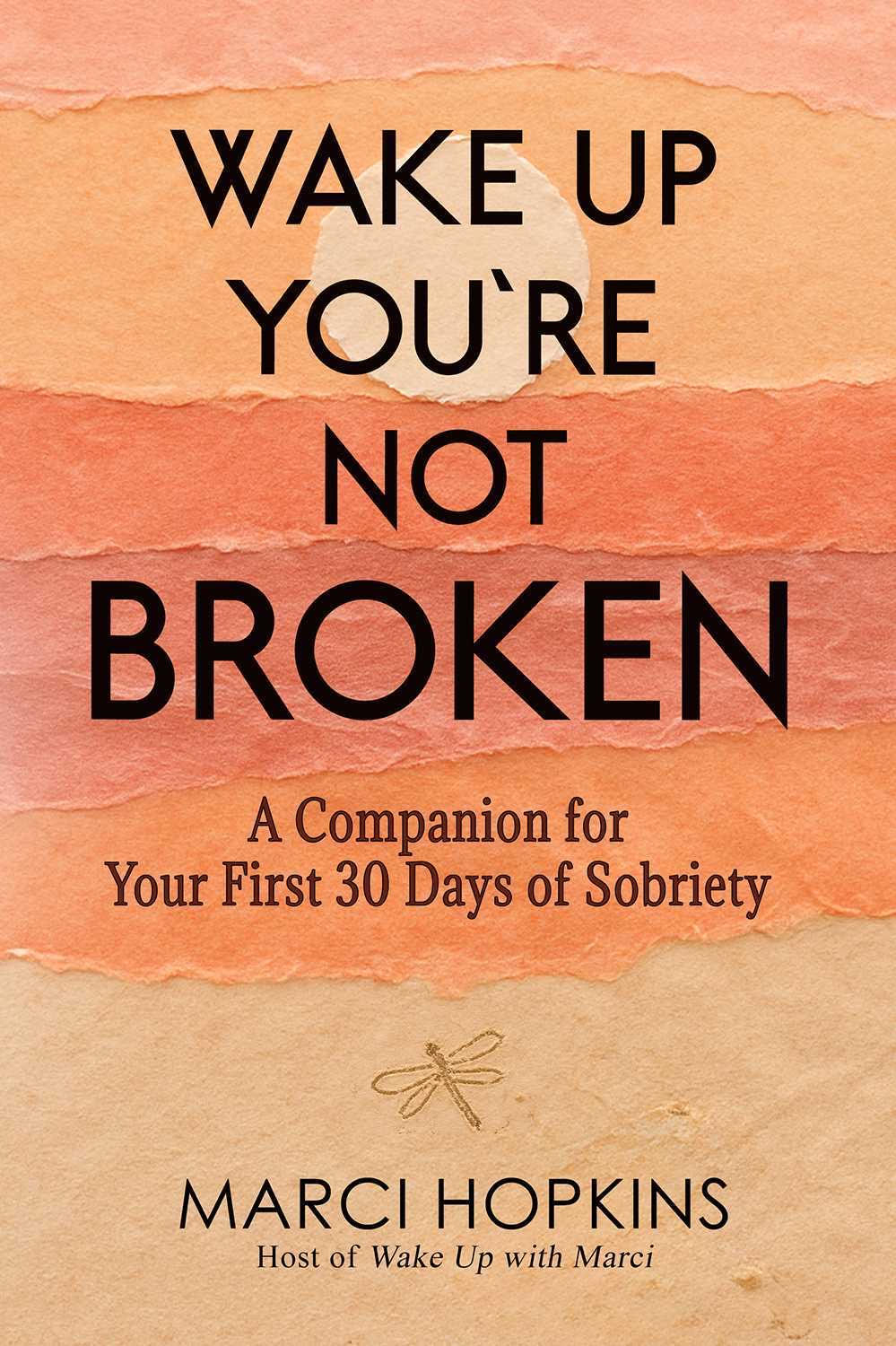
A daily, compassionate guide designed to help individuals through the physical, emotional, and spiritual challenges of early recovery.