-167Days
-3Hours
-39Minutes
-41Seconds





I grew up believing that I had to sacrifice myself for everybody, for my family, for my job. And that moment, the only solution I had was just to end it all because I didn’t want anyone to think that I couldn’t handle it, right? I wanted it to be an accident. Later that night, I was jolted awake by someone like knocking on my car window. Are you okay? Are you okay? Is what I heard. And and you know, my car was facing oncoming traffic. I was a hair away from a head-on collision. It was that far. To this day, I still don’t know how my foot went on the brake. I had followed through with that fantasy of getting drunk and getting into a car accident. And being faced with that was like, what have I done? This is Wake Up with Marcy, a space for honest conversations about healing, recovery, and women’s wellness. I’m Marcy Hopkins. Take a breath. You’re safe here. Let’s begin.
Have you ever been the strong one, the capable one, the one everyone depends on, but inside you’re exhausted, you’re depleted? What if the very thing that makes you strong is also what is keeping you stuck? Hello all and welcome back to Wake Up with Marcy. I am so grateful you’re here. I’m your host, Marcy Hopkins, and I am an author, motivational speaker, TV host, and also a mental health advocate. And today, I am so grateful for my guest. Today, we are going to meet the incredible Tracy Doyle, an award-winning entrepreneur, author of Life Storms, and creator of the Aurora Method. Tracy went from building a multi-million dollar company to hitting a breaking point that changed everything. And I bet a lot of us can relate to hitting that breaking point when we are overgiving ourselves. So now Tracy is helping women understand what’s really driving emotional burnout. We’re going to learn what it is, how it’s affecting us, and how we can get over it. She’s also going to help us to reconnect. reconnect with ourselves, our lives, and the people that we love. So, let’s welcome Tracy now. Hello, Tracy. Welcome to Wake Up with Marcy. Hey, good morning, Marcy, and thank you for having me this morning. It’s great to have you and for you to share your story because so many of us women can relate to feeling like we have to do it all. I’ve been there myself. So, I can truly relate. But I want to start with with your powerful story. And there’s a there’s a moment that you describe where you looked in the mirror and you thought, I’m done. Yeah. Can you take us back to that moment and what was really happening for you internally? Yeah, that it’s it’s a hard it’s very hard to share that moment of my life, but it’s one that’s super powerful because it was a turning point. You know, I was, you know, born to a mentally ill mom and she was a teenager. I became a caretaker by the age of 10 because she had had me as a teen, married when I was uh seven and sadly she married an alcoholic who, you know, was hitting his bottom over the course of the four years that they were married. And so, you know, what I was carrying with me was, you know, I had to assume responsibility at a young age because my mom couldn’t handle the two kids. I had to step up because she wasn’t available to step up for them. And um so I really was helping my siblings and, you know, essentially raising kids on the schoolyard for food. So, here I am now. Um I’m I’m grown. I’m the first in my family to go to college and, you know, and the stress of of the complexity of my family, managing my mom, you know, my sister at this point. um sadly had started using drugs. I had assumed custody over two kids. So I’m an insta mom. I’m a caretaker. I’m trying to manage my own relationship, starting my own life. And then I’m a senior director at work. So I felt uh like that morning was like, you know, leading up to it was just, you know, I can’t take it. I can’t take it. I can’t take it. It was just the overwhelm, the overwhelm. And then it felt like no matter what I said, no matter what I did, like people just seemed to not understand me anymore. That’s how I felt on the inside. So that morning, it was a it was a cold, gray winter’s day. It was December 21st. It’s around the holidays and I’m like getting ready for work and I just look at myself and I’m like just eyes hollow. My spirit was just dim and I didn’t recognize myself anymore. I just look so um just like empty and and inside I’m like I’m I’m I’m done, you know, and and then the the escalation starts, you know, I’m I’m done being responsible for my mentally ill mom, you know. I’m I’m done taking care of my sister’s kids, you know, and then it’s like, I’m done being stretched in every single direction at work. I’m done being the fixer. I’m done doing everything for everyone. I’m done. And you know, in that moment, I was like, you know, if if I just got good and drunk, maybe I’d crash the car. And I’m like, yeah, if I crash the car, no one’s going to know. You know, I, you know, I grew up believing that I had to sacrifice myself for everybody, for my family, for my job. And that moment, the only solution I had was just to end it all because I didn’t want anyone to think that I couldn’t handle it, right? I wanted it to be an accident. Later that night, I was jolted awake by someone like knocking on my car window. Are you okay? Are you okay? Is what I heard. And and you know, my car was facing oncoming traffic. Uh I was a hair away from a head-on collision. It was that far. To this day, I still don’t know how my foot went on the brake. I had followed through with that fantasy of getting drunk and getting into a car accident. And being faced with that was like like what have I done, you know, and how did I so lost? So that moment it was powerful. And that next day, I mean, the guilt and the shame of having almost killed two people, almost killing myself, but yet my head and my heart are fighting because I’m screaming at myself like, “How could you do this?” Right? And yet my heart’s saying, “Tracy, you’re still here. You’re still here.” And you know, and then I just yelled out something I hadn’t done in a long time, which is, “I want to live. I want to live again.” And that moment was pivotal because help me understand my first real lesson which is you know we sacrifice ourselves for everyone right but sacrificing yourself doesn’t mean abandoning yourself and I had done it means putting yourself first while you’re managing everything and I didn’t know how to do that. So for me that meant I needed to get help and that’s my journey started.
Yeah, I um there’s a lot of things that I can relate to in your story. Um first off, I want to ask you, is your mother still with us? She’s not. Yeah. So, my mother was an alcoholic and I dealt with a lot of feeling abandoned, being kept in homes that weren’t safe and such. And it really affected me. One of the things I’ve had to do on my healing journey is is find forgiveness for my mother, right, for her disease of alcoholism, for her inability to be the mother that I wanted, that I thought I should have, and then also be grandmother that I thought maybe she could be for my children and she couldn’t be and what she put me through. So that was um a a very big freeing moment for me. I won’t say moment, it it was a journey of of learning to process and and how to do it. Have you yourself been able to forgive your mother? Oh yeah. Yeah. I you know what I learned was in that moment. So that started my journey and what what felt like 10 years right because I I needed to get you know obviously I had suicidal ideiation so I had to get treated for depression um I went to therapy and you know and I’m working through I had had some trauma my biggest traumas were really when my mom was married um because she couldn’t handle uh with her own liabilities if you will or limitations she couldn’t handle the pressure of a a man not providing food. We had no food. we had no running water. Um, you know, she just didn’t know how to handle it. So, she just shut down. She had uh in today’s day it would be called uh bipolar depression. So, I I forget which it’s bipolar one or two. I can’t remember. Um so, you know, so for me like as a kid, right, you internalize that as neglect. You internalize that as she doesn’t care and nobody cares. You internalize that as I have to do uh everything myself. And so over that course of 10 years, what I realized when I got to that breaking point that it wasn’t my mom, it wasn’t what happened to me. You know, it it wasn’t it wasn’t my job. It wasn’t all of that, right? It was really my own beliefs doing it. You see, because I had grown up believing I had to sacrifice myself. The real issue was I grew up uh believing I had this this pervasive belief that I didn’t belong. And I thought that if I went 110% then maybe I would you know and so looking for validation outside of ourselves. Yes. Right. Performance became that I became an overachiever and and performance became the most sophisticated hiding place from dealing with all that pain. So what I learned was was that it was I had a good friend of mine on this journey. I mean there were so many influences so I could talk to you for hours about that but I had one specific friend. I’m from the pharmaceutical industry originally and um she said you know your life experiences shape your thinking recognize how they’ve shaped your thinking you’re empowered to change right so I’m you know I’m like I don’t know what she’s talking about I’m so lost what she what she meant was was that and and this is where I go back to my original upbringing in in in college I studied psychology and counseling and you know I wanted to be a clinical psychologist but I put myself through school, I couldn’t do it. So, as as I’m really unpacking what she’s trying to teach me because she was a trainer in the psych and the pharmaceutical industry, you know, it brought me back to um a concept from Abraham Maslo, which basically says whenever our basic needs are stunted, so our basic needs, belonging, security, like you just said, um our esteem, right, which is sort of part of belonging and our ambitions for ourselves, what happens, right? We come from a place of just looking at life through a straw where we just lack. I don’t have this. I don’t have that. The way you felt with your mom. I felt the same way. She’s never going to this. She’s never going to that. And and I’d have people telling me their opinion. You just need to get over your mother. Right? So, but anyway, so what she did was she took me through this tool that she had learned. Um, and what it was was like, you know, who hurt you, who were you angry with, what did they do, how did it affect you? And I got to I saw Maslo there. But then I said, “How did you respond?” Right? And when I saw how I responded, I got to see patterns. And then what I saw was specific self-centered traits. So what I mean by that is she was trying to help me understand that the word resentment, she was in a 12step program. The word resentment comes from the French word ray centier, which means to refill deeply. So what was I revealing? I was revealing those whenever my spidey senses were up. I would feel threatened that I w I wasn’t belonging. I would feel threatened that my security was threatened either my emotional security or my safety. And and that was the wound, right? That was the refill. And but she said, “What’s the initial belief that you created as a result?” I created I got to look at wow my needs were really really stunted because I had some significant experiences. That’s not to say that you have to have trauma to for this to happen. We all have it. I mean, I’ve worked with women who haven’t had anything near what I’ve experienced and we end up in the same place when we create these initial beliefs. So, for me, the belief was nobody cares. So, I thought my mom didn’t care and you know, and it took me to I’m not good enough, right? And then it took me to I’m never going to belong. And then it took me to, you know, places. First, it was seeking validation like you said, and that relationship. And in addition, it I then de developed this exterior of, you know, I’ll show you I’m self-important. So, what did I do with her? So, what I got to see in this exercise was I would abandon her. I I I’m a good abandoner. Like, if you upset me, that’s it. I’m done. So, if she would have a bipolar rage, I’d be like, “That’s it. I’m going to punish you with silence for six months.” And then when I got to see how I treated her and and I realized that she’s a woman with limitations, I was like, “Wow.” Yeah, just as cool. So that that what that looked like is what I call an acknowledgement conversation. I actually I had to prep for it because I knew she would she’s very reactive. Well, she was and and I had to really prep with, you know, when I started the conversation, which sounded like this. You know, Mom, I really been thinking about our relationship and what I’ve reflected on is that anytime you yell at me, I And then she gets defensive, right? So she starts yelling at me and but I waited and I finished and when she finished I said are you done? She said yeah. I go please hear me out. I said anytime you yell at me what I realized is is that I abandon you and I punish you with silence. I don’t talk to you for 6 months, 3 weeks, however long. And I realized how hurtful that must be because I’m your daughter and you don’t know where I am and you must be really scared when I do that. And she started crying. We hugged and I said and I and and what I can promise you is that I won’t ever do that again and you know no matter how hard it gets. And and what that did for our relationship was it helped me realize that she did care, right? But she was capable of a one-way relationship. So I had to, you know, what do they say? Shift your sails or whatever. I forget that. I love that little thing with the little sailboat. But um I shifted my perspective to what does a one-way relationship look like? I call her and listen. Does it mean that she’s capable of giving to me? I had other people when I put the straw down. I had so many people in my life that cared and were able to nourish me in ways that she couldn’t. It was all there. But I So I had to break through that limitation. And I call that the city of limitation. We say stuck in self-centered thinking from these refills that we have.
So I love that. I love that because that’s where I did learn all of that was through the 12 steps. And what it took me to is being able to look at myself and the thing is is that we only are capable of changing ourselves. Exactly. We change. Exactly. Yes. So it is a beautiful thing. Uh it’s one of the hardest things for people to do is to look at themselves, right? to see their part and and create that change. But I think a lot of that once we start doing that and we start prioritizing ourselves while also being there for other people because that’s fulfilling in its own way when you when you do it in the right way. And yeah, I agree. Yeah. Yeah. So, so that’s one of the things that I wanted to talk you about talk to you about because I related so much about it. It’s what we’re talking about that hyperindependence and and how that can actually be a trauma response. So, can you talk a little bit? Yeah. Yeah. I was going to say since you know the 12 steps you know so what you know when you um when you learn the tool my friend shared with me was from the fourth step in the big book of alcoholics anonymous and you know in it it has like four little columns but what she taught me was to look at it in another way and this was the most you know again I’m going to tell you psychologically and from my training what I saw and it blew my mind which is why I want to teach this as many so you know how it says like your your um you know you look at your you know what did I do in response to that and then you have to go deeper like where was I afraid um you know was I inconsiderate was I um uh dishonest was I self-seeking was I selfish well at that for me as as a person who was selfless who sacrificed herself you know I was like are you effing kidding I’m New Jersey are you effing me I’m like how dare you like call me selfish but as my friend is explaining it what I took that as what are self these self-centered traits right so I’m you know I had you know straight A’s in college so I’m looking self-centered traits right and what I learned was you know selfishness means being absorbed in self but if you really define the isish you can change and that’s what I learned so I looked up words like self-pity I felt sorry for myself which I did. Self- avoidance. I avoided people. I avoided my feelings and I avoided you. Self-reliance. I became very reliant at a young age. So what did I do? Now let’s fast forward. I’m I’m a CEO of a of a multi-million dollar business. And and I’m like, I’ll do it myself, right? Anytime something happen. And what did I what message was I giving to people? I don’t trust you. I don’t think you have skills. Meanwhile, that’s not what it was at all. It was my own fear. So what I got to see was in the presence of fear, right? And and I I I like Tony Robbins work, loss, fear, less fear, never fear. In the presence of loss, fear, what was my combo? Did I become thoughtless or inconsiderate or did I become dishonest? And and I got to see different I’m all about patterns. I got to see these patterns and I’m like, “Wow, when I’m afraid I’m going to lose something, I get really really thoughtless. I don’t care about people.” And then I get very self-reliant. And when I’m self-reliant, man, I get like self-righteous like my way or the highway. And and now there is no connection. I created so much friction and and and and I was pretty much trying to say it was all about because I had all these pressures on the outside.
So what I’ve learned over the years is I you know I started mentoring women. This was like in professional in my professional seat. I had so many women who were struggling and I’d have you know client like meaning my clients in the pharmaceutical industry what like what are you doing like how do you manage all this and how do you stay sane so I started really walking people I had no name for it yet and you know and I’m walking people through this framework and I’m helping them see how their life experiences shape their thinking and how their thinking really keeps them stuck in conflict and drives them to emotional burnout and because so many people are burned out and so then I started to Wow, you know, this person improved her relationship with her husband. That one stop the fight with the boss because why do people get fired? Because they’re in conflict with people, right? I mean, you doesn’t matter how talented you are. If you can’t get along with people, no one wants you on the team. I started doing this work with people in my company and you know, and people were like, “Wow, this is amazing.” So then I started looking at what do you do for, you know, what do you do for, you know, burnout? Well, they say change your attitude, change your perspective. Well, great. How the jersey again? How the f do that? So, I went back to my friend and I’m like, what do I do with all this information? So, she helped me see my like my initial beliefs and, you know, and I got deep with them. And she was into all these other books, too. Like, one book that I love is uh it’s called Discover the Power Within You um by Eric Butterworth. And it was just, you know, it was just all about like how do you develop your own personal affirmations? And so, I loved it. And I got to see like if I’m refilling not belonging and I think I’m not good enough and I’m I go to fear and I’ll never belong well I needed to do the I’m worthy as I am and I belong right here and that became my mantra right but then when the traits would flare up which they would because you know you feel threatened in a conversation someone does something the fear gets stoked what do you do you know that’s for me when I realized I had to breathe out fear and breathe in centeredness and calm, you know, breathe out self-reliance, breathe in the ability to ask for and accept help, you know, breathe out fear that I will lose people if I set boundaries, breathe in the ability to set them. I mean, I was able to really work in a way that was intentional. And I then understood what what all the behavioral experts talk about in terms of mindfulness, all the mindfulness experts. I couldn’t understand any of that. And once I did, I was like, “Wow, I can create my own personalized mindfulness practice.” So, so the Aurora method really, I named it Aurora because it’s she’s the goddess of dawn in in Roman mythology. And it means at any point you can start over. No matter how deep the storm is on the inside and you’re struggling in conflict, you can break free and find that personal fulfillment again. So, I hope that answered your question. I know it was a long answer.
Well, I I I can relate to so much and that’s why I really wanted to have you on the show because I myself am over 10 years sober and I actually my book is coming out today called Wake Up You’re Not Broken and it’s a companion awesome to your first 30 days of sobriety. Right. So, walking you through that, the emotions, the physical part of sobriety, um what you’re going to be feeling, what you’re going to be going through. While that is all very important, once you are able to get through those those, let’s just say first six months really, then you can start retraining how you’re thinking. And that’s what you do. And that’s and that’s where the change really begins to happen because I I put up all the walls. I I was an overachiever. Um I thought that I could do it all on my own. Um I didn’t rely on people and people were replaceable. And I if you did me wrong, I was out, right? Or maybe not initially, but once you once I hit the final like that was it, the plateau, you’re done. you’re done, right? Absolutely. Yep. Burnout slowly eroded those relationships. Yep. Yeah. And I had really I had a lot of difficulties in relationships, but it was once I started that work looking at myself that I was able to start changing my relationships. Exactly. I mean, I thought I didn’t want to be with my husband and then once I started the work, I mean, we have the best marriage possible, right? So it really is incredible once you start doing this work and you said about not understanding it and the mindset work. So if you’re someone right now listening and you’re not there or you’re not understanding what do you mean breath work? What do you mean affirmation or you know looking at myself and going deep like it may not make sense right now but it it’s once you start reading once you start listening to people that are doing this work and sharing about it. It’s these little bitty shifts that start happening for you and it starts making sense and then you it’s so important that you must do the work. You must put the action in because otherwise it doesn’t work. Exactly. And I’m sorry. No, go ahead. Yeah, I was going to say to add to that, you know, I I want to say for anyone who’s out there who because I tried everything and so, you know, I learned this work, but then like everything, right? Like you you you exercise, you lose weight, then you stop exercising. You you know, go on a diet, you lose weight, then you go back and eat the things you’re not supposed to. What I found when my friend showed me this and I started and I figured out how to practice my mindfulness, it’s it’s easy to back off of stuff, but the one thing I was going to say is is that if you’ve tried so many things and you feel like nothing works, I could tell you this does, right? And you and Marcy, you can say you can say the same thing. The thing is is it’s daily practice. Mindset is daily practice and rewiring. You know, if we’re hardwired, yes, we can rewire, but we have to continue to maintain that wire. If we don’t, it’s like we just naturally go back to those feelings of of, you know, and we were wired that way from everything that happened in our past. Exactly. So, we take to rewire it when we decision to do it. Yes. Exactly. Yeah.
And one of the things that so once I got vulnerable once I surrendered like wow first of all asking for help y so difficult but I myself I got a DUI. I almost had an you know an accident but thank God I didn’t. I lived with that shame. I lived with the guilt. So, you know, parallels there also. But once I knew it was like once I dropped being the victim and I woke up that next day and I got vulnerable and I asked my husband for help. That was incredible. But I know people feel like it’s a weak thing to do. Why is vulnerability actually the key the key to making the change? Yeah. I think a lot of us look at vulnerability as weakness. The thing is is when we become vulnerable, we we become open and that to me is the key. I when I first, you know, when this happened to me, you know, I it was horrific. I wanted to die for like six months. I mean, I fantasized about this execution plan of how I’m going to die for six months driving every day to work. And when I went through with it, it was around the holidays. And so, you know, it was it was hard. It was hurt like you said, you know, that shame. And honestly, this is the first time that was December 21st of 1999. I am now finally able to talk about that. Okay. Um because in my in my career, you know, you know, I have to you have to wear the veneer, right? I mean, professionally, when you’re managing it all, you don’t want anyone to think that, you know, you you’re cracking. But meanwhile, on the outside, I had it all. I had it all. The house, the luxury vacations, the car in the the nice cars in the driveway, you know, the big job, the big title, the money, right? But meanwhile, inside I’m I’m falling apart. And what I learned was and and this one book really got me. Um so I’m you know, I’m going to therapy, blah blah blah. And this book, it’s an oldie but a goodie. It’s called um Feel the Fear and Do It Anyway by Susan Jeffers. And um what she tells you to do is she tells you to be vulnerable and just pick one person, which is what I did. And picking that one person, it was like I put my hand out like please, I just want to tell someone what happened because I was so ashamed. And she extended her hand back and luckily for me, she was in a 12step program. She had all these tools that I had never in my life even seen, understood. Yeah. But it brought back everything I learned and it made it it it helped me internalize it because I I like the work of Carl Young. And Carl Young says, “When you can make conscious what’s been unconscious, you can change your life.” And so when she showed me how to look at how my life experiences shaped my thinking, it was like, “Wow, what was shaped can be reshaped. I get everything that everyone’s saying now. How do I reshape it?” You know, what is it? You know, and when I saw it, when I saw it, it was it was my willingness to be vulnerable. And that willingness opened me up to a place where I could receive the help I needed. And the guidance and getting that guidance, I mean, it it it enhanced what I did in therapy. It enhanced every book that I had ever read in psychology. It was amazing. And so then it wanted me to, you know, it not wanted me, but it propelled me to want to learn more about how to build that relationship and restore it with myself. And more importantly, how do I break through these fractures that I created from my burnout? Because my, you know, what I found is when I’m burned out, you know, it’s almost like those hard wires come, it’s not that they come back, but all of a sudden you’re only seeing life through this straw, right? You’re only seeing the thought distortion. Nobody cares. See, no one cares. No, you know, and and you’re just fueled when you don’t give yourself grace and space to be with yourself and to put yourself. That’s what I learned. And you know, and for me, when I recognize that those those thought distortions take over, it’s like, no wonder I need to do this daily because life is filled with pressure. We have an a 24-hour on culture now, right? We don’t you don’t get a break. You got to make it. Yeah. Yeah. Yeah. You can slip. And uh that’s why you just got to keep yourself on track and you can do it all day long. You can get yourself back on track. Yeah, you’re right. I call it the one minute reset because it’s like be sitting in a meeting and I’m breathing in, breathing out. No one. It’s not like I’m sitting there like like you know I’m just like calmly like I you know I’m staring but I’m it’s as if my eyes are closed and I’m and I’m just breathing in and breathing out and I’m nodding and slowly blinking my eyes and I’m resetting myself right resetting yourself and change the words that you say change the words that you say to yourself and um you know walking into that fear doing it anyway I’ve learned to do that right and we don’t move forward.
And one of the one last thing I just it’s amazing how many things I relate to you with you about and I used to think not necessarily that I wanted to pass away but I was so exhausted I would be like if I could just get in a car accident I could just lay in the hospital and I wouldn’t I wouldn’t have to live I could just take care of myself and how sad that we would have to think that way just to take care of ourselves to get a break. Yeah. It’s that emotional bankruptcy. And the thing that I’ve learned is is that, you know, I created that bankruptcy because I was not willing to put myself first. We didn’t know how. We didn’t know how. We didn’t. I will say though, I’ve I’ve worked with women who, like I said, hadn’t had our experiences. You experienced addiction in your life. I did in mine. That was the most profound uh shakeup for me in terms of trauma that period of my life. But I’ve worked with women, you know, executives, physicians because of the industry I was in. And one of my favorite stories is a woman, she’s a physician. She didn’t grow up with any trauma, any addiction, anything like that, but yet she struggled and she had conflicts with others. And when I did the Aurora method with her, you know what what she saw was her wound, her refill was she felt rejected by some girls when she I forget if she was a tween, 10, 11, somewhere around there. And she right, but she felt rejected. She went home. So, it is trauma because we’re all wounded. The thing though is she went home. She asked her her mom, her mom or her dad, I can’t remember, but one of her parents like, “Do you think I’m fat?” Because she thought it was her weight is why they were rejecting her. So, of course, busy parents, they were like, “That’s ridiculous, right? They just, you know, like that’s ridiculous. No, you’re fine.” And she internalized that as nobody supports me. Okay. So, it’s amazing to me what I’ve learned is that we’re all wounded, right? We all have experiences in our lives that we internalize that create these initial beliefs. And so, for her, hers was hers was basically nobody supports me. It was a security, emotional security thing. and she didn’t feel emotionally safe. They were great parents, right? So, so what we got to see was how that no one supports me. It played out at work. It was really wreaking havoc in her marriage. And once we got her to the reset and shift it and she started practicing mindfulness with it, I am like she still calls me to this day and is like, “Oh my god, oh my god.” Like everything’s going so right. Yeah. So work is amazing.
Yeah. So, tell us about your book, Life Storms. When did it come out? Yeah. So, here’s my book, Life Storms, Finding Your Clear Sky. And so, the whole idea is is for those of us who have emotional burnout, what happens? We’re reactive all the time, right? We, you know, we’re and we get ashamed of how we react and respond. So, the life storm is really the daily churn, right, that we have. We’re under pressure all the time. And and if you’ve healed from burnout, the symptoms do come back. My own experience, that’s why. But finding your clear sky is all about how to practice mindfulness and how to overcome those negative thinking uh those that that negative thinking that comes along with it that keep us stuck in what I call the city of limitation. And also how do we I always put it here. How do we build connection and find personal fulfillment? Because I for me found that personal fulfillment is an inside job. I was seeking it outside of myself. the big job, the big salary, the car, the house. Today, fulfillment means what it means is connection, you know, connection with the people in my life and just having that joy, that inner joy and getting there took time. Uh, but the book is really, it’s a step-by-step framework, as I said, I named it the Aurora method. um to let you know that no matter you know h you don’t have to wait for life to calm down no matter this storm you actually can change right now if you give yourself permission to do it and I encourage every woman every every person who’s struggling who’s ready for change you know who want to uncover what’s driving their their relationship conflicts and burnout who want to you know you know break the patterns the negative patterns that keep them stuck and go back to feeling connected right and and coming from a place of calm and centerness and confidence rather than reactivity, this is for you. And that’s what the book’s about. Oh, I love that. I love that. I you know it’s a lot of us do react to life and we don’t even understand that we’re doing it or understand you know I I used to move all the time and because my my life was in chaos thinking that it would get better and ultimately I was always taking myself with me so the chaos always followed right well that’s the pattern right so that was So, I had to change myself and breaking those patterns and and also generational cycles. That’s one of the things that that I talk a lot about and I always say and I’m so glad that you incorporate the work because I always say I wish everyone had the 12 steps in their lives because it is life-changing. So I’ve had therapy but truly the changes came through the work I did through the 12 steps and also the mindset work connecting spirituality. You’ve got to have community moving from that place of lack moving in gratitude and discontent. Yeah. It is so vital and just for everyone out there to know that really they’re not alone and there’s so many connections out there that can help you or or they’re already there. They’re there. You just need to acknowledge that they’re there and community is so important and and going within everything you need is within you. Yes. And and Right. So, we’re always on the hamster wheel and we’re always looking for the accolades and the validation outside of ourselves, but putting on our own oxygen mask first so we can be the best for ourselves and then the best for others because we are nothing. And if we’re not taking care of ourselves, we’re no good for anyone. and and there’s so many people that rely on us as the woman. It tr we we truly do carry a lot, but it’s so important that we do prioritize ourselves. And it doesn’t even have to be a lot of time. It’s just And if you’re someone like I’m sure you, Tracy, schedule it. Put it in your calendar like you put everything else. Well, no, it’s true. I mean, I wake for me personally, I wake up in the morning. I take about five minutes for myself of quiet. Um, you know, and quiet’s hard because you have like I got this, I got that, I got this. But it’s finding it and and I go back and I I want to just again say um you know my friend who was in that 12step program. I mean the level of wisdom she shared with me was amazing. And um you know and basically you know I remember you know she would want me to try and quiet my mind and I’m like I don’t know how to quiet my mind like you know. And she’d say well Did you ever learn anything quiet your mind? I’m like, well, yeah. Back in college, I learned this exercise where you stare at a candle and you see the flame in your mind’s eye. She goes, “How long did that take?” I’m like, “I don’t know, a minute.” She goes, “Sit down and do it.” She was like, she was like really funny. But anyway, I found that minute, but then I found other things to do. And I like to stretch, right? So, I sit and I stretch in the morning and I take that stretch and I go through my intention of what I, you know, who I want to be today, right? Like I don’t want to be that reactive Tracy. I want to be centered and calm, you know. I want to be open and receptive to challenges, you know, I, you know, and not react, right? I want to be um kind and understanding, not coming from self-righteousness all the time. Like I had to learn what the opposite was of these traits. And so those are my intentions now. And when I do that, I have a pretty good day. But yeah, do do I get derailed? Absolutely. Right. And when I get the route, it’s not about going back to the drama and the chaos that does this on the inside. It’s about, okay, I have a one minute reset I could do right now. There’s so much we can do. And I, you know, and for anyone out there who’s struggling, I mean, the thing is, the thing I had to do is give myself permission to put myself first. And, you know, and basically, I needed to ask myself, am I ready to rethink my approach? Because my approach wasn’t working. It took me to wanting to kill myself, right? Am I ready? Am I ready to rethink that? Am I ready to to reset myself? Am I ready to restore relationships with, you know, with myself and with other people? And if if you can unequivocally answer those questions, yes, then you’re ready for change. Yep. You are. You are. And and I know that a lot of times we maybe don’t make the change because we don’t think we can, but you you really can. Um, I I did have to hit the rock bottom. I I tried uh to create change for myself and then I convinced myself that I didn’t need the change. But but you know what? That’s okay. That’s why they say if uh you you have a setback or you relapse in life, just be be gentle and be kind. You’re human. And like Tracy and I, um, Tracy was just sharing, trying to be peaceful and not be reactive, but realizing that you’re human and if you do it, if you do this work, you can literally realize that you’re doing it and and just and just change it quickly and and and reverse what you’re doing, right? Because a lot of times just remembering like reacting to life and then you’ve made a situation so much worse and and now you got to go and apologize or try to make it better or run away, right? So it’s just you just do come become so much more resilient in life and and just you can manage life in a whole different way.
So Tracy, where can we find you? I’m so grateful for this conversation. Yeah. So, um, well, the book’s available on Amazon and, uh, in multiple formats. I know how busy people are. Um, but I’m at Tracy, you know, Tracy Doyle.life, you know, www.traceyle.life. Uh, that’s where I’m at. But if anyone out there, you know, is really struggling, it’s just meet with Tracy.coach. Um, I’m happy to free 30 minute consultation if you’re ready for change because this work is groundbreaking. It blows your mind when you have clarity because it gives you clarity on top of uh giving you the ability to improve your communication. That’s what it teaches you. Communication is key. That’s what I talk about. One of the first things I have the care method communicating with others. It is just so vital to to create the change of how how we communicate. And you showed that through your communication with your mother and how the outcome was so different.
So for all those out there, if this conversation spoke to you, share it with someone who needs to hear it. And Tracy, thank you again for coming on Wake Up with Marcy. Thank you, Marcy. And congratulations on your book. It sounds really great. Thank you so much. And for all those out there, if you’re in your own healing journey, please check out Tracy’s book when it comes to emotional burnout and rediscovering yourself. And if you are ready to surrender to a life without alcohol, please check out my new book, Wake Up You’re Not Broken, which is a compassionate guide guiding you through the first 30 days of sobriety, helping you to understand the emotions, the the mental side and the physical challenges of early recovery. This book reminds you that you are not broken. You are healing and a new life is possible. So remember, you are becoming and it is time to wake up to your worth. I’m Marcy Hopkins and this is Wake Up with Marcy and I’ll see you with a new episode every Thursday.

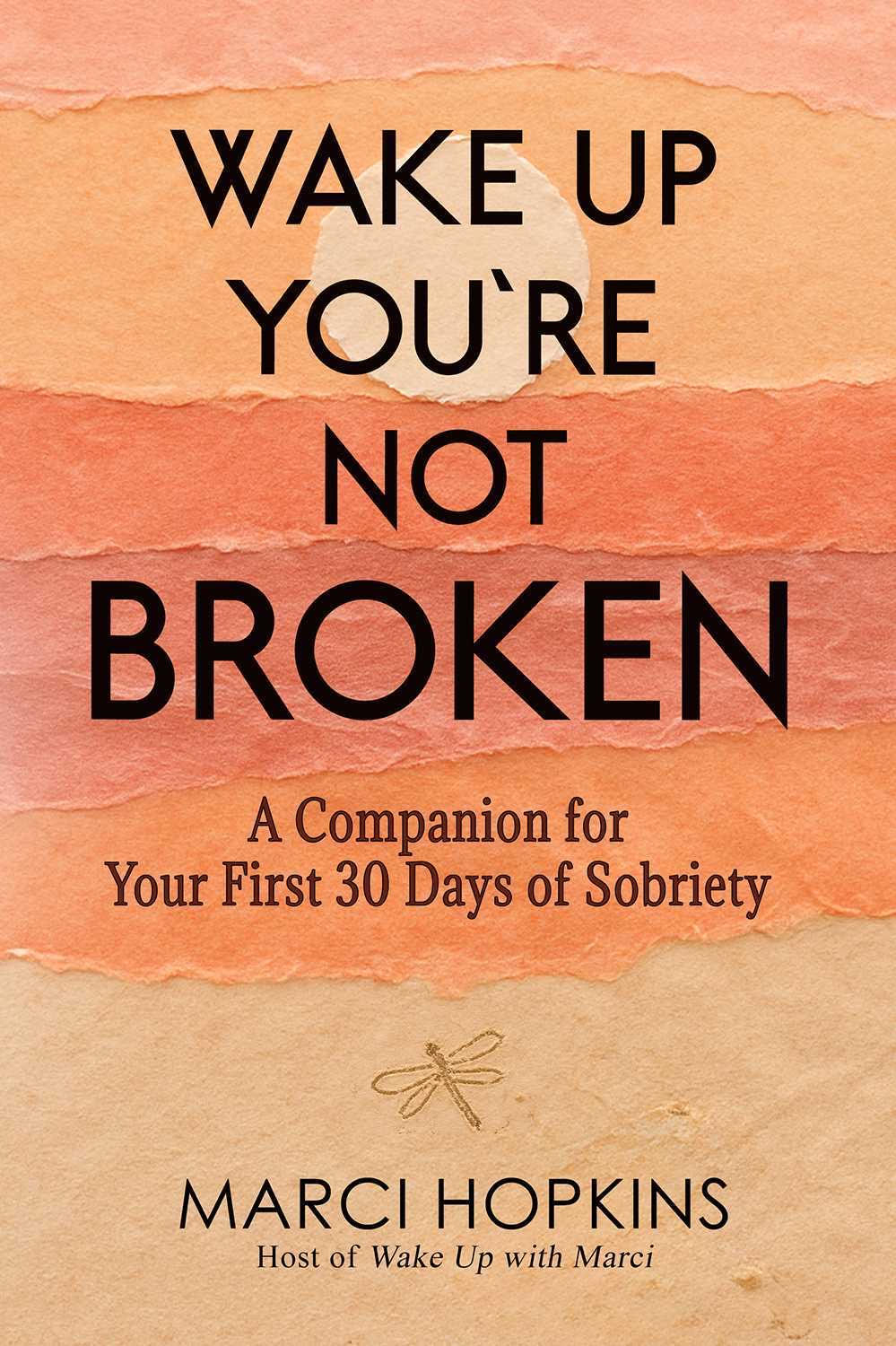
A daily, compassionate guide designed to help individuals through the physical, emotional, and spiritual challenges of early recovery.