-166Days
-6Hours
-26Minutes
00Seconds

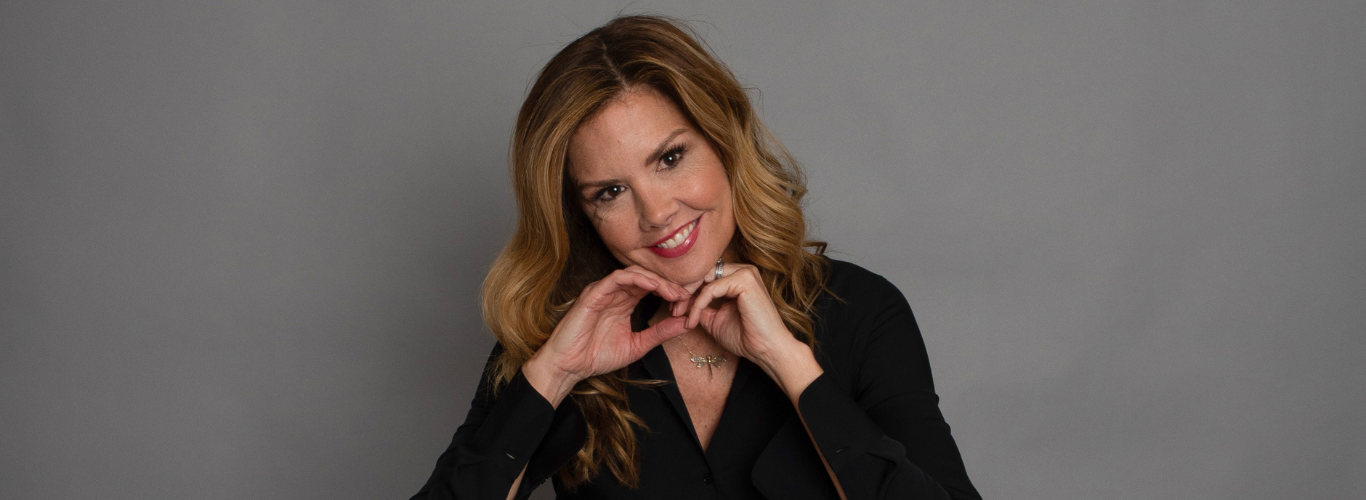





I remember somebody saying to me, “You’re not your circumstances.” I didn’t embrace it in that moment because I’m used to deflecting when somebody gives me any sort of compliment. In earlier sobriety, especially, I wasn’t worthy to receive it. And the reason why I felt that way is because I had to survive the disappointment of my parents. I had to survive the abuse of my parents. And I had to survive in a world that was often very cold, it felt like, and unfair. This is Wake Up with Marcy, a space for honest conversations about healing, recovery, and women’s wellness. I’m Marcy Hopkins. Take a breath. You’re safe here. Let’s begin.
Addiction and recovery are still surrounded by so much silence and shame. But what if the emotions people experience in early sobriety aren’t signs that something is wrong with them? What if those feelings are actually signs that the brain and body are beginning to heal? Today, we’re talking about the truth behind early recovery, why so many people struggle in silence, and how healing really begins. Welcome to Wake Up with Marcy, the podcast where we have real conversations about healing, recovery, mental health, and waking up to your worth. I’m your host, Marcy Hopkins, and today’s guest is someone who works on the front lines helping people rebuild their lives after addiction. Dina Lefonte is sober herself and she is the manager of recovery support services at Mountainside Treatment Center where she supports individuals navigating recovery and rebuilding their lives. She is also an expert contributor to my upcoming book, Wake Up You’re Not Broken: What to Expect in the First 30 Days of Sobriety. and I’m so excited to dive into how she’s helping others and what she has to share through my book. Hi, Dina. Welcome to Wake Up with Marcy. Thank you so much for having me here. I got to tell you, I I love that I have you back on the show and that we now have this experience together with the book Wake Up You’re Not Broken. And I just want to say I’m so grateful to have you as one of the experts. So, thank you so much. I appreciated our conversation when this was being conceptualized. Um, and I was so inspired to hear how you wanted to provide this to people in early recovery and remove some stigmas that were part of just the journey of recovery. and I couldn’t have been, you know, more grateful when you reached out, but also just being, you know, a woman’s woman, how proud I am that you were able to bring your dream to life. A thank you, Dina.
Well, I’ve been so grateful since I’ve met you and I know that you yourself are in recovery just as I am and that has led us to do the work that we do today. So, can you share with us a little bit about what it is that you do and why this work is so important to you? If you would have asked me six years ago if I would be doing what I’m doing today, I would have never in a million years forecasted this journey. And I think that when we make the decision to look at ourselves and change our lives and heal parts of ourselves that felt broken, right, but realize we weren’t actually broken, we were hurting. Yeah. Um, for me through sobriety, the journey led me to feeling really impactful when I was able to be of service to help another person to see that they themselves too. They’re not broken even if you feel like you are. And that feeling that that bind like in being able to relate to that and then show somebody these are the steps that I took. these are the things that have helped has been became the purpose right of of ever of our lives. Um and through that every day I wake up with such a sense of gratitude not just for my own sobriety and how full and big my life has become but because I finally have arrived to a place where I feel like I’m worth something. I feel I’m loved because I love myself. I feel capable and confident. I don’t need validation. Right. Like the eyes that are part of this have really come from a place of the journey of sobriety. Yeah. Yeah. 100%.
So I know that you work to help others to rebuild their lives, which is amazing work through Mountainside Recovery Center. and you actually see what’s happening going on behind closed doors. What are some of the biggest struggles people face in early recovery that really the outside world often doesn’t understand? Yeah. Working at a reputable treatment center has been invaluable as far as being educated and exposed and and being able to become part of different areas that I may have not had access to, right? We’re like a big family here. Mhm. So seeing the different ways in which people struggle with mental health and how it’s, you know, substance use disorder is a piece of something, but there’s also other things that accompany that, right? And so when you’ve abused things for an extended period of time, and it can be something as small as chocolate, you’re changing the chemicals that go on in our response in our brains. And I think that what happens is people minimize and I’m not saying mountain side, I’m saying the industry or outside the industry even because it’s not really within but outside of it. There’s a lack of education and understanding that there’s more that could be needed on a professional level. And so yes, removing the substance that’s mind or mood altering that’s creating the behavior is a piece of the puzzle, but that is not the full spectrum of how you’re going to change your behavior to change your life. That’s one part of a very big picture. And what we need in early sobriety will also change in what we need to stay sober. So I think these things go hand in hand. And I often see people who want to have agency in their their process and they want to believe that if they do detox, they’ll be fine to go home and and they don’t need the rest of the clinical recommendations. But there’s a very big reason why these recommendations are provided because there’s actually more that goes on under the surface than the, you know, individual themselves realize.
And I remember in early sobriety how badly I wanted to be normal, whatever that meant, right? And so when somebody’s telling me I’m not considered normal because something could be going on and because I’m struggling with this thing, it’s giving me an identity crisis essentially. And so now I’m fighting against that idea that even though I don’t feel normal and you’re telling me there’s there’s this thing that’s unique about me, I’m hearing it through the lens of which I’m I’m sickened by. It takes a lot of surrender to get to a place and some people don’t get to that place. And that can be sad, you know, like I I’m in this, you know, industry because of compassion and empathy and and love. So, of course, I want everyone to heal and everyone to believe that change is possible. Um, and and some people don’t get there. Yeah. Yeah. I know. But there’s also with this struggle and the silence around addiction and mental health that there’s so much shame and there’s so much misinformation and and and especially people not understanding. you touched on this like how this changes the brain and and the work that needs to go into that and that this is not about your moral compass or willpower.
So why do you think shame is still such a powerful barrier for people to get through that are are trying to get this help? I think it’s it’s a complex question. So the first part is it could be culturally, right? So depending on what culture you’ve grown up in, it may be very hard for you to ask for something as simple as help in the area of mental health and substance use disorder. Yeah. Um and even when you do it, it could be minimized. Um and it can make you almost feel like you’re being gaslit, so to say, like the newer age term, like you’re you’re not struggling with that. That’s not the problem. The problem is willpower. The problem is more focus. The problem is work harder, have more goals. And and those are all great qualities, but if the person can’t get there because there’s a block, and the block could be multiple things along with substance use disorder, that person’s not going to be able to power through. Substance use disorder is not personal to a family member or a loved one or a spouse. People don’t do it because they want to do it. They’re doing it because they’re compelled to do it. It’s a reactive response at the point in which you’re diagnosed with that. You’ve lost the power to choose whether you will or won’t. The other part to that is the idea that society has created around willpower and ego. Right? It takes a lot for a person to say, “I don’t feel well in my my heart, in my mind, in my body. I don’t like how I’m acting.” It takes a lot of surrender in in so many different capacities and a continuous surrender at that to let people in to be vulnerable. If a person’s been abused when they were younger, it’s very hard to trust the world around them. Therefore, when I show up and I’m like, I’d love to help you. Here’s how I could do it. They haven’t been able to believe their primary relationships. Why would they believe a stranger? You know, and so you have these different things. Society says if I have, you know, if I go to school and I go to college and I get a degree and I get married and I have children and I have a house and a car and finances, I should be happy. And sometimes we can feel something’s wrong when we’re not. And we’re reaching for alcohol. we’re reaching for other substances or we’re doing these things that are that are destroying us morally and then it becomes repetitive action to relieve the feelings we’re having. So I think that it’s just a cycle that’s generated over time that people have to be empowered to say like this relationship isn’t serving me. I want to leave it instead of destroying myself to stay in it. I’m not afraid. Or this family member interaction is not serving me. I need to take space from it and not be afraid. Or this thing that happened to me, I need to resolve it so I can make peace with it. So I’m not living in this place of grasping for something outside of myself. It’s all those things.
Yeah. I mean, for me, I live I lived in a victim mentality. And so I kind of relate to that stain in a relationship. And there was a part of me that felt like I was going to fail if I didn’t make this thing work, right? Because I was always trying to find love and and acceptance and approval from outside sources, which usually was a man. And then if I couldn’t make it work, then of course that was a reflection of myself. And and I think just coming from abuse and abandonment that was so important to me and all the while using alcohol to to mask mask the real pain, right? And and numbing myself.
So I want to um talk about the book now and I’m just again so excited you’re a part of it and you shared a really powerful line in your contribution to the book. You wrote that we are not our circumstances, but we often spend years reacting to them. The survival patterns that once protected us can quietly become the very things we must outgrow to heal and that really resonated with me. So, can you explain what survival patterns really are and why they become hard to let go of? So, you know, that came from a lot of personal reflection and internal work that I did. I remember in my earlier sobriety, there’s a lot of overwhelm and feelings and emotions that are flooding back. And somebody had said to me, cuz I had felt ashamed, right? We’re talking about shame and the guilt and the things that once your mind clears, you’re taking a look at. And you wonder to yourself at times, at least I did, how do I go on? And so I remember somebody saying to me, you’re not your circumstances. I didn’t embrace it in that moment because I’m used to deflecting when somebody gives me any sort of compliment in earlier sobriety especially, I wasn’t worthy to receive it. And the reason why I felt that way is because I had to survive the disappointment of my parents. I had to survive the abuse of my parents. And I had to survive in a world that was often very cold, it felt like, and unfair. And so these survival instincts to fight against and prove against and not fail often superseded the fact that I was enough and often superseded the fact that I didn’t need to fight against a nice compliment and I could forgive myself. So in all this internal work we do especially in early sobriety when we are reinventing who we want to be that we respect it became a part of like understanding everything that we did leading up to who we’re now choosing to become was a direct result of the circumstances we’ve experienced to survive it. It doesn’t mean that it know it serves us any longer because now we are aware enough that we are choosing to be different than that circumstance. Circumstances are the things that happened to us beyond our control. I can’t choose how my parents lived. I can’t choose what they treated me like. And as a child, I couldn’t even choose how I responded to be honest. But as we become older, that idea can shift. That idea can change. And now I no longer am in that survival pattern. I get to observe the pattern and choose to respond differently. And I have to say it’s very hard to work with, but it’s very humbling because I get to go back and have those conversations. I didn’t love how I showed up in that. I didn’t communicate clearly in that. I was afraid of vulnerability with this. This is what I mean. This is who I want to be. And the more I practice that, it becomes an art. And the more I get to shift and change beyond the patterns I used to survive. Yeah. Just like the the more and more you do anything right, it becomes the norm. And so with those changes and and like anyone out there making these changes in any way, these little micro shifts, eventually it does get easier and easier and it becomes the norm, not not how we responded in our past.
So, I just want to take a quick moment and share a short video about the book. Are you in the first 30 days of sobriety or wondering if now is your time to start? Hi, I’m Marcy Hopkins and I wrote Wake Up You’re Not Broken just for you. It’s a real raw guide to those first 30 days. What no one tells you, what you will feel, and how to keep going. This isn’t about perfection. It’s about progress. Order your copy now on Amazon. Remember, you’re not alone. You’re not broken. You’re waking up.
Welcome back, Dana. We’re talking about recovery and the upcoming book. And again, I want to thank you for being a part of this project, Dena. Another line I want to talk about is that you shared was feeling overwhelmed in early recovery is not failure. It is the brain and body relearning how to live without substances. Can you explain what is actually happening to the brain and body during early recovery? So, you know, and I talk about this a little bit in the chapter um where you preface from the experts. Sometimes what’s happening is when you remove the substance that your body has become accustomed to utilizing to relieve whatever feelings and and sometimes you can find that it’s depression. Sometimes you could find that there’s more underneath the surface than just depression. It could be a diagnosis that was undetermined beforehand. Our bodies are responding not just to the emotions but also to this reccalibration, you know, and to make it as simple, if you think of like um a dam, right? You have a dam that protects you from water coming over the side and then all of a sudden when the dam goes down, the water rushes. So, I kind of look at what’s happening in our body the same way. We’ve built up this dam to protect us from our feelings and emotions and and thoughts and we’ve used this escape route and now we have let the levies down and we’re letting everything flush back in. So for people it can feel very overwhelmed, very frightening. I remember there was times I felt frightened. Um, and I do think that there’s there’s a time where you do need professional help in order for you to stabilize the body and the brain. This is where detox and medications can be of huge help to to reduce those feelings to see if there is something that needs to be adjusted on a medicative level, right? And that could be a mental health diagnosis. It could be things like bipolar. It could be personality disorders. It could be, you know, um chronic depression where you do need some support in order to be able to allow everything else to come together. So, what was a rush of water is now just a flow. Mhm. Yes. And you learn how to to work with those emotions, cope with those emotions in a very very different way. and actually being vulnerable is and that’s one of the things you’ve mentioned several times is very very hard but it’s actually showing so much strength and that’s something that I had to learn myself.
And you talk about medications there’s there’s medications that you talk about in the book that can actually help us through our recovery that’s something newer that we are starting to hear about Dena so can you just touch on Yeah. So, you know, I am an AA baby. I came in and um I think it’s really valuable to know all the ways in which you can explore your recovery. And I don’t think that there is a one-sizefits-all. And I think it’s extremely dangerous to impress upon somebody that recovery needs to look a certain way to live a sober life. That that’s not true. Um, and if there’s anything somebody could take away from the book, I hope it’s that, right? Is that you are in control of what you integrate to change your life. The only thing we’re accountable for is changing our lives. So, as far as medications that can assist with early recovery, there’s things that are like Nelxone, right? So, it always depends. You you should never go out and just get these medications. You need to be under a doctor’s supervision for multiple reasons. if there’s different health conditions leading into this or different responses or allergies. It’s a life-saving drug honestly as far as alcohol withdrawal symptoms. You have Vivitrol shots. So, it depends on the individual. Some people prefer to take something daily. It creates consistency and routine um reassurance. For some people, they like the meditative state of having a morning routine. And then there’s things that you can inject um and it’s a month’s worth of a supply. So there’s, you know, Vivitrol, there’s Sublocade, there’s Suboxone, and and all of them do something different depending on what you’re separating from. They’re all different stabilizers so that you can get to a place where your brain can heal and new responses can be developed. So you’re not obsessing on the thing that you’re missing, right? that craving we feel that craving. Oh god, we had we talk a lot about that in the book, right?
So as a contributor to the book, Wake Up, you’re not broken. What do you hope readers take away from the book and from your chapter? So from the book in overall I hope that you find or the reader will find a feeling of unity and and community that what they’re feeling is okay. And you’re reading it written by people who have survived it and and th are thriving and living full beautiful healed lifestyles that you can see anything can be possible regardless of when you start. And then from my chapter, you know, specifically, I hope that the reader takes away the courage to explore different routes. Just cuz you’ve tried one and you didn’t find that it resonated and worked, that’s okay. We can find many different ways where it it feels natural to you. It feels maybe challenging, but a challenge is good for the human soul, capable. we will make sure that the the path that you choose becomes capable and you’re successful. Right. And the other part to that is that you don’t have to do it alone. Yeah. You know, I alone not today, not ever. Yeah. Yeah. And and that’s that’s I think a great place to end. And it’s just so important to know that we aren’t alone and there’s so much help. And that’s what we’re doing through this book is letting others know that.
So, I just want to thank you, Dana, so much for the work that you do and for sharing your wisdom with us today. Thank you for putting this book out there. It’s long overdue in the industry and in the field and for people and I’m really excited and inspired. Thank you so much. So for everyone out there, the book is releasing April 7th on Amazon. And if you are listening today and this resonated with you or someone else needs to hear this, please share, comment, like because it is with us coming together and and bringing the awareness that we can help others. And I want you to know that you are not broken. You are healing. And sometimes the hardest days are the ones that lead us to the life that we were meant to live. So, thank you again for being part of Wake Up with Marcy. And I’ll see you guys next Thursday.

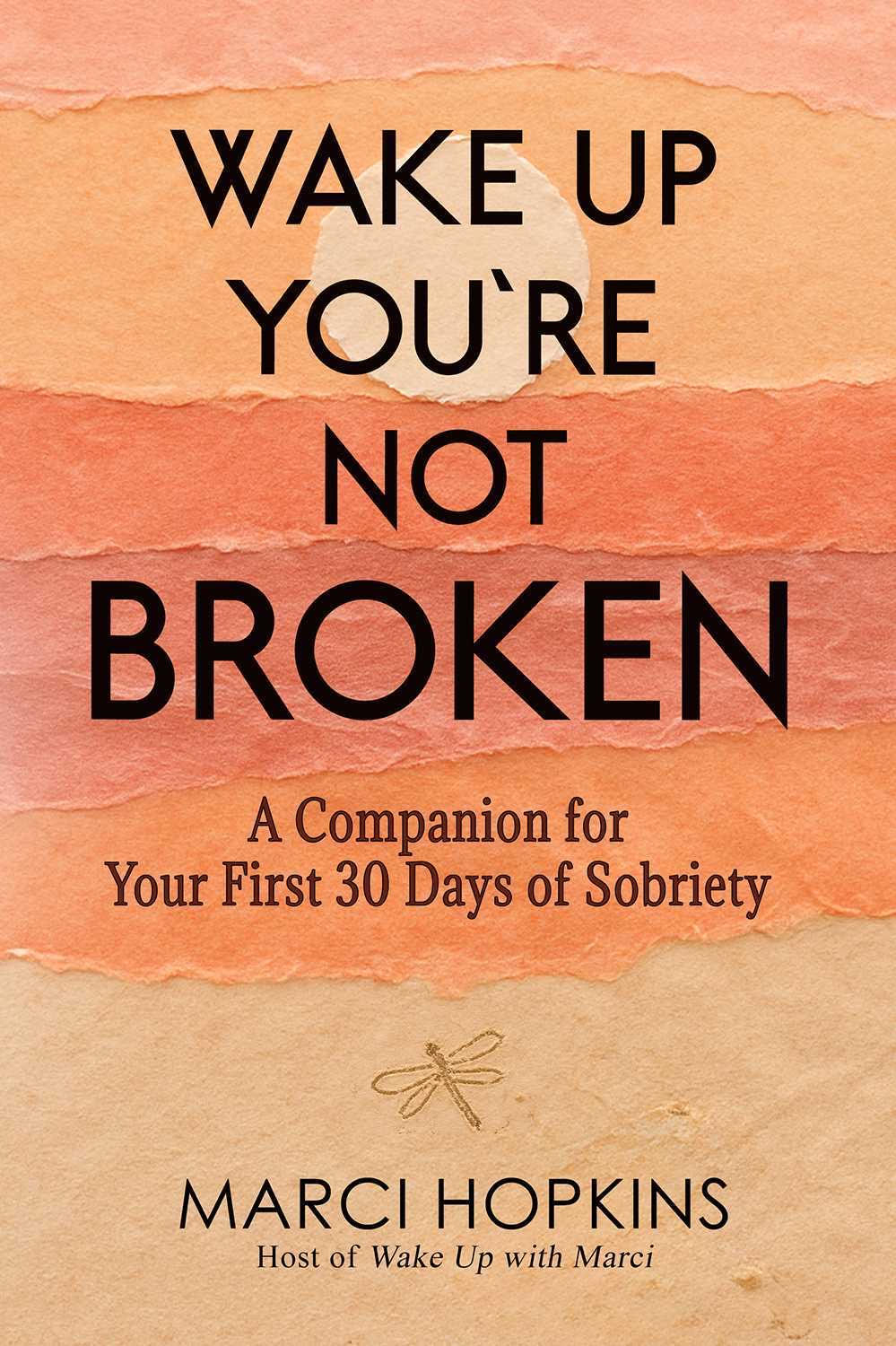
A daily, compassionate guide designed to help individuals through the physical, emotional, and spiritual challenges of early recovery.