-111Days
-8Hours
-53Minutes
-19Seconds





My show is about mental health and wellness and transformation. That scary guy used to get bullied and it creates a moment. You know, it’s hard when there’s a an age gap getting kids to really pay attention to you. And so I use it as as a way of propping open the window and letting the light come in that gives us sort of a a commonality to discuss. And then once I do that, we’re able to start having a really great conversation. Shawn Kanan’s journey from a young fighter in The Karate Kid Part Three to a beloved face on The Bold and the Beautiful. Shawn faced not just scripts and cameras, but life’s hardest punches. Today, he’s more than an actor. He’s a creator, an author, and a voice for those chasing their dreams. This is Shan Kanan proof that the real fight is never on screen, but within and my husband and our relationship. and just be better. Like you’re you’re better for yourself first and then you’re amazing for everyone else. And I too am living a life beyond my wildest dreams. And yes, you can have lots of fun and beautiful life without alcohol on the process that is necessary to achieve the results. Keep refining it, doing diagnostics, apply it effectively and consistently and the results manifest. Sean, welcome to Wake Up with Marcy. Such an honor to have you here. Thank you. It’s so good to be back with you. I got to tell you, you have done so much. I’m so excited to talk about your career and what’s upcoming and I had you on my TV show recently with Michelle and you guys were speaking about your book, Way of the Cobra Couples, which has been an incredible success. Congratulations. Thank you very much. Thank you. Yeah, it was great writing a book with my wife. Yeah. And I and I love that because you guys have been able to help so many and coming from different perspectives. So I know it’s been so wellreceived and you and I had the opportunity to recently meet at the International Impact Awards and you actually won author of the year for the book. We Me and Michelle, you know. You and Michelle, of course. It was it was it was it was a big honor. It was really uh it was a special evening. I love it so much. And so with all that you’ve done and we’re going to talk about, you know, I know people know you from The Bold and the Beautiful and of course Karate Kid part three and Cobra Kai and those are all like such amazing roles that that you have done. You’re back in the the soap opera world, aren’t you? Well, yeah. I’ve I’ve been uh back on Bold and the Beautiful now this time for I think it’s going on my fifth year and it’s your fifth year. Yeah. And and November marks my 25th year since first playing Deacon Sharp. So did something change though? I thought I saw recently like something. Was there a new contract signed or something? No, we we we had been at Television City which is a landmark in Los Angeles. So many famous shows have been there. Carol Bernett, All in the Family. I mean, just on and on and on. I think the honeymooners actually. Um, and after I think it was 38 years, we left, which was actually kind of emotional for all of us. Um, so our new home now is at Sunset Los Studios, which is about 10 minutes down the uh the street in Hollywood. Okay, that’s the change that I saw. Right. You’ve been there for for so long, 25 years. This is probably going to sound really weird. My parents recently sold my childhood home and they moved out to uh Arizona, which is great because they’re closer to me. Uh, and I went home for the last time. And I I don’t know. I actually was more misty when I saw them pulling the CVS letters off the side of the building than I was with my home. I guess because I was excited my parents are going to be closer to me. But, you know, that was my that was my television home for 25 years, you know, and and knowing it was the last time that I would walk through those gates and there’s so much history there. Um, and I think a lot of people felt that way who worked on the show. Yeah, I bet so. And, you know, I think sometimes going back to like selling that childhood home, right? Like you think that there’s going to be so much sadness around it, right? and all the memories, but you know, it’s kind of like that was your like your parents’ foundation and then they they raised you and then you created that story, right, with the bold and the beautiful. So, I could see where there be more ties there, right? I think also I think also when you’re an actor it is such a mercenary existence in the sense that you know most actors um will get a job, they’ll work the job and then they’re on to another job if they’re fortunate. And it isn’t very often or at least it’s not the norm that you have the luxury of extended employment and playing the same role and working on the same show for you know multiple decades. And so when you find something like that, you know, it really resonates with us as actors that it’s something very special and it it’s like a family. It’s your family. Absolutely. Absolutely. It really is 100%. People always ask me, they’re like, “Do you spend a lot of time with the people from the show?” And I’m like, “I don’t, but we spend a ton of time together, you know, at work.” So our socializing is in the makeup room and preparing for our scenes and everything. And then we go home to our families. But we have you know a very rich life with each other at work which is very special. Yeah.
Yeah. Let me ask you when you started your acting career was being in a soap opera was that like something that you dreamed of like you really wanted to happen or just unfolded that way? Not not at all. And and you know people ask me that a lot. They sometimes kind of ask me and imply, you know, why why are you still doing a soap opera? And I’ll tell you why. Because I have the luxury of going and doing things like Cobra Kai. I have the luxury and the financial, you know, base to go produce this film that my wife just directed. And so it affords me a sense of security but still have the ability to go out and take chances and do other things. That’s part of it. The other part of it is I love my job. I love the people I work with. I love the character that I play. Um, you know, I think if I was really locked into a contract where I couldn’t do anything else, that would be a problem for me. That would be hard. You know, you you know me, I do lots of different things. I produce, I write, I coach. And so for me, the different things that I do each satisfy a different creative bone in my body. But because they’re so wonderful to me and I I have really amazing flexibility, I’m very happy there. Yeah, I think that’s wonderful. And at the core of it, it’s that stability and that connection that you have, right? So and the stability gives me the opportunity to go and take creative chances elsewhere. Yes. You know, for me, I don’t look at it like it’s a golden cage, and a lot of people do. For me, I look at it like it facilitates the visibility that I have, the financial wherewithal that I can go and do these other things. I mean, if I want to take off and go do a play where you make like no money, I can go do that. You know what I mean? I don’t have to worry about paying paying my rent, which is a blessing. Yeah. Can you write off Deacon for uh No, you probably do it in in the office. No, I I I don’t like to ask him to write it. Well, here’s another great thing. You know, the way we film, we do one and a half shows a day. So, you know, we can also structure things that we do pre-taping. So, if I know I’m going to be away for a couple weeks, they can occasionally pre-tape a bunch of my shows so the audience never really knows I’m gone, right? So, it’s terrific. Yeah. I love that. And I got to tell you a little secret about me that you don’t that I don’t share much is that my dream growing up is that I wanted to be Erica Kaine and I wanted to be on a soap. Oh my god, that’s amazing. Well, so let me ask you a question because I obviously I’ve watched her in the past. Was her daughter Greenley? Greenley? Yeah, the character Greenley I think was Erica’s daughter and that’s the actress Rebecca Buddock who now plays Taylor that I’m now involved in story line with. Yeah. Oh, that is too funny. I can’t answer that question. I guess I love Eric. Yeah. Right. Who doesn’t? She’s an icon. But uh Yeah. So so fun. And let me tell you, being in a soap opera, I’ve heard is not easy. like you can’t veer off of the script, right? Like that’s that’s the rumor. That that depends. But yes, I mean, you know, you want to respect the writers and what they’re doing. I I think the there’s two things that are difficult about a soap opera. It’s the voluminous amounts of dialogue. And you know, you can be a really terrific young actor and if you aren’t able to deal with the amount of dialogue that you have to learn, you’re not going to be able to sustain yourself in in soaps. You just can’t because we move so quickly. That’s the first thing. The second thing is, you know, as an actor on a soap, you impart the same information again and again and again because that’s the design. if somebody didn’t tune in Friday, they got to know what’s going on Monday, right? And and you know, a lot of us occasionally get frustrated with that and then we all remind ourselves that that is one of the challenges of the medium. How do I take something I’ve said before and make it fresh and interesting so that it’s not boring to the audience and as an actor I’m not doing something redundant so that my acting is no longer interesting. And that’s it, you know, and every medium has different things. You know, when you do a play, once the curtain goes up, no one else cut. You don’t have the advantage of a second take. When you’re doing films, you know, you shoot a lot less material. It’s it’s out of sequence, although we do that in daytime. You know, sitcoms are set up joke, set up jokes. So, every every medium has something to contend with and you don’t complain about it. You, you know, overcome it and, you know, make it interesting.
What would you say has been your hardest role? my hardest role. Well, I’ll tell you, I just finished a film a couple months ago and it’s making the rounds right now with the festivals for Oscar consideration. It’s called The Persian Rug. Yeah. It’s called The Persian Rug and I play I play a French director and I was hired sight unseen. I didn’t audition for it and I I don’t think they knew whether I could do a French accent or not. French accent is a very difficult one because it’s very easy to sound like Maurice Valier. You know, you can sound like over the top or Pepe Lew. And so I I had a limited amount of time, maybe a couple weeks to work with a dialect coach, great dialect coach out here in LA named Scott Moffett. And he really got me in shape to do it. And I’m I’m actually very proud of, you know, what we were able to do in the film. That was challenging. I would say the most challenging roles for me probably are ones I’ve done in theater. Um, you know, people always say people always say to me, “How do you learn so much dialogue on the soap?” Well, there’s a big difference between learning dialogue for a character that I’ve played for 25 years and I know all the other characters in the plots. And if I said to you, Marcy, here’s an Ipsson play. Learn this in two weeks. Do you know what I mean? Which is completely unfamiliar material. So, uh, plays tend to be, um, difficult, but I like I love challenges when I’m acting. I mean, you know, you know, you don’t want it to become easy. Yeah, I I get that. And that the challenge is fun, right? That behind it. Sometimes during the course of the process it’s difficult and maybe not quite so much fun but you know the just like anything like anything you know you got I’m a huge proponent of if you want results ignore them don’t focus on the results focus on the process that is necessary to achieve the results keep refining it doing diagnostics apply it effectively and consistently and the results manifest and it’s the same with role I don’t think people also understand at least Listen, I’ve done this much acting in my life, but doing like indie films and such like you’re talking about, right? Having the other characters involved and it’s not just learning your part. I mean, you’ve got to know, right? What’s the response? What’s next? Like, what is the other person saying, right? So, you have Well, that’s an interesting it’s an interesting point. I mean, I teach acting and I I always like to quote Mike Tyson and say, you know, everybody’s got a plan till they get punched in the mouth. And and what I mean by that is you can do all your preparation for your role as an actor, but acting is not solitary. And so the other actor is doing all of their preparation. So what happens is you don’t know what’s going to happen. And that’s what gives you momentto moment acting which creates conflict and which makes it, you know, interesting and dynamic. Yeah. So you know, 100%.
Now, let me ask you, you were telling me a little bit about Blood Hound, and first off, I know you and Michelle have done this project together, right? Where did this idea come from, and why was this series so important for you? So, this is a streaming series that is still we’re still working on uh and it deals with the single greatest art heist that has been unsolved except for possibly this new one with the Lou and these diamonds and jewels, but it’s the Isabelle Gardner Museum art heist. And so the story follows my character who’s the FBI agent on the trail and it jumps back from the 90s during, you know, the time with Whitey Bulier in Boston and the present where my character is dealing with impending dementia and wants to solve this case before he’s unable to. And so it’s been it’s been really terrific. Um Michelle has directed all of them. We we sort of put that on hold because we just finished a really exciting feature film project that Michelle and I wrote, Michelle and I produced and Michelle directed and I acted, which uh is called Body Man. And it’s a it’s a fulllength feature film. It’s set against the backdrop of human trafficking and fentinel that unfolds during uh the California senatorial race. and I play the incumbent senator and it involves the cartels and it’s a it’s a female driven political action thriller and we think it’s terrific and yeah and we’re getting ready to take it to the uh American film market in about two weeks and uh take our little baby to market and see how we do. That is so exciting. Congratulations. I love that for you. Yeah. So, you’re doing so many amazing things and you continue to do amazing things and I tell you, I don’t know when you’re gonna stop. You know, maybe it’s when when you go up to the good Lord, right? But but you’ve also you’re you’re a really big mental health advocate. You’ve gone through difficulties yourself and the show so much my show is about mental health and wellness and transformation. So, absolutely. Can you take us behind all of this success where you realize that you yourself needed to take a pause and address some things that were going on with yourself? Yeah. Well, first of all, I want to thank you for what you do because everybody like you who is working to drag mental health issues from the darkness into the light so that people feel comfortable and supported talking about them instead of hiding them. I I really applaud. So, thank you for doing that. Before I wrote Way of the Cobra, you know, I found myself in a place where I was I was 50 years old. I was like 35 40 lbs overweight. I was really struggling with alcohol addiction and I knew that I had to make some profound changes in my life or I was going to swirl into a life of at best mediocrity. And I made some significant changes. I I got sober. I lost the weight. As as important as those things were, I also looked at a lot of the psychic scars that I carried from when I was bullied as a kid. Mhm. And you know that negative self-image I carried around kind of I guess you call it your inner child. When I was able to process that stuff and move on from it, my life changed and I just got back from being in my hometown in Newcastle, Pennsylvania, and I spoke to five different middle schools because October is bullying prevention month. And so, you know, I’m able to speak to these kids from a place of intimate knowledge. And usually what I do is I play this scene from Karate Kid 3 where Mike Barnes is, you know, terrorizing Daniel Laruso. And when it’s over, I I I ask the kids, I said, “Would you believe that that scary guy used to get bullied?” And it creates a moment of um, you know, it’s hard when when there’s a an age gap getting kids to really pay attention to you. And so I use it as as a way of propping open the window and letting the light come in that that that gives us sort of a a commonality to discuss. And then once I do that, we’re able to start having a really great conversation. Um and and it really, you know, being in the trenches and actually talking to the kids about bullying and even some of the really brave kids who talk about maybe why they’ve bullied in the past. Um and you’ve had that. Yeah. Super fulfilling. Wow. Suicide is the third leading cause of death among adolescence and bullying is an enormous contributing factor to that. And so for me, I’m a, you know, very big proponent of service. I think it’s very important and and this is one of the ways that I like to be of service because I’ve I’ve experienced it myself. Yeah. So powerful, Sean. Thank you for sharing.
And for you though, recognizing that you were struggling with drinking and would you say that how long did that process happen for you? Like was it kind of like a the last year of your drinking just became too toxic and too much or was it a long No, my drinking my drinking had been problematic for decades. I’m just a very high functioning guy and I would have yeah long periods of being able not to drink but I was a binge drinker and so it was really destructive. And would you say that that was because was that linked back would you say that that was linked to your trauma from being bullying and the lack of self-confidence? Do did you start because of that? I don’t want to sound like a victim and I don’t want to make excuses. I would say that probably I used it as self-medicating for anxiety, you know, anxiety that that came from, you know, probably low self-esteem and things like that. And um yeah, it’s it’s funny. There’s this whole study with addiction where they talk about when people fall in love, but real love. That’s the point where a lot of people are able to quit because that connection provides a similar connection to what substances and alcohol do for people. Um, you know, it it creates a link a uh it’s a type of bond. And I think once I was able to start loving myself, that was the beginning of walking out of the dark woods and the relationship that I have with my wife Michelle was, you know, kind of the guide that helped me get there. And it it’s amazing because I I could not do it myself. I couldn’t quit myself. And, you know, I I you know, whether you’re religious or not, call it the universe, call it God. I prayed daily to have this obsession lifted from me. And I couldn’t do it. and and it has been lifted. And that’s what’s the most amazing thing. It’s not like I’m on a diet, but sooner or later I’m going to eat cheesecake. I don’t feel the pull to it like I used to. And there was a powerful pull to it. And now I’ve channeled it into other things. And my life is more exciting now than it ever was. And I had a pretty exciting life while I was drinking, but I mean it’s it’s pretty exciting now. Yeah, I totally get that. I mean, I used just because it was so normalized in for so long and and it was to push down my trauma and I used to be a victim. I’m not going to lie. I mean, well, I was a victim as a child, but then I had that victim mentality and used alcohol to cope, right? And it was the hardest thing I ever did putting down the drink. Yeah. But then the real work is the healing, right? And like you said, it’s creating a happy life for yourself. Exactly. And then finding that love for yourself is so powerful. And then just that how that helped me and my husband and our relationship and just be better. Like you’re you’re better for yourself first and then you’re amazing for everyone else. And I too am living a life beyond my wildest dreams. And yes, you can have lots of fun and beautiful life without alcohol. I guess I thought I couldn’t do it. You know, Marcy, it’s like this great Joseph Conrad quote where he says, “The treasure that you seek lives in the cave that you fear to enter.” And I I thought for a long time, well, if I get sober, I’m going to be boring. My I’m not going to be as good an actor. I mean, it was it was all crap because I am an infinitely better actor now because I’m actually in in touch with my, you know, myself. And um for people that are listening to this and they’re like, well, you know, how do you do it? You know, you’re giving us a lot of sort of broad strokes. What I will tell you is this. The fastest way to build self-esteem is to do estimable acts. Get out of yourself, be of service, help other people. You will feel better about yourself. And as you feel better about yourself, your confidence and self-esteem escalates and it makes it a lot easier not to have to rely on something outside of yourself, whether it’s food or excessive shopping or gambling or people use sex. I mean, you know, all sorts of things that we all use when we’re looking to fill a hole. And I I call it in my book filling the wh h e because you’re trying to feel whole. But the problem is that hole is an endless black hole that you cannot fill. And so you have to, you know, you got to fix it from the inside. You got to fix it from the inside. That’s where it starts.
You have a new book coming out. I do not. My wife said she divorced me if I wrote another book. Um she’s like, “No more books for a while.” You have a workbook or something? Did I see something about a workbook? I I don’t think so. Our big our big one that we’re pushing right now is the third installment of the Way of the Cobra trilogy, which is Way of the Cobra couples. And Michelle and I co-authored it. And listen, you know, when you have a book, you go on shows and you try and sell it. But honest to God, please get the books. I mean, if you want to change your life, go to Amazon, start with Way the Cobra, then read Welcome to the Kumate, and then read Way the Cobra Couples. And I’ll tell you what, if if it doesn’t change your life, if you put it into action, I’ll give you your money back three times over.
All right, Sean. So the final question here is for those out there listening, those are struggling with addiction or their worth or fear of starting over. What’s one thing that they could walk away with today? All I can tell you is that whatever fear is keeping you from living the life that you want to lead, that is the fear that you must walk through to have the life that you want to lead. And you know, speaking from somebody who has walked through the fear that I had with, you know, alcohol addiction and coming at least today out the other side, wow, there’s a better life out there. There really is. I mean, I mean, you know, think about if you struggle with alcohol and substances or gambling or anything, chances are you’ve burned the house down before. You know, you’ve burned your life to the ground. So, if you’ve burned it to the ground, don’t be afraid of burning it to the ground again in a positive way. and rebuilding it this time with a clear head and focus instead of, you know, scrambling to mitigate and and do damage control because you can build a better life. You listen, I if I look back and look at the things that I blew and lost when I was drinking, houses, things like that D, guess what? They’ve all come back to me and more. You know, my career is better now than it ever was. D I’ve got the woman of my dreams. So don’t be attached to the life that you need to say goodbye to. Embrace the life that waits for you. Love that, Sean. And it’s so true. So true. That that hit home for me as so. Sean, thank you so much for being on Wake Up and being so open and showing your strength and your heart and Mercy. I appreciate it. helps us helps us all and reminds us, you know, that we’re not alone in this. And you know, with that, what’s that song? You know, just a slob like you and me, you know, look, we’re all just trying to figure it. We’re all just walking through this life, trying to figure it out. When you realize that we’re all just trying to figure it out, if we don’t have any other commonalities besides that, we’re all just trying to figure it out. and spend less time worrying about how you look to the outside world and more time about how you feel on the inside of yourself and the rest will take care of itself. 100%. Well, I wish you so much luck with your projects, your upcoming projects. Thank you so much and I look forward to seeing you. I hope to see you November 16th here in New Jersey. That would be great. I would love that. See you in person. Please tell Michelle I said hello. I will. You take care of yourself, Marcy. Have a great weekend. Okay. You too. And until next time, guys, remember you are not broken. You are becoming. And it’s time to wake up to your worth. And I’ll see you next week, every Thursday, with a new episode. Bye bye. Have a great week.

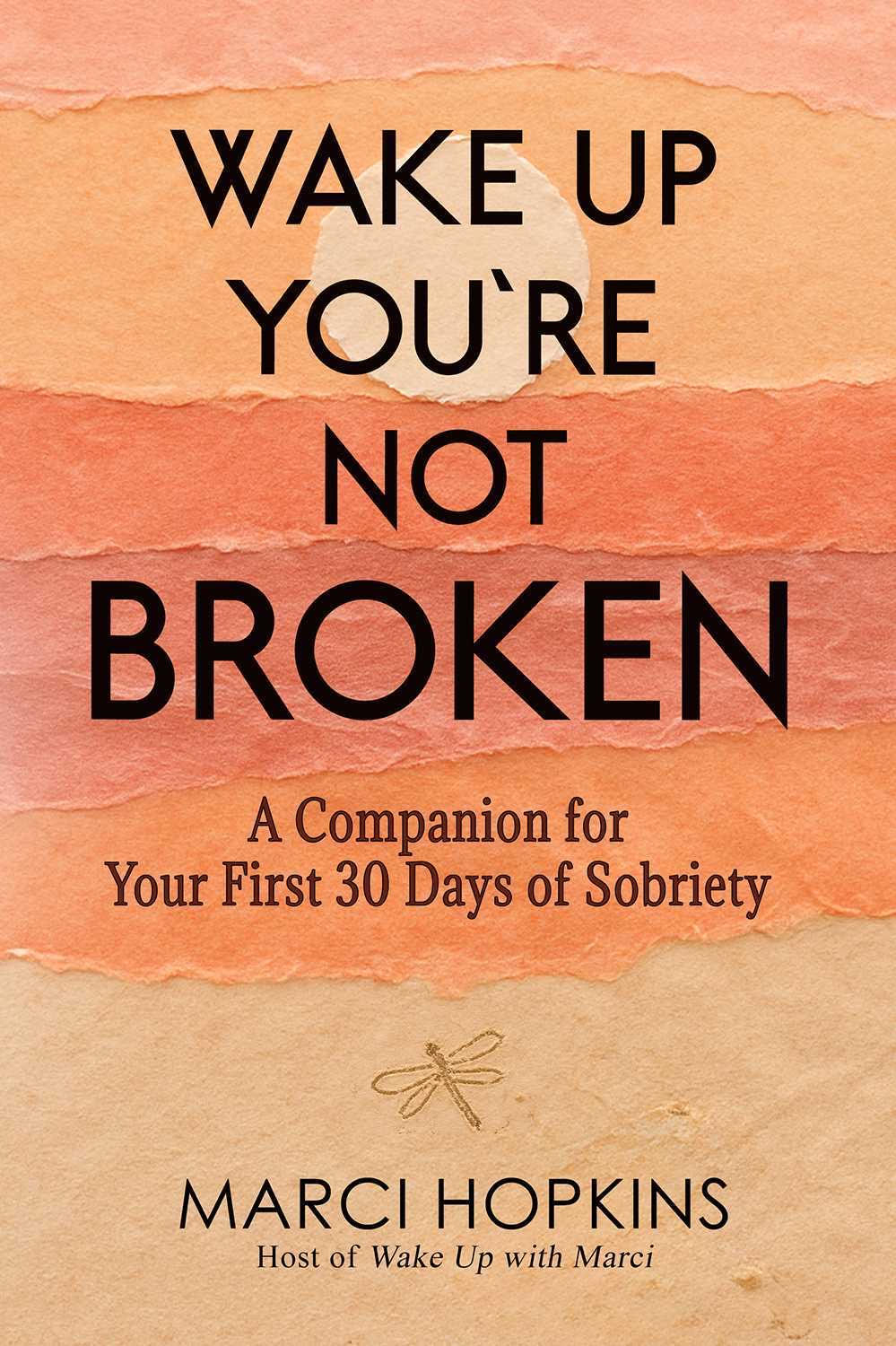
A daily, compassionate guide designed to help individuals through the physical, emotional, and spiritual challenges of early recovery.