-166Days
-20Hours
-39Minutes
-11Seconds



What were you escaping at such a young age? I went to the pantry. I found what I was looking for and I proceeded to drink alone in my bedroom on almost a nightly basis around the age of 11, 12 years old. I’ll do anything I have to do. I surrendered fully. They were going to look at me and say, “Oh, little girl, go home. This is a place for adults.” Morgan Thompson is a leader in long-term recovery and the CEO of Prevention Links, a nonprofit dedicated to preventing substance use disorder and supporting individuals across their recovery journey. She spearheaded the launch of New Jerseys first recovery high school and three peer recovery community centers, expanding hope and healing for countless families. Morgan also serves on the board of the Association of Recovery Schools and was appointed by Governor Murphy to the New Jersey Opioid Remediation and Recovery Advisory Council. Her vision continues to shape the future of prevention, recovery, and community wellness. What guided you to your purpose? if I wanted to be able to see my younger siblings, if I wanted to be welcome in the house, if I wanted to be supported in any way going forward that I needed to go to treatment. Listen, this is not about willpower. This is not some choice that you have made. It’s the one disease where we say we’re not going to help you. You’re shunned.
Morgan, welcome to Wake Up. It’s such an honor to have you here. Thank you so much for having me, Marcy. It’s an honor to be here. Well, first off, I want to say that you are doing incredible work in the recovery space, but you yourself are in recovery. And I got to tell you, it’s amazing that you have been clean and sober since 18. That is just phenomenal because it’s so hard at that age to even think about not drinking or using or whatever it was that you were doing at that time for the rest of your life and what that looks like. That must have been an an extremely overwhelming decision for you. It was. And I don’t think I really knew what I was getting myself into at the time. And if I had, I don’t know if I would have moved forward in the way I did. But everything happened the way it was supposed to and I’m so grateful.
So can you take us back to that time and and what was going on in your life at at that point? Like were you in high school, out of high school? Were you you know just take us back to what was going on for you at that time. So I managed to even though I was using on a daily basis finish high school. In fact I finished high school early. Um and I had aspirations of becoming a music journalist. That had been my dream. Um I I was so into music and I wanted to uh go to concerts and you know write about them and be on the Rolling Stone magazine and all that sort of thing. and I got this wonderful opportunity to uh intern with a local music magazine that did just that. That would have really set me up for that trajectory. I did well in school, like I said, despite all the things I was struggling with. In addition to my addiction, I was really struggling with mental health challenges from the time I was very young. Um, and so much of my substance use really was tied up in just trying to feel better, just trying to cope with the depression and anxiety. Yeah. As it is, right? I mean, I mean, that’s what we do to cope and manage what we don’t understand. We don’t know any other way.
Yeah. So, I want you to continue, but I just wanted to ask you like when did you start using and was there something that triggered this for you for what were you escaping at such a young age? So, I think that the depression and anxiety was there very young. Uh, I’m talking like 8, nine years old if I if I really look back and knowing what I know now about what that looks like for a child, the symptoms were there, the isolation, the obsessive thinking, all of that sort of thing. And what really was the breaking point for me where I started to use and for me it started with alcohol. The one person in my life who was always that constant support kind of my safe person was my great-g grandandmother. She was young for a great grandma. um and she became sick with cancer and she was in our home on hospice and um seeing her decline and ultimately pass away was such a terrifying experience, devastating experience and I just didn’t feel like I had anybody to talk to about what was going on with me and what my experience was like through that. And it was at that point and you know maybe it was being at the services and seeing a lot of people drinking or just it clicking that so many of the adults in my life used alcohol to cope that I went to the pantry. I found what I was looking for and I proceeded to drink alone in my bedroom on almost a nightly basis around the age of 11 12 years old. Wow. Wow. Yeah. That was the first time I drank.
So now you’ve gotten through high school. I mean it’s incredible. I drank through high school. I didn’t use in high school. I started using after. But you know it’s not just just because you did that doesn’t mean that you don’t then have opportunities or you can’t get through graduating high school and moving on. So you had this opportunity at the magazine. And what happened there? So, at that point, I was also working a full-time waitressing job and my substance use had really picked up. Um, I was using, you know, quote unquote harder drugs at that point and again on a daily basis. And I quickly realized, I did the math that if I did this internship, which was unpaid and had to work less, well, I knew what was going to happen. I wasn’t going to get what I needed to feel okay. And whether consciously or unconsciously, I just never showed up on that first day. I worked a double, you know, made a couple hundred bucks and did what I always did. And my parents thought, I guess, that and they didn’t know the full extent of what was going on, but they knew something was wrong. Yeah. I think they thought if I could just get to college that everything would be okay. So, I got into Ruckers. I moved into the dorm. I was there about a week and a half and again the same thing. This isn’t gonna work. Yeah. So, I withdrew. And so, I was gonna ask you what your parents did know through that time, through the time you were using at a young age. They knew I was drinking. They knew I was smoking weed. They suspected maybe there was more to it than that. They had tried so many things. Tried to get me into therapy. tried to get me around different friends. They even moved, you know, I had to change schools, the whole thing, but I always found my way back. I always found my way what I was looking for. And again, I think they were just holding out hope, you know, that college was what was going to make it better. And when I failed or when I dropped out, I I went to community college and I really tried at that point. I was like, I’m smart. I want a future. Mhm. I would literally drive to campus and then turn around and leave. I was definitely not in control. And on some level, I knew that there was a breaking point for my parents. They gave me an ultimatum. I say that with a grain of salt because that really doesn’t work most of the time. Um I think most aspects of my story are unusual. But what started the journey for me was my family saying that if I wanted to be able to see my younger siblings, if I wanted to be welcome in the house, if I wanted to be supported in any way going forward that I needed to go to treatment and that was where it started and that’s where it started.
So how did you feel in that moment? Did you feel like I’m glad this is happening or did you feel that you were being pushed to do something you didn’t want to do? I thought it was a joke. I thought that the joke was on them that we were going to get to the treatment program. They were going to meet me. They were going to look at me and say, “Oh, little girl, go home. This is a place for adults. This is a place for people with drug problems.” Which was not at all the case. The joke was on me, as it turned out. They tested me and I came up positive for things I didn’t even know that I was using. And because I had support and insurance and the means to pay, I was able to go to treatment for about 45 days. Wow. So that’s an extended amount of time because a lot of times, right, it’s 30 or less. So that’s incredible that you had that. Now, was your family there? Did you go to rehab in New Jersey? I started in New Jersey in a a withdrawal management program and that was about the first two weeks and my family was there. They were present. Um they came to visit me and then I did go to Florida for the 30-day inpatient program. Now I will say so with anybody out there that doesn’t know withdrawal program that’s where you support during detox because it’s very dangerous to go through detox on your own. It actually needs the substance. It believes it needs the substance to survive.
So once you got out of rehab in Florida, what happened then? I came home and entered an outpatient program and uh started going to 12step meetings in the community and it went well for, you know, several weeks almost two months. I was excited. They call it a pink cloud, right? I was filled with possibility and I really wanted to go back to school. That was what immediately came up as the next step. And I went to my counselor so enthusiastic. I’m going to go back to Ruckers. And they said, “Maybe that’s not such a good idea because, you know, there’s a lot of using that goes on on college campuses. Maybe that’s not maybe you’re not ready for that just yet.” Right. So, what did you find that that helped you? What What guided you to your purpose? Well, as it turns out, Ruckers is one of, at that time, one of the only, but now the longest running collegiate recovery community in the world. Wow. What are the odds? Yeah. So, my counselor didn’t know that. Yeah. So that is so a collegiate recovery community is a community of support on a college campus for students who are in or seeking recovery to come together to access therapy, counseling groups, peer support. But in the case of Ruckers, they actually have a dorm that’s dedicated to students in this program. And so I moved in and I lived with other students who were on the same journey that I was of recovery and pursuing a college degree. That’s amazing.
So is that what sparked you creating the programs you did? Absolutely. So as I was going through uh school when actually when I was working on my masters I was offered a job uh with prevention links as a recovery mentor. It was I’d never heard of such a thing. What is that? And it was for a new innovative program that they were opening here called the recovery high school. It was the first in New Jersey. and I was the mentor. So, I was just there to share my experience as a young person in recovery for high schoolers who were looking to make a change. Yeah. And it was the most incredible experience. And there wasn’t a lot like it at the time. Peer support was new here in New Jersey. And I started to learn about other states that had really grown that model and made that model more accessible. And I started to advocate. I would advocate with my boss. I would advocate with government folks. I would advocate with people who were, you know, funding programs. And as a result, we were able to build out so many new services to where we serve thousands of people every year with peer recovery support, people of all ages. And it started with the recovery high school.
Wow. So tell us why is peer support recovery so instrumental for young people or in recovery? There’s so much you know when we think about addiction in general we talk a lot about stigma that addiction is highly stigmatized and I don’t think addiction is highly stigmatized because people are cruel or ignorant about it. I think people have had really challenging experiences with people they love not getting the help they need. And the research tells us on average it takes usually something like seven years and four to five treatment attempts before someone achieves remission from a substance use disorder. So I think about families watching their loved one go through that and how devastating that is. I mean again my story is I’m a unicorn. Nobody gets it on the first try. It’s so rare. But again, I had this additional support that held me for years following that initial treatment episode. And everyone needs that. Everyone needs that. They don’t necessarily need a therapist. They might if they have some additional u mental health issues like myself. I’ve been in therapy my whole recovery. But we really need that social connection. Uh, we need people who we can look up to as role models, people who we can walk side by side with and help. And we need community. We need to be able to come together and have fun in a safe environment and build those social connections that allow us to live in the community and not have to cycle in and out of jails and institutions, which is what the current system has created for us. So really peer support is a fundamental shift in how we approach addiction to where people can be supported in their homes in the community to lead thriving lives. I love that so much. And that you offer that through prevention links. We do. Yes.
So we have three. Tell us about prevention links. Yes. So prevention links has been around for 54 years. Um, and we provide an array of services, but everything that we do is designed to help individuals, families, and communities to both prevent addiction and to support people in healing from addiction. And so, I’ll talk first about recovery and how we do that. And and really, I’ve already talked a lot about the peer support concept, but throughout New Jersey, there are recovery community centers in every county. And most of us know what a community center is like or a senior center. It’s a community gathering place where there’s a menu of different ways you can get involved and be supported. I like to think about it like a gym membership. Um I’m a member of my local YMCA. So is my son. He goes to certain activities. I go to certain things. Sometimes I just go to workout by myself. Sometimes I work out with the trainer. Sometimes I go to a fitness class, a yoga class. Sometimes I meet with a nutrition coach. It’s the same with the recovery community center. You can go to groups at the recovery community center. You could meet with a peer recovery specialist. You can get linked to other outside supports that you may need help navigating. And so you pick and choose. And it’s really driven by you as the person in recovery in uh accessing what’s going to help you in the moment. And if you don’t come for three weeks, it’s not like you can’t come anymore. You don’t get, you know, your membership doesn’t get cancelled. somebody’s going to reach out and say, “Hey, we miss you. What’s going on? How can we help?” So, you have outpatient, you have inpatient. Is that what it is exactly? Or is this just a the community support that you’re talking about? Just community support. Now, if someone comes to us and they say, “Hey, I’ve been coming here for a while and I’m still having a really hard time. I haven’t been able to stop or make the changes that I want to make with my use. Can you help me get into treatment? Absolutely. We and we’re very um you know capable of getting people linked to support whether they have treatment or not. And we even transport people to treatment. We’ll drive them there. We’ll pick them up after. We’ll bring them back after to get uh connected to support right away. Amazing.
So tell us where exactly are you located and do you help people just in New Jersey? Can you get the support online or is it just in person? We do offer some virtual groups and um other programming. Absolutely. Our centers are located in Jersey City, New Brunswick, and uh Roselle, New Jersey. So, mostly in the central northeast New Jersey area, but like I said, you know, there are other agencies that operate almost identical programs all around the country and even abroad. Um in New Jersey, recovery community centers are in every county. In other states, that’s also true. There’s a a national and international movement to grow recovery community centers. And something interesting about recovery community centers that even folks who know what they are don’t know. For the average person in recovery, it takes 15 years to achieve the same quality of life as the average person. 15 years before you feel the same level of contentment with your life. But if you engage with the recovery community center, on average, you get to that point after five years. Wow. Yeah. I got to tell you, uh I’m about to celebrate 10 years and I could never have done this on my own. I mean, you cannot isolate and do this. You have got to have people in your life. I mean, for me, the 12 steps that that saved my life, and while I had so many therapists in my life since high school, it was really doing the work through those steps that helped me to heal from, you know, all the the brokenness that I was uh trying to mask with the alcohol. And and how amazing that you you had the strength and you’ve been given your life. Listen, I didn’t get sober till I was 45. It looked like I had a pretty darn good life, but there’s a lot of people out there suffering terribly, but their lives look pretty good on the outside. So, there’s so many young people that are terrified to not get sober because they think that they’re never going to have fun in their lives again. and they’re never going to have whatever we think that that we want out of life at a young age, right? It changes with every era. But, you know, so I really celebrate you for doing that. I got two DUIs early on around 1920 21 and I tried to get sober and I convinced myself that I didn’t need to be. And so then I went, you know, all those years for me, uh, once I did decide to get sober, I was struggling, I went into the rooms and I started comparing myself to everyone that my story wasn’t as bad, right? So then a year later after I had some major consequences in life, I finally like said, I’ll do anything I have to do. I surrendered fully and it’s hard.
So, you have some amazing things coming up. I’m so excited. Please share with us about the Red Ribbon Day and I’m so grateful that I get to be a part of this event, too. Absolutely. And first, I just want to say, Marcy, congratulations on your recovery. Every every recovery story has to be celebrated and celebrated loud. So, thank you for using your platform to break the stigma. I just want to say one thing before I talk about Red Ribbon Day. you talked about 12step and I too am someone for whom 12step has been such an integral part of my recovery, my healing. Um, and and that’s true for so many people and it’s also not true for so many people. There’s so many people out there who don’t find recovery that way. For how pervasive addiction is, I can’t think of any other health condition where we would say, “Okay, well, there’s a treatment that works for 20% of people. That’s all we need, right? We’re not going to keep experimenting. We’re not going to keep research. I mean, we put hundreds of millions of dollars into researching new cancer treatments every year. And we’re not going to stop until every single person has a solution and can recover. And the same should be true of addiction. We need to keep innovating. We need to keep finding new treatment. And that’s what we’re doing here at Prevention Links is trying to bridge that gap for people who may not find what you and I have found in 12step programs to no fault of theirs. I consider myself just a very blessed and lucky survivor who got it on the first try because the predominant modality was what I needed. But that’s not true for most people. So yeah, but thank you for saying that, Morgan, because so many people that are listening need to know that there are other ways of getting sober. I went to AA and it worked for me. I don’t go to AA anymore. there’s many people that need it for the rest of their lives, right? So, everyone’s story is different. So, I I just say, you know, keep listening because something will well, not always, but hopefully will hit home and like be a light bulb moment for you once you decide to get sober. There’s so many there’s such a great sober community out there, too. That’s what I love is that we’re now really communicating about this disease and understanding just like you said, it is a disease and we need to understand that this is not about willpower. This is not some choice that you have made and it’s the one disease where we say we’re not going to help you. You’re shunned because you have this disease and can’t help yourself. Right? And there’s got to be more that’s being done. and at Prevention Link you are doing that. So, thank you for all that work. Thank you, Marcy. Thank you so much and thank you for your um agreeing to join us on October 11th for our annual Red Ribbon Day event. Um we’re so excited. This is our 27th annual Red Ribbon Day. It’s one of the longest running uh events in the country. Um, and you know, Red Ribbon Day is um, it’s a somber occasion in that it remembers the life of DEA agent Kiki Camarina who died in the line of duty investigating drug cartels abroad. You know, Red Ribbon Day really honors his life and also is an opportunity to raise awareness that prevention works. Um, and and that it takes all of us. It takes a whole community for prevention to be effective. Um, I’m a child of the 90s. I went through the DARE program and I’m sure many people remember the the lion, but more so they remember the news story, the breaking news that it turns out the DARE program isn’t just ineffective. It might actually make kids more curious about drugs. Something that I think really shattered public confidence in prevention field. And so, you know, I’m really proud to say that at Prevention Links, we’re engaged in evidence-based prevention education, which is really just about teaching young people to build resilience, to build social, you know, emotional skills. So many young people have grown up on devices and on the internet and they don’t know how to connect with people in the same way that those of us who grow up before the internet did. And so, you know, we’re teaching those social skills. We’re teaching conflict resolution. We’re teaching goal setting, all the things that help young people to build resilience, feel good about themselves, and make good decisions. And so that’s what Red Ribbon Day is really about is a celebration that prevention works and bringing um members of the community together to raise that awareness, celebrate recovery. Um we have a health fair. We connect people to resources, but we also have a lot of um events for families. We have uh pony rides and petting zoo and face painting. It’s a big carnival. Um, and we have uh really inspiring speakers like yourself, Marcy, who are just going to share the hope and and help to shine a light that prevention is possible, recovery is possible, and we don’t have to live in the devastation of addiction as people, as families, or as a community. That’s so powerful.
All of these tools that you are teaching are so vital for our young people in life, right? And they don’t have it. Like for instance, my son does not have addiction issues, but he has struggled with mental health and he struggles with connection and so he has gone in for support in those areas that you specified. Young people that you help, are they in recovery or is it diagnosis or is it people that have mental health uh disorders also? Who exactly are you helping? We actually help everyone when it comes to prevention. So, we start in preK. We actually start with, you know, families who have children who were, you know, under one and we work in parenting skills, but really it’s across the lifespan. So, those same skills, we have different types of programs that are age appropriate for every grade level. And we do some programs that are with the whole class or a whole grade level. Sometimes we work with a targeted group who’s been exhibiting some behaviors that indicate that maybe they’re at higher risk. Um, and then we work with students who are having challenges, whether it’s mental health, substance use, whatever it might be. And we have counselors who go into the schools and work with them uh on a temporary basis. And if they need longerterm support, we help transition them to like an outpatient program or whatever it might be that they need. Sometimes we find in working with them over those six to eight weeks that recovery high school might be a good option and so we help get them there. But there’s so many, you know, it’s very individual. Everybody needs something different, but we have a really good infrastructure to be able to get into the schools and into the community to meet people where they are and provide that support.
Tell us about that recovery high school. That is amazing. Absolutely. So, it’s a very small intimate setting. Our max enrollment is 30 students. So, we’re really not meant to be a big big school. Um, but it’s for students who have had lots of lost learning time because of their substance use. So, whether they’ve been in and out of treatment or they’ve been suspended several times. Um, but it’s clear that, you know, the root issue is the substance use that they um need a supportive environment. So often, you know, a family will finally get what they’ve been wanting. They’re able to get their child into treatment. They’re doing well. They’re different. They have their son or daughter back. They’re feeling so good. And then the first thing that happens when they leave treatment is they go back to their home school, to the same friends, to the same environment, and they return to use within days and weeks. And so recovery high school gives that small intimate supportive environment with positive peer pressure like where I went at Ruckers with the um college program, but it gives them a a community of support staff who are informed and understand the nuances of the beginning of the recovery journey and what they’re going through. Peer mentors like I was and now we have several peer mentors on the staff who work with the students on a daily basis. and in the event that they do start to struggle, get them immediately reconnected with support and then they come back to us. But in most cases, we’re able to support them there within the school environment, get them to graduation. We’ve had a 100% graduation rate over the last five years. Uh, every student who’s been eligible for graduation has graduated on time. Um, and these are students who are very unlikely to graduate period because of the severity of their addictions. Oh, now where where is the the high school again and and can you share with us the name? So, our school is the Raymond J. Lesniaak Experience Strength and Hope Recovery High School, and we’re located in Roselle in Union County, New Jersey. There are two other schools uh that are not affiliated with Prevention Links, but we all work together. There’s the Keys Academy in Linraftoft in Mammoth County and there’s the Coastal Prep School in um I believe it’s in Lower Township in um Cape May County. So, between the three of us, we can serve most of the state, though I do hope that one day we’ll see a couple more schools open so that every student in New Jersey has access to a recovery high school. And is there uh an admission process or is there fees involved? So, we are very grateful to have a grant from the state department of education that covers tuition and transportation for our students. Um, the admission process. So, we have an interview with the students and the parents just to make sure it’s the right environment that they’re going to get the support they need there. As long as that all checks out and uh their district approves, then we are able to accept them.
Wow, Morgan, I got to say you are doing amazing amazing work and making such a difference here in New Jersey. And I just just incredible to hear like, you know, the stories of of where you came from, where others are coming from, and then now creating such change uh for those that are struggling or even the preventative work that you’re doing, which is amazing. And these young people really, really need support for these life skills to help them not to feel that stress and overwhelm. And so much of that comes from just not knowing. It’s so true, Marcy. And and thank you for saying that. It really is a privilege to do this work and to have the space here to raise awareness of it because I think there’s a lot of folks who just don’t know that there’s help out there that prevention works, treatment is effective, and people can and do recover. And I take every opportunity I can to put that message out there. So, thank you for giving me this space today. Amazing. So, you’re giving so many people hope, and we need hope, and showing them what recovery, resilience, and purpose truly look like. I just want to say, anyone out there, check out Prevention Links and all of the peer recovery services that they offer in New Jersey and beyond. And again, I wanted to Red Ribbon Day happening uh October 11th. And where exactly is that? That is that it’s in Cranford. Yes, it’s at the Noah Park right across from the Union County College campus. Amazing.
And wow, I have learned so much. And for all of you guys out there, thank you so much for listening or watching, share with someone who needs to hear this message. The more that you interact with the programming, uh, the more people I reach. And I want you to remember that recovery isn’t just possible. It’s powerful. And it’s never too early or too late to choose a new path in your life. So for everyone out there, you are worthy, you are beautiful, and it’s time to transform and go after the life that you deserve. Thank you again, Morgan, for coming on the show. Thank you so much for having me.

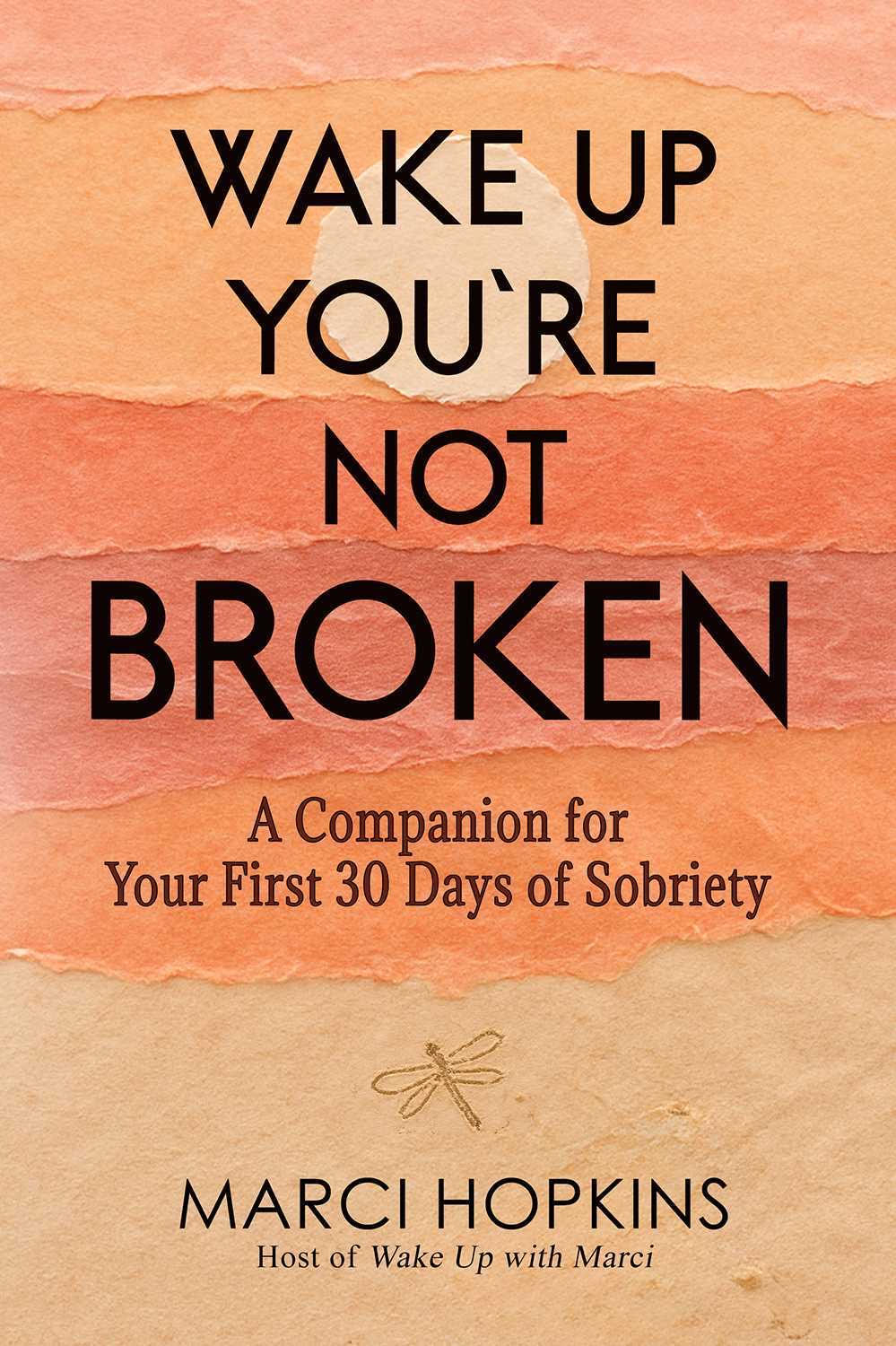
A daily, compassionate guide designed to help individuals through the physical, emotional, and spiritual challenges of early recovery.