-167Days
-4Hours
-44Minutes
-3Seconds





Welcome to Wake Up with Marcy, a deep dive into self-discovery. I’m your host, Marcy Hopkins, and this is the space where we get real about life, transformation, and finding our true selves. Welcome back to Wake Up with Marcy, where real conversations spark real transformation. and I’m your host, Marcy Hopkins, and today we’re diving deep into healing, self-discovery, and breaking free from the labels and shame that so many of us carry. Joining me is Dr. Addie Jaffy, a world-renowned expert on addiction, mental health, and relationships. Once facing addiction and prison time, Dr. Jaffy completely transformed his life. He went on to earn his PhD from UCLA, founded Ignited Recovery, and is the author of the best-selling book Unhooked: Free Yourself from Addiction Forever. He’s made it his life’s mission to destigmatize addiction and educate not only those suffering, but also their families. Whether you’re personally facing challenges, supporting a loved one, or simply on your own journey of wellness and self-discovery, today’s conversation will bring hope, perspective, and practical tools that you can use. So, let’s dive in. Welcome to the show, Dr. Addie. Thank you so much, Marcy.
All right. So, you came from a good background. Yeah. And then you you got into some trouble and you literally had a SWAT team break down your door. So why don’t you take us back to Yeah. Why? What happened? How did you get yourself there? Because people think that you come from a really bad background. That’s why you’re going to start having these problems with alcohol or drugs or such. And that was not your case. Yeah. And and exactly and even if you come from a a better family, I’ll say, but you know, better, I’ll put in air quotes, but they expect that there must have been, you know, abuse. There must have been something really terrible under the surface. And and there wasn’t in my family. I mean, look, my my mom and my dad almost got divorced. My dad left for a little bit. You know, that was probably that and the big move from I was born in Israel. The big move from Israel to the United States were probably the two most traumatic things in my life. But the bottom line is between personality and taking things really really really internalizing my own lack of what I would call perfectionism and adequacy in my own mind. Uh my dad being a really high achiever and setting really high standards that I felt like I was failing at regularly. But then also as I mentioned a move we had a big move right into high school from Israel to the US. Totally different culture. I spoke the language not well. You know, there were things of that nature. But what I talk about, and I think this is important in the context of the book, is people think addiction is this disease that you have a genetic predisposition for. Uh that you know because so it runs in your family or you’re you have a a proclivity to fall into it from an early age. What I found having worked with thousands of people at this point is there are definitely streams of uh connectivity. There are connected, you know, um, themes between people who struggle with addiction, but they’re actually primarily more about the internal struggle, the strife, the lack of adequacy, feeling less than judging yourself against others than they really are about the background. And I think that’s important for people to hear. That’s why wealthy families, mid, you know, uh, you know, kind of like upper middle class, middle- class families and people that come from abject poverty can all struggle with the same issue is because the drugs, the behavior is used to cope. In my situation, it was primarily used to cope with social anxiety and again low uh feelings of selfworth. Yes.
So what happened when that SWAT team came in? Like what why did that happen and what was going through your head? Yeah. Um, I open the book with the story of how the the SWAT team came in. And so I won’t belabor the point of of the actual experience, but you know, the short of it is I I was a little disenfranchised from um the culture and the the family that I grew up in. And and that was self-inflicted, right? That wasn’t by by their doing. I felt like I didn’t belong. So I literally moved to the other side of the country. My family was in New York, upstate New York, and I moved out to California. So I was separated. I was isolated from them. And in that context, my drug use escalated and escalated unchecked. It went from smoking weed and drinking like the vast majority of kids in high school into harder drugs after a breakup and depression. And it got to meth the last five, six years of my use were pretty heavily involved in meth. I was using a lot of drugs that cost a lot of money. I didn’t have money to use as many of the drugs. So I started selling the drugs. And there were actually four total arrests. That SWAT team arrest was just the last one and they escalated, right? It was like a a traffic stop where I ended up spending a night in jail. Then another stop with more drugs where I spent a weekend in jail. This time what ended up happening is somebody must have given my name. Uh I ended up getting in a car accident, a motorcycle accident actually, and uh broke my leg, but they also found a half a pound of cocaine on me in that accident. And that told them I was more than just a user for three months or so. They tried to get me to give them other names. I wouldn’t do it. So 8:00 in the morning, they paid me the courtesy of that SWAT team arrest. You asked what was I thinking at the time. And really, honestly, the main thing that I was thinking is I was pretty sure my way of living up until that point was done. Yeah. I had no idea what that meant because I didn’t know any other way to live. But it was very clear. It’s kind of like the universe, God, whatever you want, kept sending me these signals. Yeah. You can’t keep doing what you’re doing, right? Little arrest, bigger arrest. Broke your leg in a wheelchair. or now the SWAT team is in your house. It was all moving in one very clear direction. So, I knew I had to do something. Still no idea what that was, but I knew I had to change.
So, there’s a couple of things I want to unpack here. And, you know, I’m almost 10 years sober. And I I like what you’re saying. The universe kept giving you these um potential stop gates like, “Hey, maybe maybe you want to like stop what you’re doing, right? and and rethink, but I I needed a major consequence and and for me that ended up being a DUI and almost losing my family, but understanding that I did have addiction in my family, but I was coping I was coping with a lot of difficulty from my past. So, you knew that you needed to make a change and and so how did that change start for you? And you know, there’s a lot of people out there that maybe maybe they’re not going through the same things that we’ve gone through, but they’re recognizing like this is not beneficial to my life, right? There’s maybe some difficulties in the relationships or work. So how can we start shifting and thinking in a way that okay I need to make this change and and I don’t want something terrible to happen in my life. So so what can we start doing? How can we start looking at this? Yeah. Hey. No, I I write in the book that that back against the wall moment for you DUI, for you a SWAT team arrest are often times the things that help us understand that there’s got to be a new path forward because we can’t head back. Our literally our backs against the wall, right? We’re stuck. Um what that is, there’s a lot of leeway around, right? So you it doesn’t have to be catastrophic but it does have to be a moment where you are willing to consider that maybe the per the perception the perspective you have in the world I talk about that that’s a whole chapter in the book is wrong and you need to allow a new perspective.
So I’ll give you my version really quickly now so for me I got arrested I had a gun next to me and everything like that so I had almost a million dollar bail I was put in jail because of my broken leg they put me in the hospital ward of of the jail it was decrepit and dirty and you know people that had jumped out of windows and broken ankles and people that got shot at. We were all in one big cell and um and I was coming off of drugs. So I actually slept for almost that whole week waking up to eat, sleeping on and off. Mhm. I waited about a week to get out because my bail was so high I didn’t even want my family to post it. I wanted to go to in front of court. So once I was done with that 5 days slight somewhat detox, my lawyer said to me, he said, “Look, if you show up like this to court, you keep showing up like this, you’re going to end up doing 10, 15, 20 years in prison. We’ll fight the case, but the way you look and with what they just found at your house, you’re going to go away for a long time. I need you to go to rehab and clean up because if you don’t clean up, we’re going to have a losing case.” Right? So what my lawyer was so genius at, and I think I actually talk about this directly in the book, is he didn’t tell me, “Look, you’re addicted to drugs. your life’s going to go nowhere. You really need to do something about this. He took something I cared about. I wanted to fight this case. I didn’t want to spend 15 to 20 years in prison. He said, “If you don’t want that, you got to do this.” Often times, we forget because we see people drinking. We see them using drugs. We see them engaging behavior that is not helpful them for them. We see the outcome. We know where we think they need to go and we want to move them in that direction. We want to say, “Look, you’re drinking too much. Stop drinking. Your life will get better.” Yeah. But that’s not the way they understand it. That’s not the way they see it. They wake up full of anxiety, fear, self-doubt, deep levels of stress, shame. Exactly. Um, and so the drinking actually helps them. And you’re looking at them saying, “Hey, if you stop taking your medicine, everything will get better.” They say, “You’re crazy. You don’t understand me.” He targeted the part that he knew I cared about. I didn’t want to spend 15, 20 years in prison. He targeted that because I’m sure Marcy before you got that DUI, you knew things weren’t you weren’t firing on all cylinders. You you knew things weren’t working well. It just you weren’t in a place where giving up drinking was the angle you Yeah. It’s all I knew. And um I was very much a victim and I didn’t know how to not drink and I was putting everything off on my husband just basically like you don’t know how to have fun and you know so even though I knew that things weren’t good and I came from an alcoholic mother and um I knew what it looked like and but I kept comparing myself and I wasn’t passing out every night. So, you know, that that kept me um continuing and on this path even though you know it’s your gut. You’ve been you think about it for quite some time and and oftentimes a decade. Yeah. A long time. Exactly.
Exactly. And you know, for women, it’s really really hard because we have we’re the caretakers. We’re afraid to admit that there’s so much shame around it, right? To admit that we have a problem. We think our husband’s going to leave us, that kids are going to they’re going to take the kids, that everyone in the community or wherever we are or whatever we’re doing in life, we’re going to be judged. How do we if we are working and we’re moms? Like, how how do we get sober? How do we take care of ourselves? Like, I don’t know. It it just feels uh a lot a lot of times that that women struggle um more because of the shame around it and and we don’t feel that we can leave our situation if in fact we needed to go to to rehab. Right. So for men it might be I’ve got to keep showing up to my job. I’ve got to keep doing keeping a roof over the the family’s head. You’re saying for women it’s the parenting, the taking care of the household, etc. is is oftentimes such a big undertaking. Yeah. Look, I mean, here’s the interesting thing. There are a ton of reasons. I mean, I talk about this again in the book. There are a lot of logistical reasons why getting help is hard. That’s actually the good news in why if you seek help sooner, the help is easier to get and it takes less time. You don’t The only reason some people end up having to go to rehab is because they’ve been struggling for 15 years and they literally can’t not drink for a day. So they need a place for 20, 30, 60 days to just rebalance. If you can handle this 10 years earlier, you probably don’t need a rehab, right? Just some therapy, reading a book, doing some groups will probably be enough for you. And and I think that’s that’s a big part of the message for me in the book is if we remove the stigma and the shame around you struggle with alcohol being you are an alcoholic. Yeah. Earlier on in the process, Yeah. If some of us just sat down and said, “Wait, why am I drinking every day when I get back from work?” Yeah. Oh, let me break it down. It’s because of A, B, and C. Okay. Well, that I can do something about that. I can figure out a way to reduce my stress at work. I can go to couples therapy with my wife, right? How many How many people do you know who drink heavily because they’re in an unhappy marriage? Yeah. And when they get home, they have to sit next to a stranger or somebody who is even worse than a stranger, right? is making them feel badly about themselves. And in order to do that, they just have a couple of drinks so that they don’t care as much. Well, it doesn’t seem like that big of a deal early on because it does help you get along better. 10, 15 years later, you’ve now been in a bad relationship for 15 years with no help. The drinking certainly didn’t make the relationship better and now you need to drink more in order to deal with your marriage. So, that the issues are always there at the outset. Well, and I’ll also say that because I was so wounded from my past and then I was drinking a lot, my relationship was really bad because of my drinking and the way that I was responding and reacting to life. And I will say that we have 10 years later, I mean, I never thought about growing old with him because I didn’t know what that looked like. and today we have the best relationship possible. So, um I’m I am so grateful for recovery and and then the healing that comes after it, right? It’s not just about putting down the drink. with all the things that you’re talking about um that that we need to heal from and building on that confidence and self-love and self-awareness and um so so let’s talk about well you have uh your program that you’ve created and and you talk about you know getting really radically honest and I love that. I love that. So what do you offer through your recovery model?
So in the book I I kind of split up the book into two parts. One, the one that explains why we struggle the way we struggle. The second one I really wanted to give tangible steps for people to follow in order to move forward. So a big part of it is something I call the sparrow loop. And that is something that I just want people to the sparrow loop. Yeah. S P A R O. So stimulus, perception, activation, response, outcome. And I’ll explain why all those stages in a second. But the idea was, you know, people are so scared of things they don’t understand. So even when when we’re in the throws of drinking or drug use or any addictive behavior, eating, binge eating, everybody wake, you know this, everybody wakes up in the morning saying, I today I’m going to I’m going to go beat it. Today ourselves, today I don’t need this, right? I’m I’m going to beat my addiction today. Today I’m not going to drink. Today I’m not going to use drugs. Today, I’m not going to look at porn. Today, I’m not going to eat a box of pizza. Whatever it is, and then by 9:00 a.m., noon, 3:00 p.m., 7:00 p.m., midnight, whatever it is for you, you’re back in it again. If we don’t understand why we’re doing what we’re doing, it’s even more terrifying, right? More shame. So, the first thing is to just explain to ourselves why we do things. Stimulus is the thing that sets the the behavior in motion. Perception is the way in which you process a stimulus. I’ll explain more about that. Once you process a stimulus a certain way and it creates an activation physiologically and psychologically, you have feelings somatic like in your body or cognitive in your head. Those feelings are the things you’re trying to deal with through the response. The response for many of us is the overeating, the drinking, the stuff, right? The the behavior that we’re in trouble with. You drink, you overeat, you binge, you start really feeling really sick or you drink until you black out. That’s the outcome. Most people don’t come for anything but the outcome. They just come because crap happened that they are unhappy with and they want to solve it. DUI for you, an arrest for me, a blackout when you ended up waking up uh with somebody you didn’t know in bed next to you, whatever. You know, using porn so much that uh your wife found it and is now mad at you and is threatening divorce, whatever it is, the outcome is what people care about. But because the behavior came right before the outcome, you drank, you blacked out, you overeat, you threw up, you uh used some meth and got arrested. We think the thing to focus on is the behavior. But what I explain is if you remove the behavior, all the coping that came before it still needs a place to go and you now have no way of dealing with it. And so that’s why we get caught in the cycle. You stop drinking, but then the stress and the anxiety build up. Well, you don’t have new coping strategies to deal with it. to you at some point you say well forget about it I’m going to go back to having a drink and that cycle is why so many of us fail so number one is to just explain what it is that that the uh that goes on for all of you and then the next piece and that’s I call it eat the explore accept transform cycle once that outcome happens a lot of people in our situation um get really afraid of failure and I think that that’s explained by what we talked about early right self- judgment deprecation feeling less than is such a big part of the problem that when you fail, you get the blackout, the DUI, the you throw up, whatever it is, you feel once again like your self-image has been reinforced. But one thing that I’ve learned now being in this field 15, 16 years, is those failures are actually opportunities. When things don’t work out the way you want them to, it’s the time to stop, understand why. That’s explore, sit with it, and accept it. That’s sitting with discomfort, getting comfortable, being uncomfortable, understanding you’re not perfect, but you’re also not broken, right? You’re just you’re human. And so, acceptance, explore, accept, and then once you’ve finish that acceptance piece, transform. Okay? Drinking doesn’t lead to the outcomes I want when I feel anxious and stressed, right? I need something else, but I don’t know what that is. Transformation is about going out there and seeking. It’s all I call it like a scavenger hunt. What can deliver the outcome that I want? And so it’s this loop that I have people go through and every time it works out the way we want it to, we celebrate, right? You had a sober night, you did well, you drank the two drinks you wanted to and it did. But every time it goes off the rails, it’s time to get to work. Yeah. And that’s different than what most of us do, which is every time things go off the rails, we try to sweep it under the rug, move forward, put on a, you know, stiff upper lip, smile through it, and try to get to the other side. So that’s the overarching idea behind the book is understand why you act the way you act, accept what got you to this place, but then go change it. Yeah.
Well, like for me, I mean, I have well, I have a huge uh toolbox and then uh for me a lot of it was, you know, gratitude, forgiveness, and shifting my energy from, you know, like living in gratitude is a way of being a magnet to a beautiful life, right? Every person listening to this right now, if they’re looking for their own path, you’ll discover your own toolbox. There are things that have worked for many, many people. Gratitude is one of the things I bring to most of my clients right off the bat because it’s super easy to do. Yeah. You can get it done in five minutes a day. Yep. And you know, the irony is most of my clients, if I ask them for three things they’re grateful for, they’ll sit there and think for a little while. Whereas once you’ve been in once you’ve been in practice at this, I’ve been doing this for about let’s say a decade now. Yeah. There are thousands of things that can be great because Yeah. People have to that people think it’s got to be something big. It’s like the car in the driveway or the house you’re living in. It’s not about that, right? Clean water, a roof over your head. Yeah. Uh clean air to breathe shoes that fit you. I mean, you know, you you breathe you’re breathing right now, right? Yeah. I mean, like the number of things you have to be grateful for or you can be grateful for is nearly endless. And the good news, as you just point out, and this is just one tool we’re talking about right now, it reformulates the way you look at the world because once you start, I call it’s like these flags of gratitude that pop up all over the world as you walk around. And that’s the real benefit.
All right, somebody’s sitting there and they’re listening and they’re like, “God, my life right now. I mean, I don’t know how I can look at anything and be grateful. I can’t wait to have my ne my next drink or whatever it is.” Where are they turning? what’s what is a first step they can make and then tell us a bit about your book uh because unhooked I mean that there’s an answer for you but uh yeah yeah so first of all start small number one start small too many people they try to hit it out the park right off the bat right so if you’ve been drinking for 15 years first of all it could be literally medically dangerous for you to just stop drinking without medical supervision so don’t um get some support and that’s Support sounds dangerous or risky for a lot of people because normally support only came when we screwed up. Support only came when we failed and other people made us accountable. The kind of accountability I’m talking about is different. It’s reaching out to people that you trust and love and say, “Okay, I don’t want to live this way anymore. I’m willing to start considering some change. Let’s start working.” So, that’s number one. Uh finding a comfortable environment to do that in. A lot of people try to do it alone. Shame is a huge player in that. I say just find, it doesn’t matter what group, it doesn’t matter who is part of that. Find a group of people you can do it in. It helps a ton to be able to do that. And then a couple of quick tips from the book. Number one, this is hard, but you want the fastest route. Stop lying. Stop lying to yourself and stop lying to other people. Radical transparency will be really, really uncomfortable for a short period of time. It’ll be your quickest path to get where you’re going. And that brings me to the second part of this, which is Mhm. In in order to get better in life, and I’m not talking about recovery, I’m talking about life in general, you have to get comfortable being uncomfortable. Yeah. And that is something you have to train yourself in because and I’m not, no judgment, I did this for 15 years of my own life. Um, one of the reasons we use so much is to escape discomfort. Escaping discomfort is the most sure way to bring destruction into your life. You have to get comfortable being uncomfortable. So, those are kind of the big pieces. Stop lying. Get some accountability and support with a group of people. It could just be one person for now that you trust and has your best interest at heart and then start getting comfortable being uncomfortable. Um, you mentioned the book and on our last couple of minutes here, I have a website called read unhooked.com. You can look at a bunch of little pieces there. When you buy the book, we also have resources on the web page in order to support you with additional uh work on top of the book. But this book is my way of trying to give people something really really actionable. We’ve heard from a lot of the readers saying, “The first half got me to understand why I’m struggling. The second half gave me the actual tools to do something about it.” And that’s it, right? And this is what you talk about getting educated, right? We need to be educated. Those that are involved, I mean, it’s a family sickness. Um, so we all need to get educated and we all play different roles and uh and then we need to lo you use the tools. We need to learn them and use them. always got to use the tool, right? Just learning about the tool is not going to help you all that much. You’ve got to uh take the action and that’s so so important. So, I’m so grateful that you joined us today. Thank you for being here sharing your story and you know just just all that you do. No matter where you are in your journey, it’s never too late to wake up and rewrite your story. Amen. So, I will see you next week and thank you again, Dr. Jaffy, for being here. Thank you, Marcy. Thank you, everybody. Bye-bye.

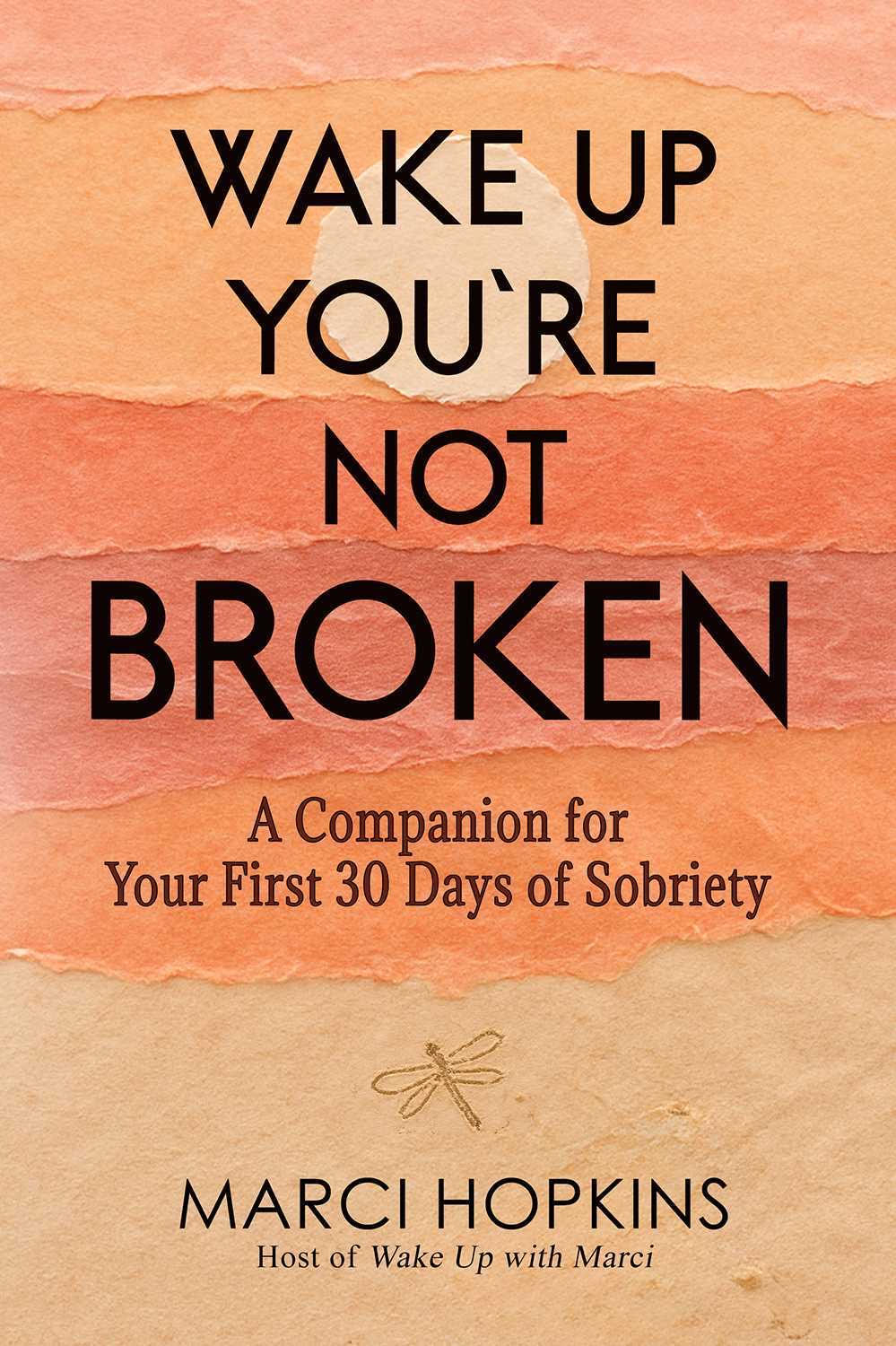
A daily, compassionate guide designed to help individuals through the physical, emotional, and spiritual challenges of early recovery.